Smart layout, sustainable finishes, and the use of highly functional design solutions are among the aspects that are given precedence by homeowners in 2026 and hallways are not an exception. Be it in the case of hallway closet remodel ideas, hallway long remodel ideas, or small hallway remodel ideas, this guide has detailed yet practical solutions. You might also be thinking of narrow hallway remodel ideas, upstairs hallway remodel ideas or even full hallway bathroom remodel ideas- and all through this article I will address the most fundamental questions: How do we make these transitional areas more of a space? What are the real differences in modern improvements?
Transform Your Hallway Closet With Smart Storage Solutions
I often find that a hallway closet becomes the most overlooked but highest-potential space in any home. Smart storage solutions are increasingly modular, flexible and aesthetically enhanced so that they can fit in narrow corridors or multi-purpose spaces in 2026. When I am designing a hallway closet I will either lean towards built-in shelving systems, low-profile lighting and careful space planning which will add more utility to the walkway without crowding it out.
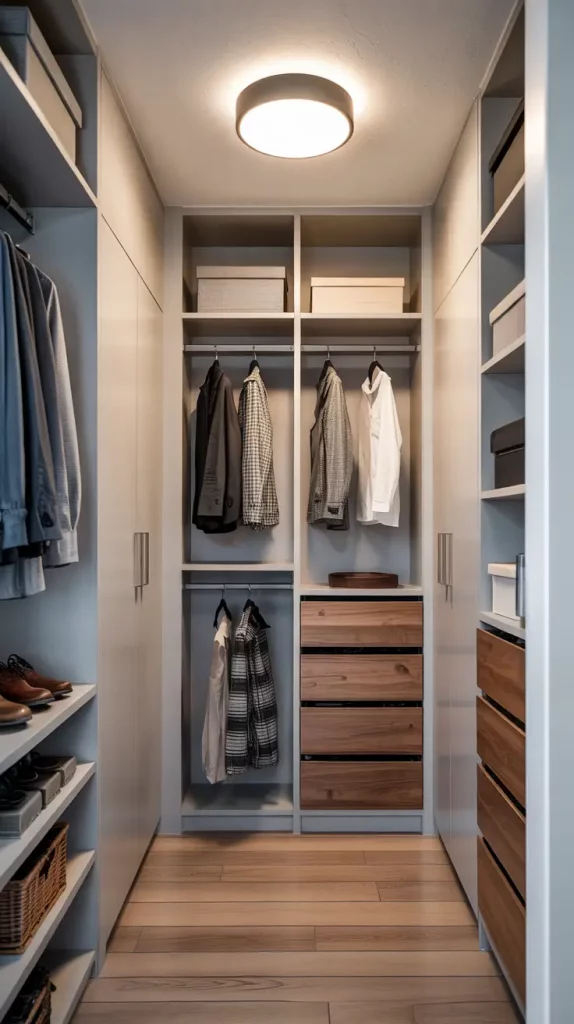
When doing this kind of remodel I usually incorporate adjustable shelving, soft-close cabinets, and hidden spaces that can be used to store seasonal stuff. I also like matte wood finishes with thin metal handles as they are contemporary and durable at the same time. Another necessary element is a motion-sensor LED strip – it raises the functionality and gives the feeling of luxury.
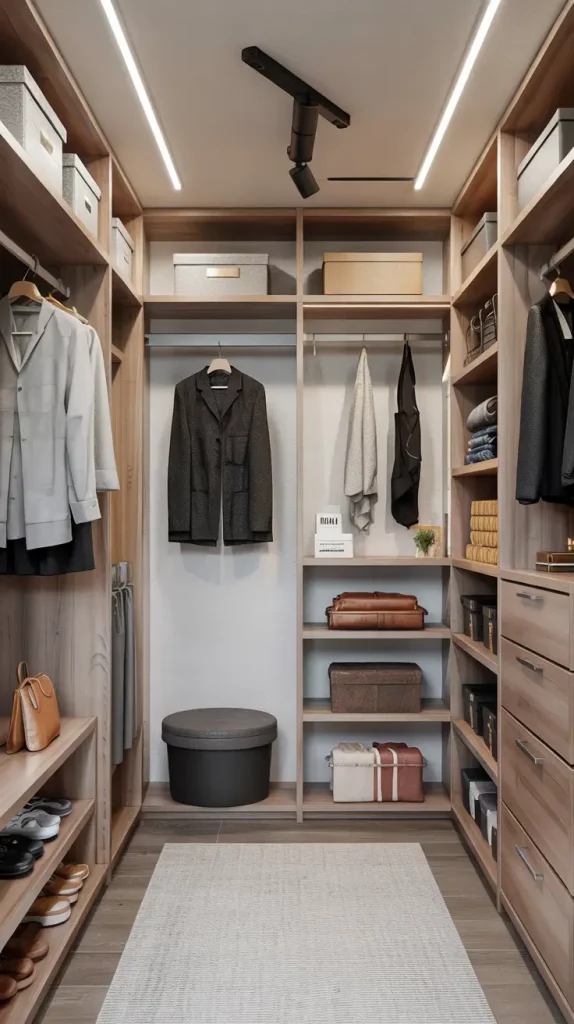
In my opinion, the most successful remodels of hallway closets are the ones that are guided by the philosophy of Nate Berkus: “Every space must have a purpose. I have used this technique on numerous remodels and it always makes even small closets look meaningful and classy.
In order to make this section even more comprehensive, I would also incorporate some recommendations in the incorporation of environment-friendly materials, like bamboo shelving or recycled wood paneling, which will be extremely popular in 2026.
Refresh Long Hallways With Dynamic Wall Treatments
When I design long hallways, my goal is always to break up the visual monotony using wall treatments that add depth and interest. Textured plaster, geometric paneling and the use of two tone paint schemes are also very popular in 2026. These solutions make a mere passageway a designed moment without a need to change the structure.
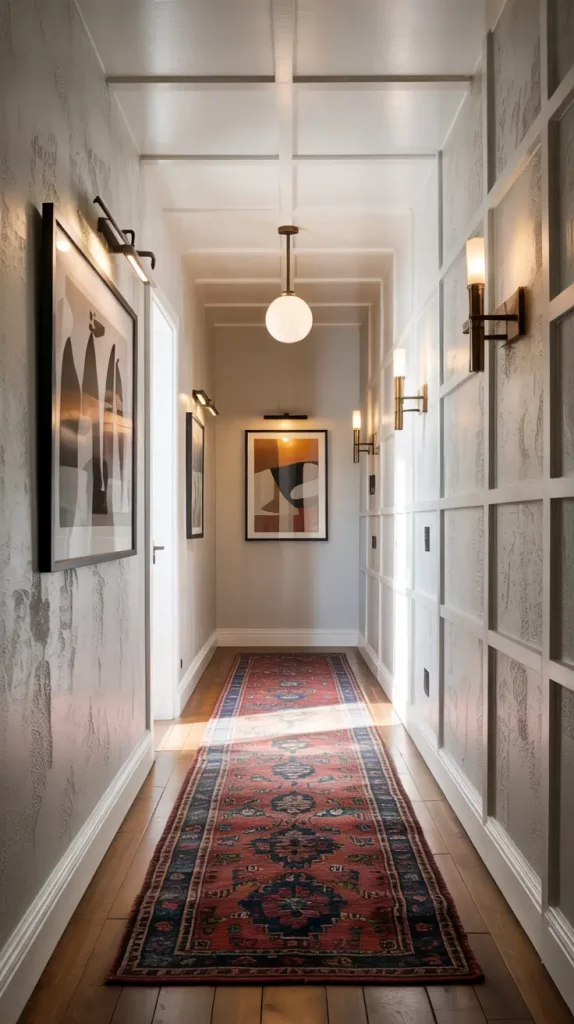
I will also use decorative wall molding, slim wall sconces or continuous gallery style rails to promote flow. The design is anchored by a runner rug which contains small patterning, and limitation of glare in naturally bright locations or those that are artificially lit is achieved with matte paint. Each work plays its role in the creation of equilibrium and movement that are badly required by long hallways.
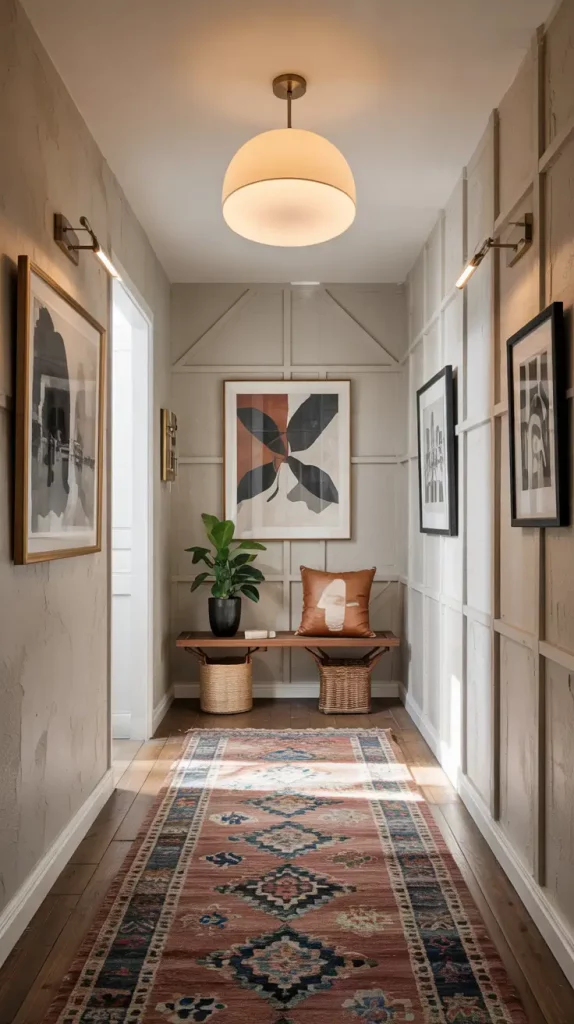
My experience has shown that sometimes designers at Architectural Digest focus much on the role of scale in such spaces, like large-format art or the lack of continuous lines makes the hallway look like a room rather than an everlasting one. I also concur and I apply this principle in all the remodels.
Something will be lacking in this area, but I would add suggestions of acoustic walls panels that do not create echo but rather add comfort to long corridors.
Maximize Small Hallways Using Space-Saving Designs
Small hallways demand creativity and discipline. In remodelling these areas, I am concerned with being open but enhance the functionality. Slimline wall hooks, floating console shelves and small storage cubbies are used to make the space organized without limiting movement.
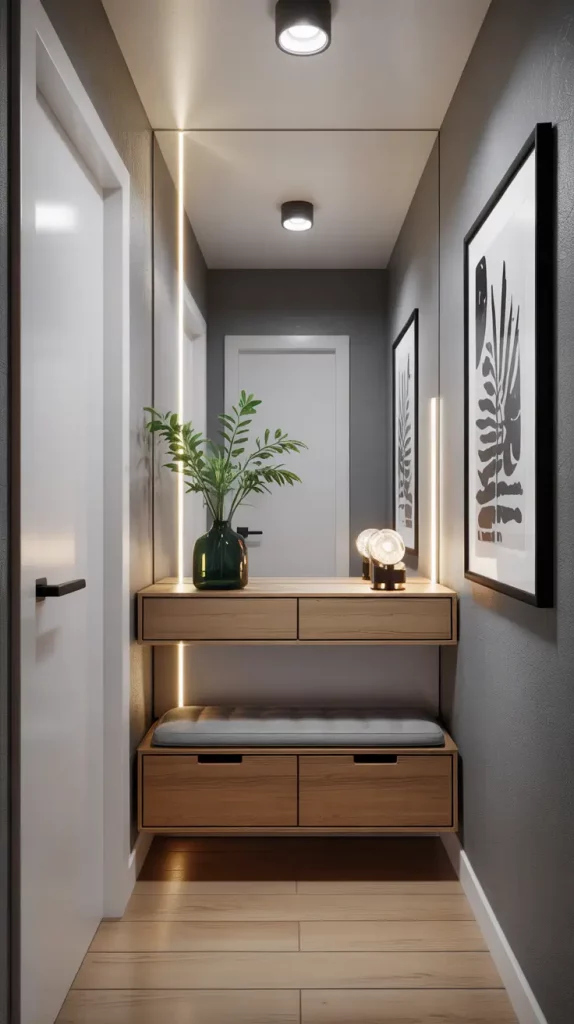
All the design decisions should have a purpose. Most of the time, I choose slim benches with inbuilt shoe drawers, wall-mounted mirrors, and in-wall lighting designs. These create the visual enlargement of narrow areas and provide storage advantages. A vertical sculpture or work of art adds an uphill appeal to the eye and makes the hall look taller.
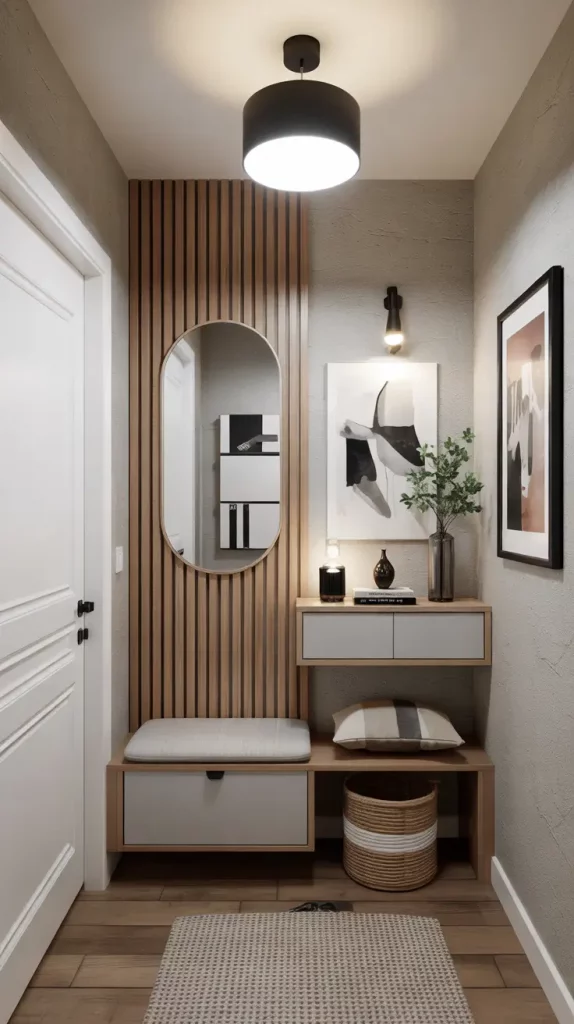
Bobby Berk is one of the most prominent designers who encouraged me to be inspired in my work, as he emphasizes on efficiency without clutter in design on small space. His tactics have assisted me in polishing my own tactics over the years.
Some recommendations on the traffic resistant flooring which includes porcelain tile or engineered hardwood could also be helpful in this section to maintain the flooring across high-traffic areas.
Brighten Narrow Hallways Through Strategic Lighting
Narrow hallways often feel dim or confined, so a well-planned lighting strategy can dramatically change the atmosphere. My preferred combination of recessed LEDs, thin wall lamps, and cove lighting is needed to spread the light evenly and physically expand the space.
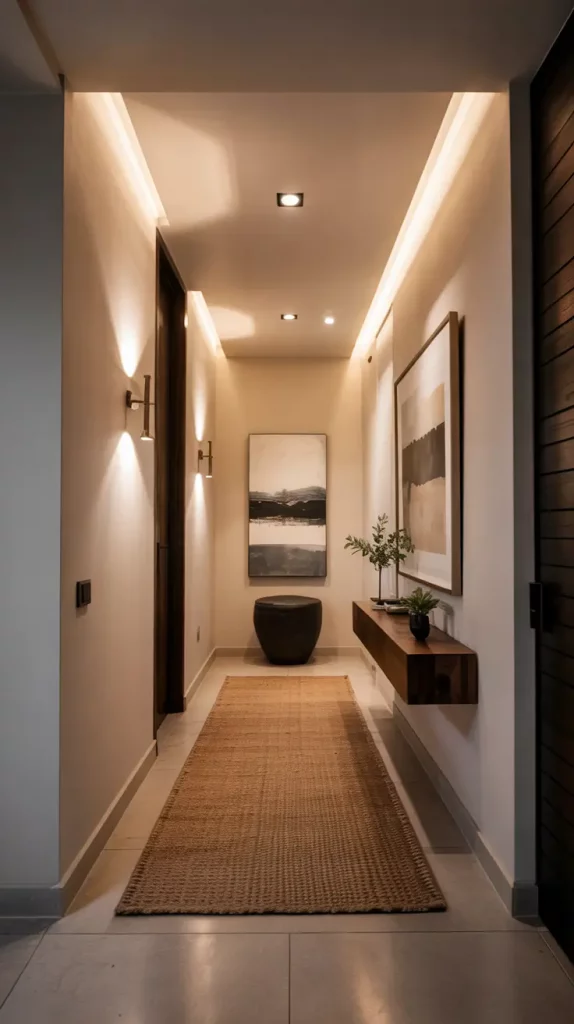
Lighting fixtures must be handy and attractive. I frequently addition of warm-temperature bulbs, brushed metal sconces, and frosted diffusers are used to soften harsh shadows. An oversized neutral-colored rug finishes the appearance by stabilizing the walkway.
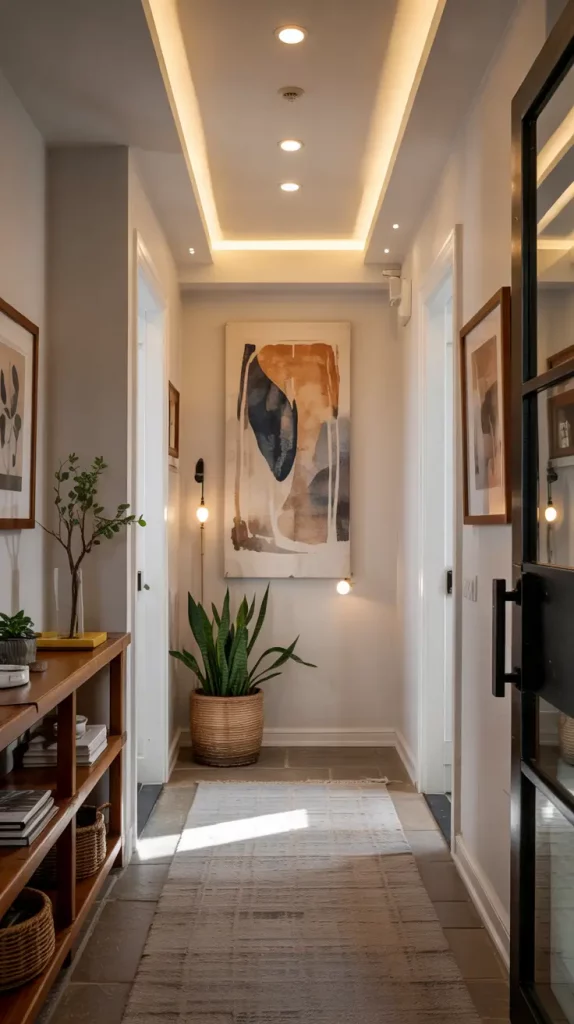
Personally, I have observed that the designers at Elle Decor have placed a lot of emphasis on the layering of light to make it not seem as a tunnel. I do concur, the use of layered lights achieves a sense of dimension, mood, and simultaneously comfort.
One thing I would include is advice on the incorporation of smart lighting controls that enhance efficiency and individualization in the remodeling of 2026.
Upgrade Upstairs Hallways With Modern Architectural Accents
Upstairs hallways often serve as bridges between private rooms, so I design them to feel warm, cohesive, and architecturally polished. The ceiling beams, bookshelves constructed on the walls, and railing systems enhanced are some of the features I incorporate to make these spaces higher even though the building remains stable.
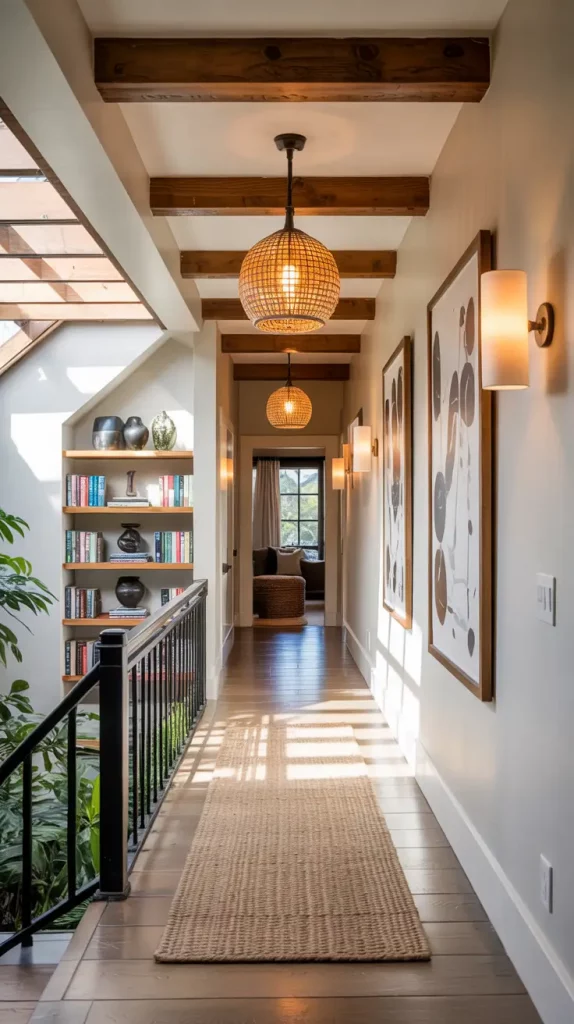
I would suggest the use of wood, matte metals, or soft plaster finishes to make the room look natural and easy to relax. A woven runner is used to provide a warm touch on the floor and wall sconces or pendant clusters provide soft lighting and minimizes footfall. I, where I can, use skylights to increase natural light.
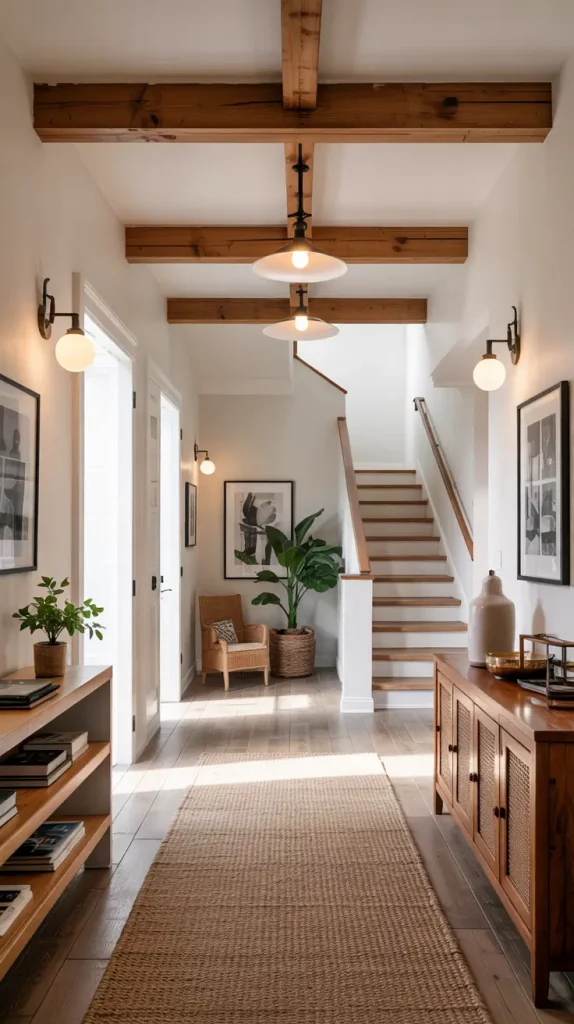
Personally, I have found that the idea of Kelly Wearstler that she incorporates of using unexpected detail is great in stairs, where it is better to add one unique design feature that makes the hallway a place, not a place to come through.
I would also add some options of the sound-dampening materials to this part; options that are necessary in the multi-level homes.
Reimagine Hallway Bathrooms With Sleek, Functional Layouts
Hallway bathrooms require a balanced approach: stylish enough to impress, functional enough for everyday use. My typical initial design is a layout that is space efficient and includes floating vanities, corner sinks or wall-mounted toilets to make the most of every inch. These are the modern elements that will predetermine a renovation in 2026.
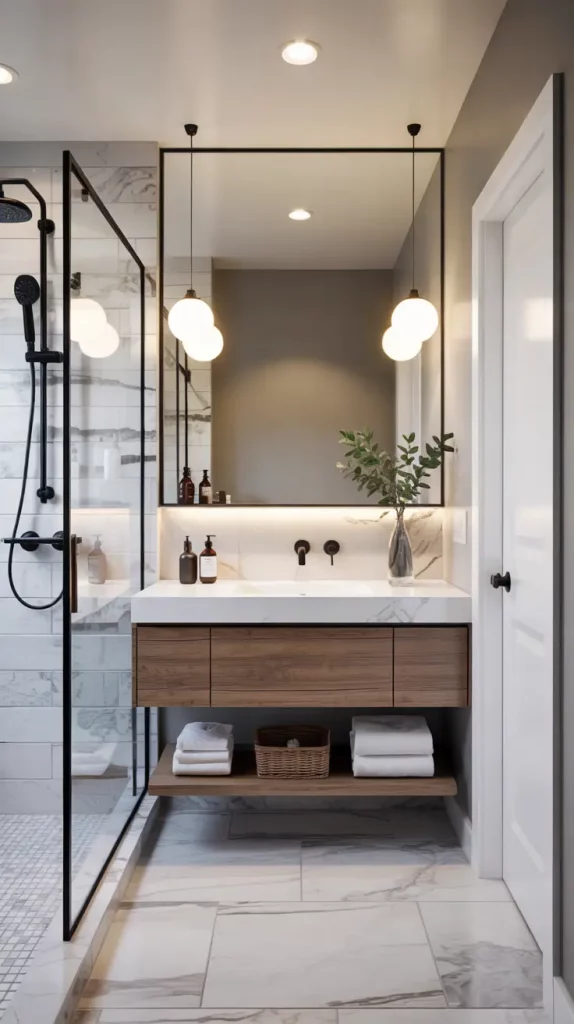
When it comes to the materials, I like big-sized tiles and matte fixtures and gentle ambient lighting. The medicine cabinet is recessed whereas a frameless glass shower is used to increase visual space. Wood accents are warm to ensure that the modern appearance is softened.
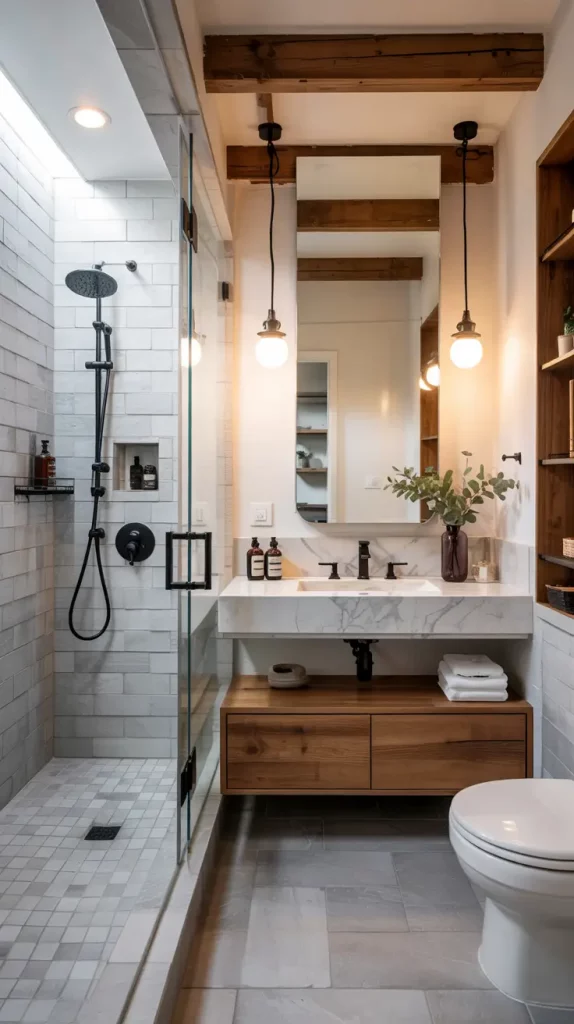
In my own experience as a professional, I have encountered thousands of magazines, magazines, and magazines, whether it is Dwell or House Beautiful, that have spoke about the emerging trend of combining naturaltextures with a minimalistic shape in bathrooms. I have employed this strategy in my designs since it creates a good balance between serenity and elegance.
Another addition that would be made could be the addition of the water-saving feature, i.e., dual-flush toilet or aerated taps, which are now a core requirement in a 2026 remodel of the bathroom.
Create Visual Flow With Hallway Color Palettes
Color has the power to transform a hallway instantly. In palettes selection in 2026 remodels, I pay attention to harmonious colors that make a continuation between the rooms soft neutrals, warm clay colors, and subdued ones. Such colors make the corridors look purposive and peaceful.
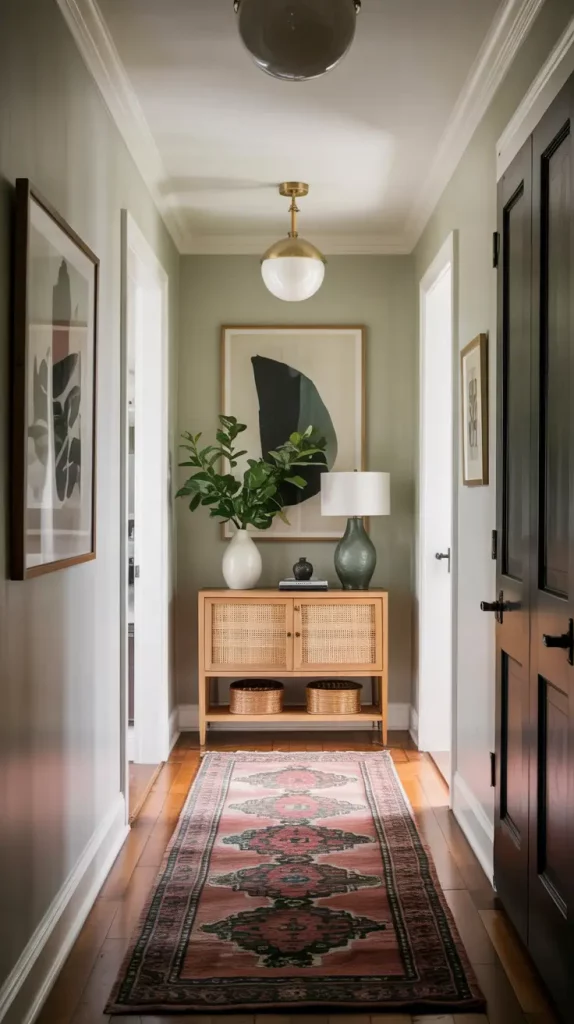
I normally supplement such palettes with natural wood trim, matte black accent or brass hardware. There is a subtle patterned runner which connects it all together and assists in moving around the space. Coordinating tones in artworks make the break of colors coherent and harmonious, not crowded.
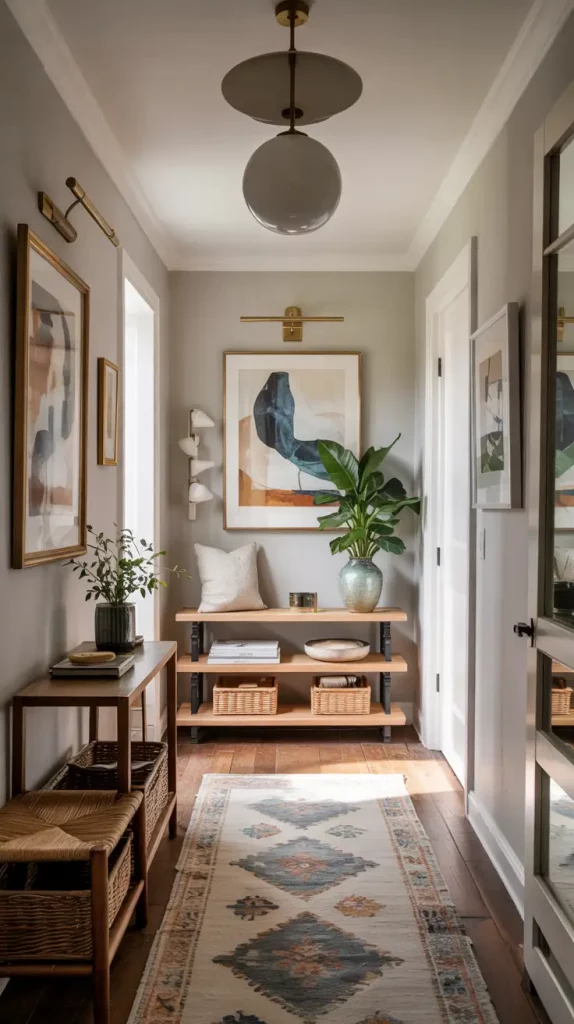
According to the suggestions of Sherwin-Williams color experts, my design philosophy is based on the idea that the colors help tie spaces together and do not create discontinuities. I have been using this technique over the years since it incorporates the home to look together.
To give this part an extra boost, I would also add the information about the choice of finishes, matte or satin, and how each of them influences the light and atmosphere.
Elevate Entry Hallways With Statement Decor Pieces
When I design entry hallways, I aim to create an immediate sense of style and welcome. By 2026, the home will be filled with elements of statement demonstrating the decor of the home as soon as a person enters the door, where large mirrors, sculptural consoles, or loud art pieces will be present. I am very concerned with balancing the space, meaning that pieces should not overwhelm the space but should provide balance in terms of aesthetics and functionality.
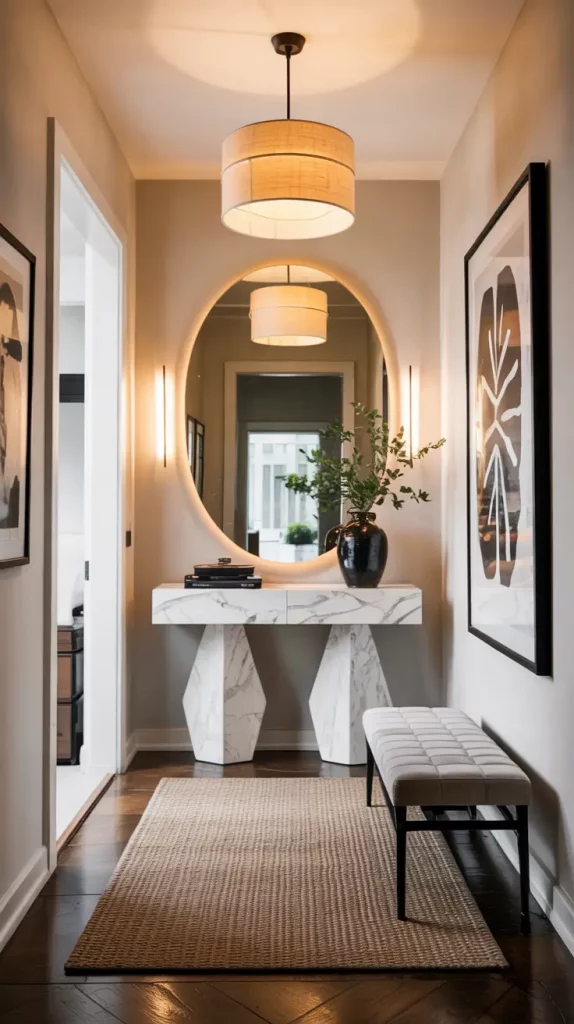
In the case of furnishings, I would usually select a modern console table that has useful drawers, a big round or curved mirror that promotes the reflection of light, and a prominent vase or sculpture to give the design a sense of place. Low-profile bench/ ottoman helps in introducing extra design but without making the space cluttered. Every object has its purpose and contributes to classical beauty to the entrance.
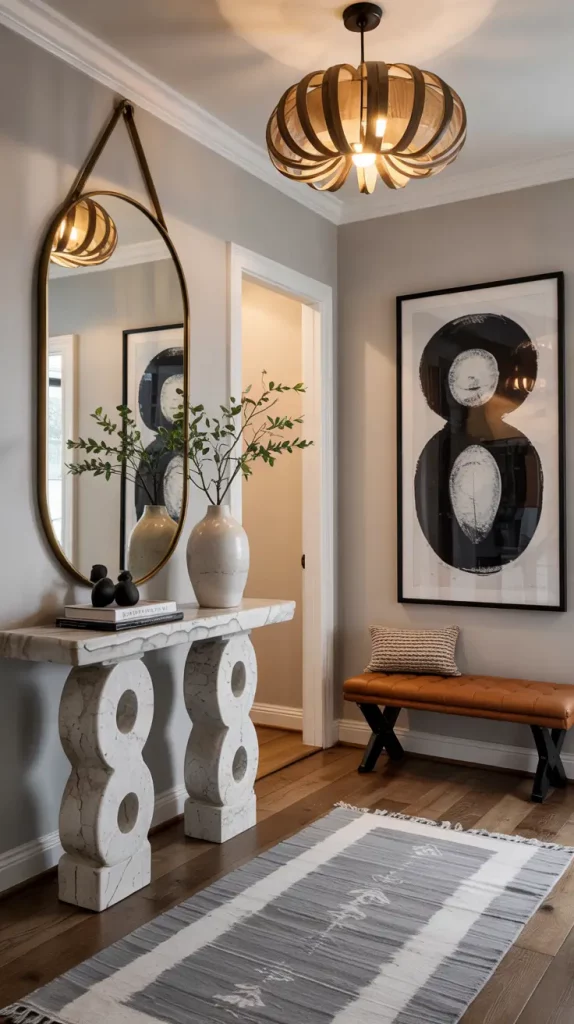
Personally, I have read in House Beautiful that designers who showcase their designs usually point out that the entryway must look edited and not theatrical. This philosophy has really come in handy; each ornamental object that I have received offers practical benefit, be it in the way of a storage place or a way of creating a sense.
To fulfill this segment, I would include recommendations on ambient lighting based on the type of lighting, it should be a pendant or linear one which would bring in the warmth and the sophistication.
Improve Traffic Flow In Busy Hallways
As someone who frequently remodels high-traffic areas, I understand how vital flow and accessibility are. Hallways need to be designed with care that does not over-crowd with people, but should move as much as possible without jeopardizing the aesthetic. I usually do this through simplifying the storage, furniture arrangement by placing the items where they make sense and lighting the room to be easy to see and to be safe.
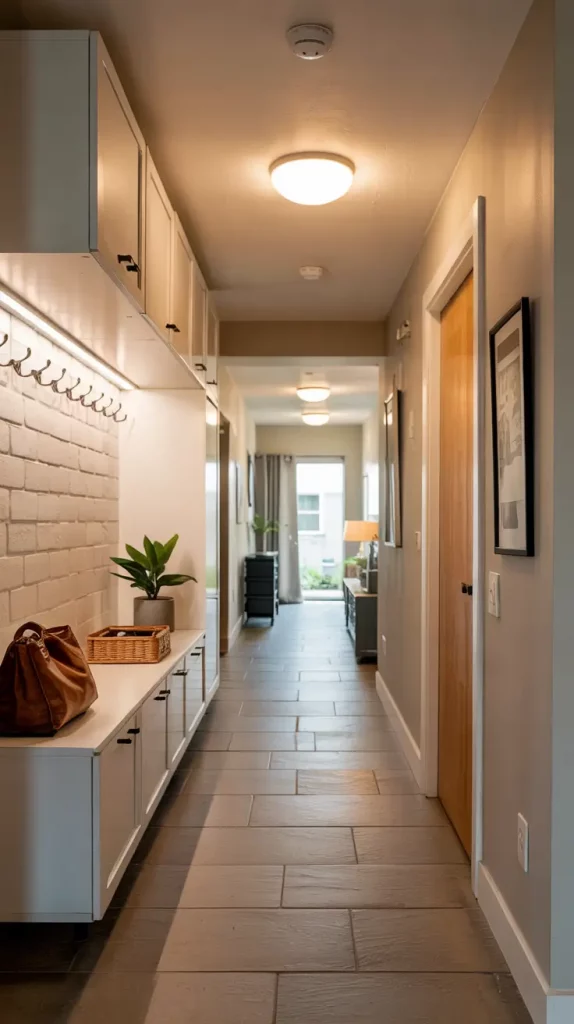
To ensure practical use of design, I use the wall mounted hooks, slim storage units, recessed lights and flooring that is not slippery. These characteristics make the hallway remain active even when there is maximum activity. A narrow bench or stool may be provided where there is room, and it must not in any case impede walkways.
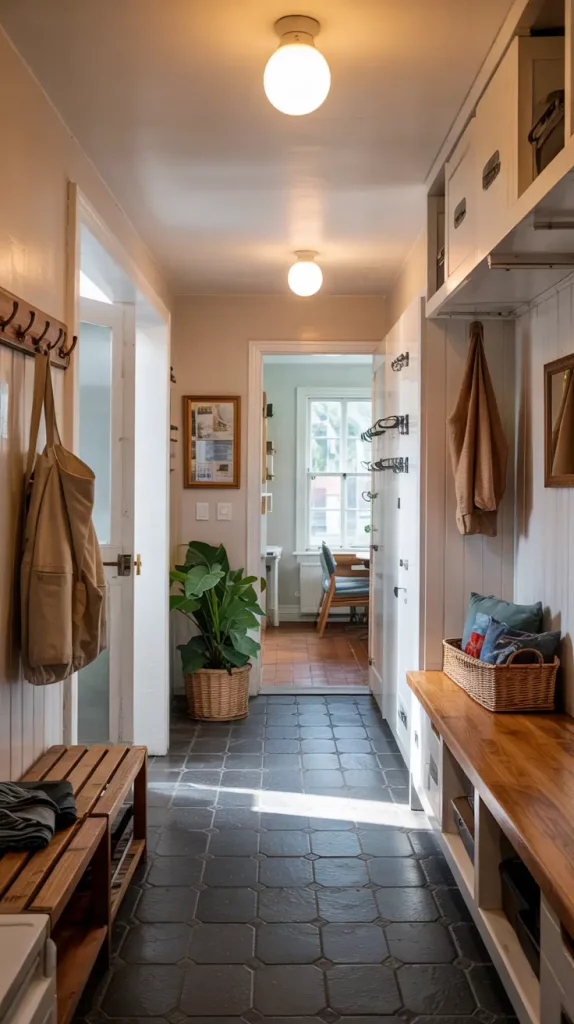
According to my experience, numerous specialists at Architectural Digest emphasize that the visual clutter has to be removed in order to enhance flow. I have embraced this advice by incorporating secret storage facilities and diffused non-directional lighting to facilitate flow.
To further elaborate on this issue, I would include information about ADA-compliant spacing that is becoming more important in relation to inclusive design in a contemporary home.
Install Eco-Friendly Hallway Materials For Sustainable Design
Sustainability has become a top priority in 2026, and I often begin hallway remodels by selecting eco-friendly materials that are durable, beautiful, and environmentally responsible. Good options that make indoor environments healthier are bamboo, reclaimed wood, recycled glass, and low-VOC paints.
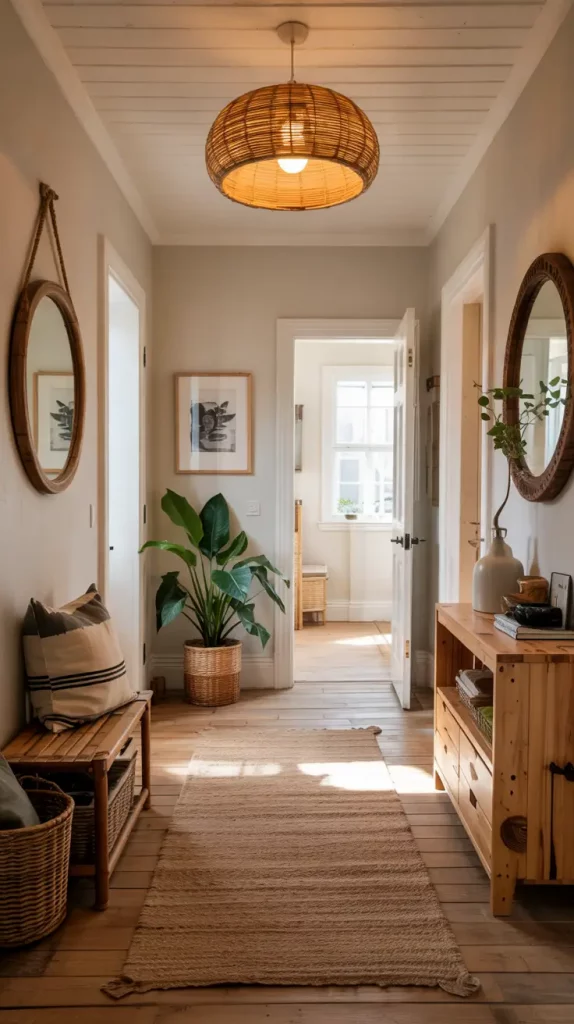
I would work with bamboo floor or cork tiles in most of my eco friendly hallways, incorporating them with natural fiber rugs, organic cotton fabrics and sustainably sourced wood trims. The other necessary element is LED lighting, which greatly decreases the energy consumption but provides superior lighting.
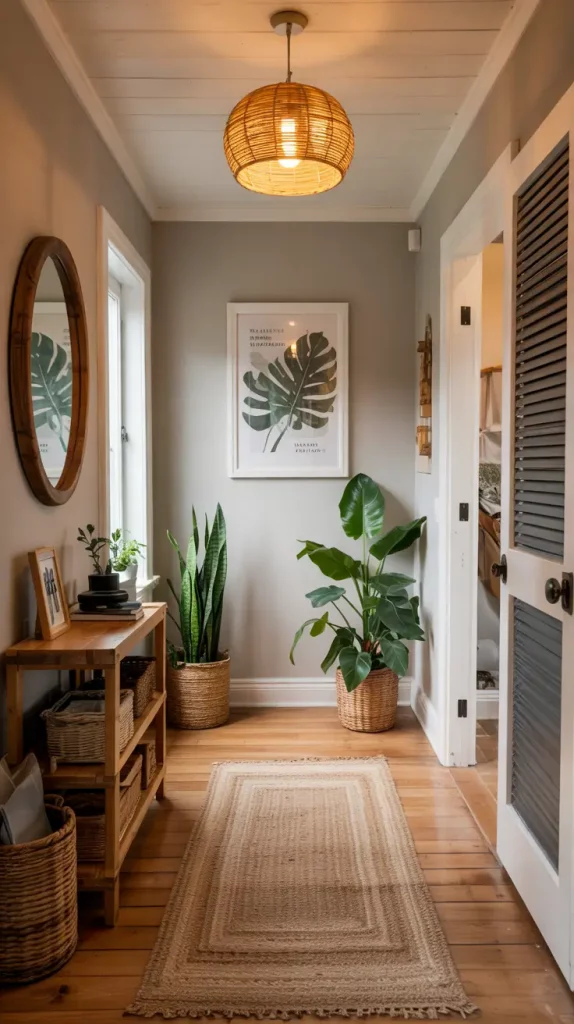
In my professional opinion, such articles as Dwell constantly remind homeowners that they should use renewable materials to reduce the environmental impact in the long run. I have personally observed the impact of these decisions in terms of air quality and life span in busy places.
To this list, I would suggest smart thermostats or motion-sensitive lighting to add to this section to continue the theme of being environmentally friendly in living.
Incorporate Hidden Storage For Minimalist Hallway Appeal
A minimalist hallway thrives on clean lines and clutter-free surfaces, so I often integrate hidden storage to maintain this aesthetic. By 2026, smooth furniture, flat walls, and hidden storage will be the norms of the minimalist modern design. The latter aspects enable the owners of the homes to enjoy smooth corridors without losing functionality.
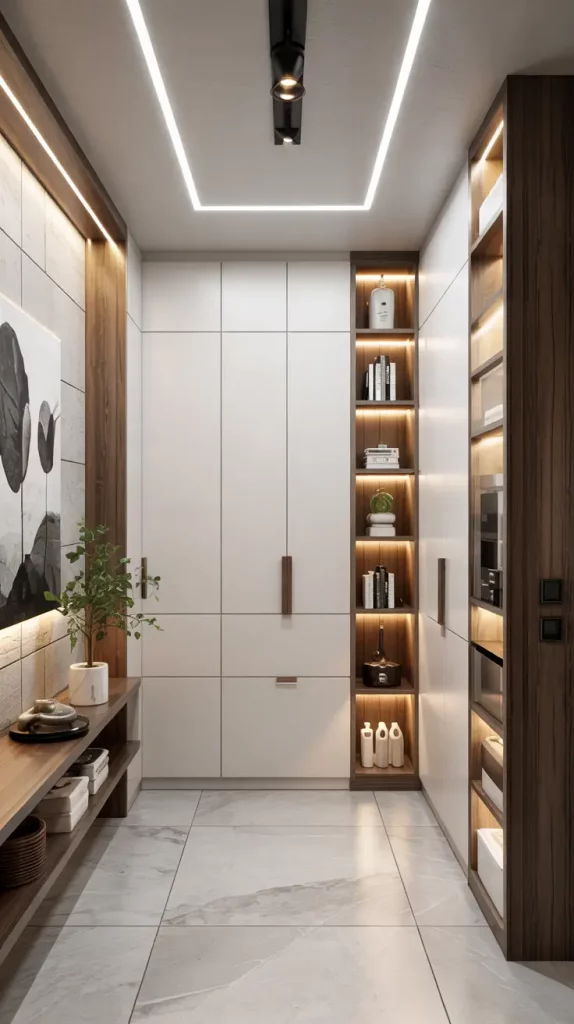
In this strategy, I often incorporate in-built drawers, hidden coat closets, recess shelving and in-wall storage that are part of the interior design. Touch-latch doors or handleless fronts are also important to me to have a simple and elegant visual profile. Such options provide a sleek appearance, and they have a large storage capacity.
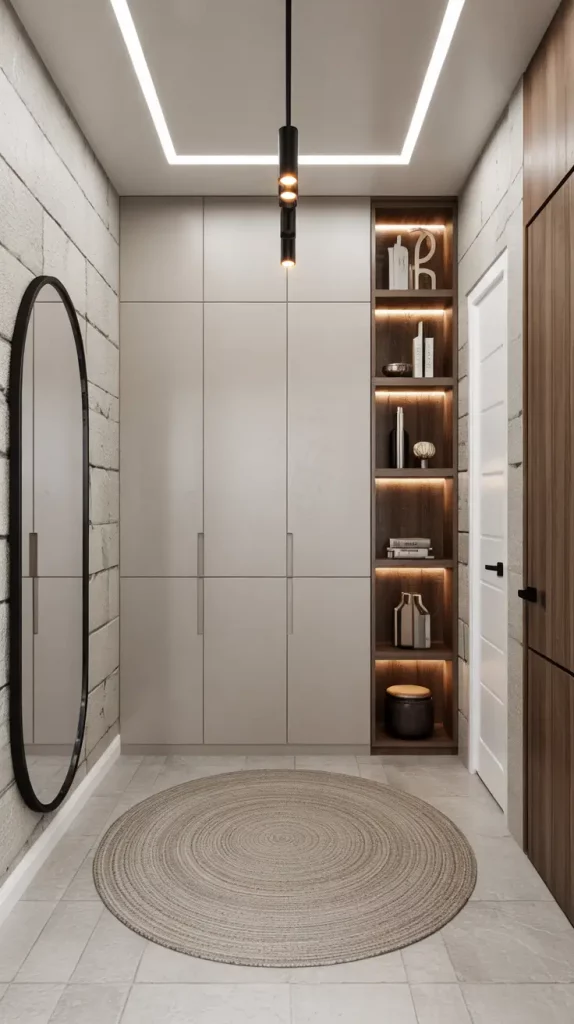
A lot of designers mentioned in Elle Decor emphasize on hidden storage to keep tranquility within access points. I share this view and I can confirm that the home owners will value the beauty and practical features these solutions offer.
In order to improve this part I would provide some suggestions on how to incorporate wiring channels or concealed charging points in cabinets to have a cleaner and cable free appearance.
Use Mirrors To Expand And Brighten Tight Hallways
Mirrors are one of my most trusted tools when remodeling tight hallways. They mirror both natural and artificial light making closed spaces look bigger and open. Oversized mirrors, gallery-style mirror collections, mirrored panels are being used in 2026 by designers to turn dark or narrow corridors.
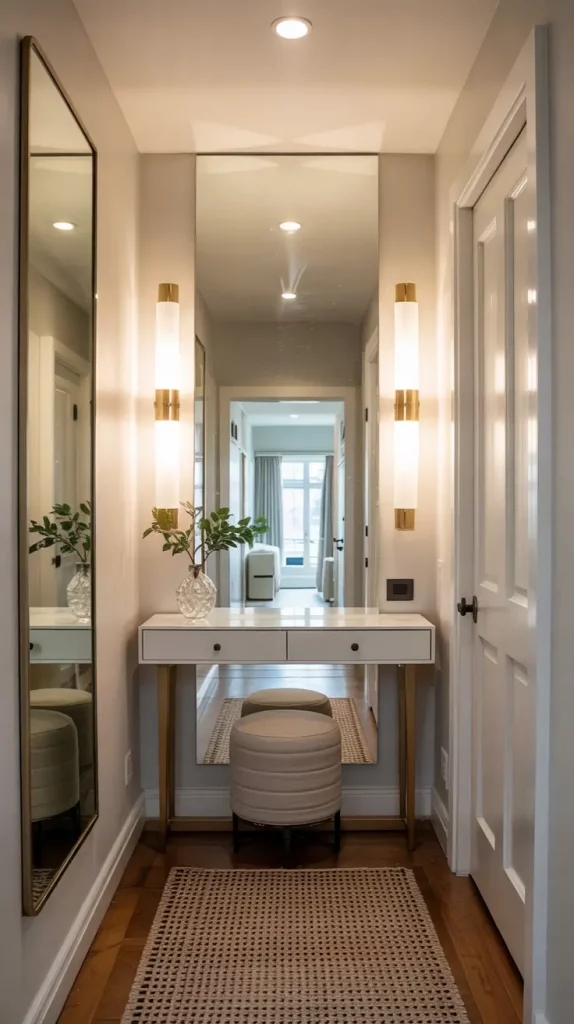
I would install voluminous vertical mirrors or entire wall reflective surfaces to move the eye up and outwards. In combination with the luxurious sconces on the walls, or the accessibility of the sconces in the walls, the mirrors increase the brightness and establish the visual harmony. Subtle decorations below mirrors and thin console tables will ensure there is no overload on the design.
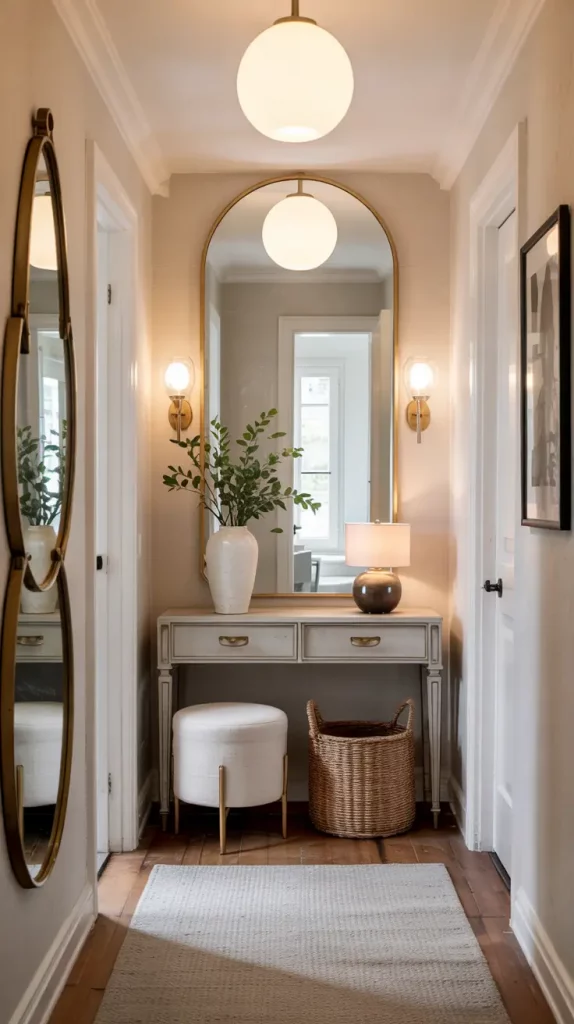
Through experience, I have followed famous interior stylists in HGTV repeatedly prescribing mirrors to expand narrow areas. I have been using this tips to great effect on my clients when they are seeking immediate expansion in visuals.
In case I had to include something, I would suggest anti-fog or colored mirror finish to those home owners who want to look into something unique in modern appearance.
Add Artwork Galleries For Personality-Driven Hallways
Hallways can become stunning personal galleries when curated thoughtfully. I frequently turn blank walls in passages into works of open art, with photography, prints, or multimedia on them. This makes the transitional path ways emotional and interesting design experiences, which expresses the personality of the homeowner.
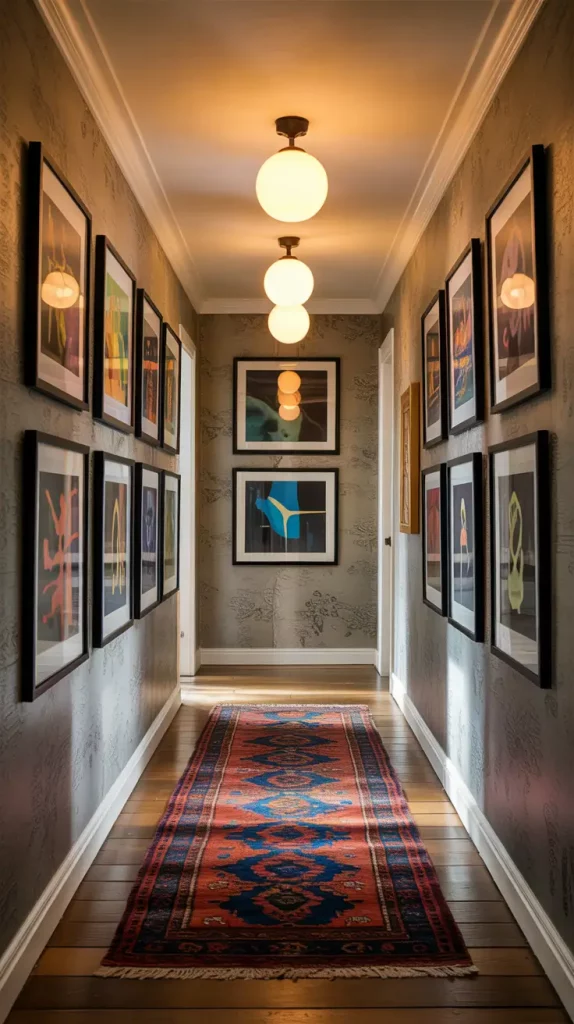
I normally use floating frames, grid patterns or eclectic designs depending on the style vision. Each piece is highlighted by picture lights or adjustable track lighting. A slight runner or textured wall finish assists to root the gallery visually, as well as making the design consistent.
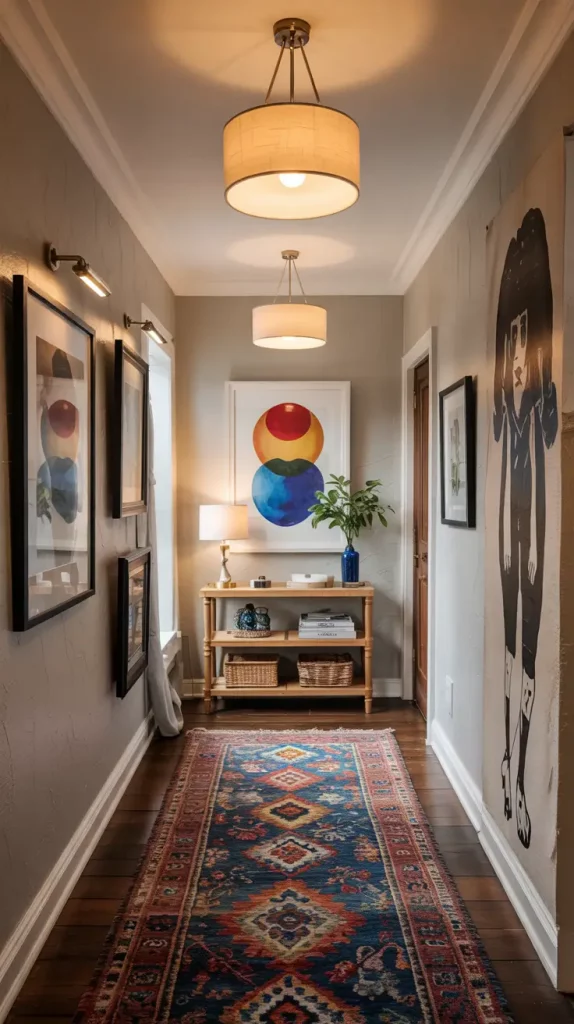
In my experience, interior stylists in Domino usually advise to balance and mix frame sizes in order to create dynamic but harmonious compositions. I do use this piece of advice regularly as it is deep and at the same time not too complicated.
I would also add tips on how to select artwork scale in order to add instead of clutter the hallway, as an additional richness to this section.
Integrate Smart Home Features For A Modern Hallway Experience
In 2026, I find that hallways are becoming key zones for smart home integration. It can be automated lighting, activated sensors to control climate, or an app to control decorative features, all these innovations enhance convenience and efficiency. I usually integrate technology into remodels but in a less bold way to ensure that the image remains clean and at the same time, functionality is added to improve the daily living.
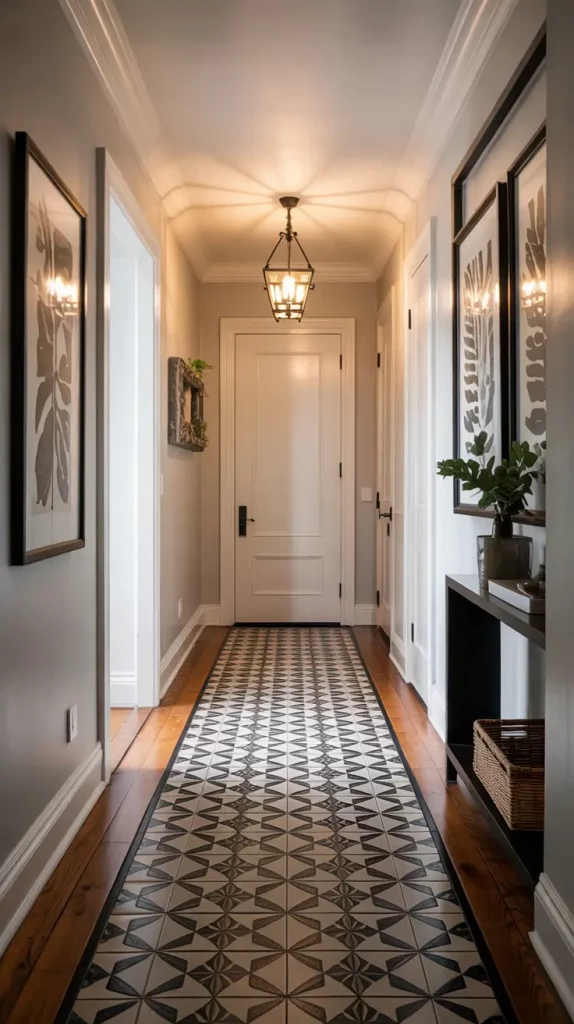
To allow a smooth integration, I employ motion-sensor lights, smart thermostats at the crossings of hallways, concealed charging points, and digital art frames that can switch the image accordingly to the decision of the user. Also adding life to hallways are smart dimmers and ambient color-changing lights, which do not appear overly techy. These tools are combined perfectly with the contemporary design ideologies.
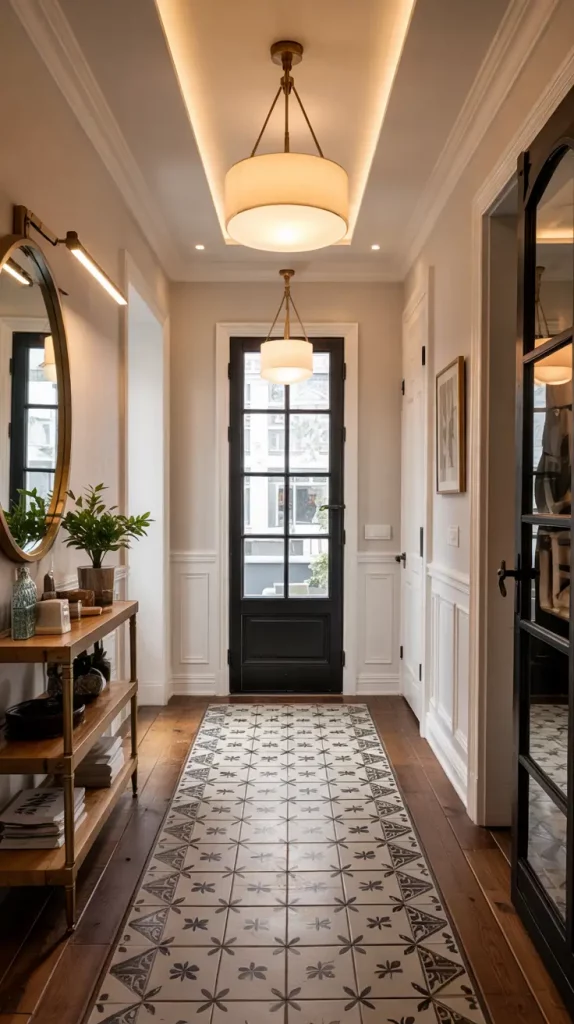
Based on suggestions by Wired Home, smart features are to be done behind the scenes, and not to be in the limelight of the space. I have applied this philosophy to my own projects, and it has made it much easier to use.
In case of the expansion of this section, I would also add the recommendations on how to incorporate security features, e.g., covert hallway cameras or smart locks, which can be useful in multi-story houses.
Refresh Hallway Doors With Trending 2026 Designs
Hallway doors often define the visual rhythm of a corridor, and in 2026, I’m seeing a shift toward sleek, textural, and architecturally interesting styles. In the remodelling, I will pay attention to the doors that will complement the entire look of the house but at the same time offer strength and privacy where necessary.

I usually deal with flush wood door, reeded or fluted paneling, matte black or brass hardware and soft-close hinges. Frosted glass doors are perfect in such rooms as home offices, as they do not need much light, and still provide a separation. Depending on the design, pocket or barn doors can also modernise a corridor and save space.
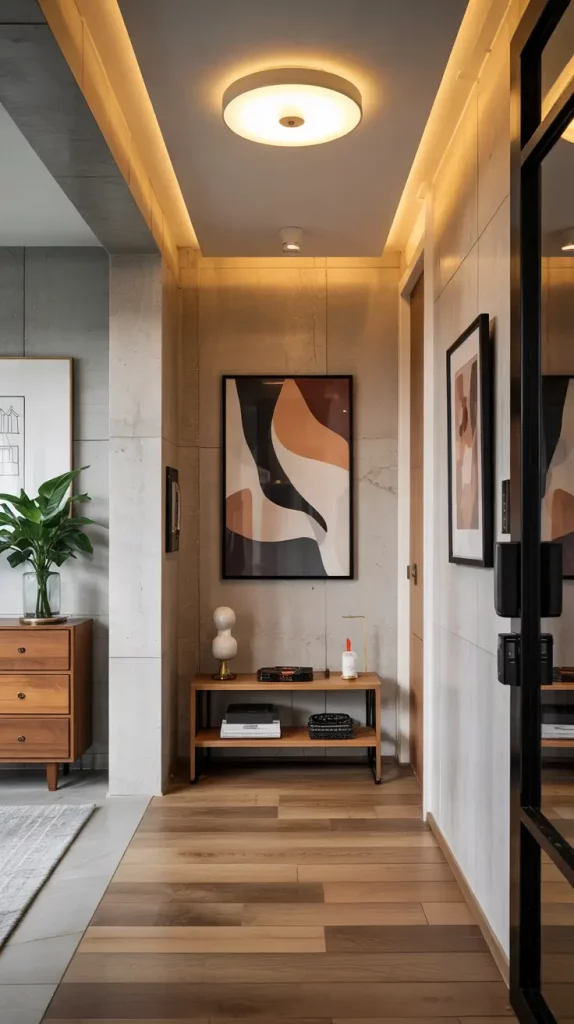
In Architectural Digest, designers include the emphasis on the quality of the doors in uplifting the transitional space. I agree with this tip, because modernized doors may entirely change the atmosphere and luxuriousness of the corridor.
To make this section better, I would include an addition of tips on sound-rated door choices, which increase privacy with bedrooms and home offices along the corridor.
Create Cozy Ambiance With Layered Hallway Lighting
Layered lighting has become a defining design strategy in modern hallways. I deem lighting in three layers, namely ambient, accent, and task. The given technique helps to avoid the feeling of flatness and over clinics of the hallways and adds depth, a sense of warmth and visual softness.
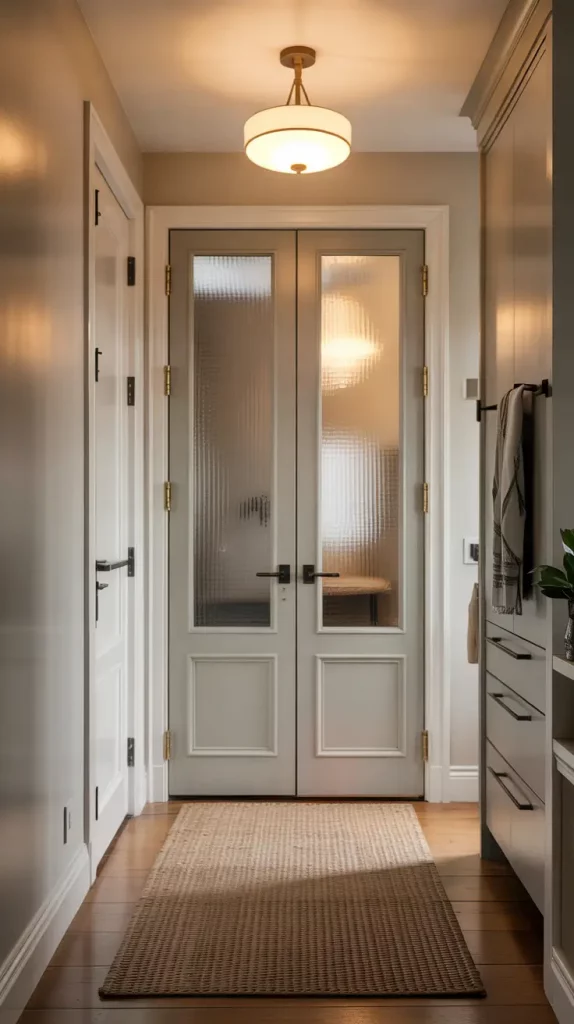
In the case of fixtures, I would usually mix recessed ceiling lamps with sculptural sconces and low profile LEDs between baseboards or crown mouldings. This provides a gentle light effect down the corridor. Consoles may also have small accent lamps on their tables to create an extra glow that is comfortable and cozy.
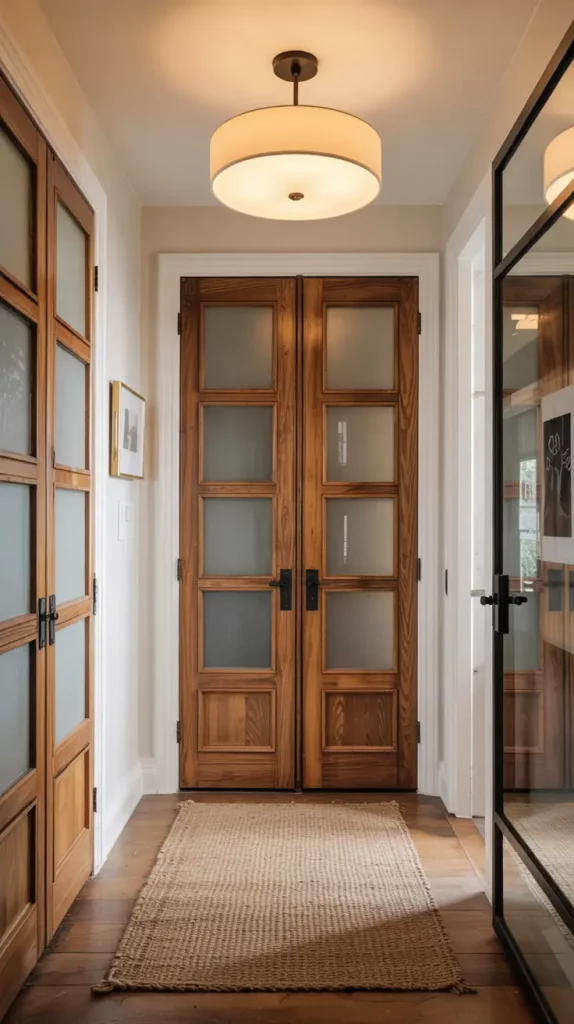
Lighting and Homes Magazine experts underline that warm, dimmable lighting in the hallways is very beneficial to improve the mood and functionality. I have long been using this principle and I realized that it adds versatility in the daily and evening use.
To bring this section more to the point, I would also add intelligent lighting system that would control the brightness and change the temperature of colors across the day.
Redefine Hallway Ceilings With Bold Architectural Choices
Ceilings in hallways often go unnoticed, but in 2026, I see them becoming a major design feature. I make use of coffered ceilings, wood slats, or curved architecture regularly to enliven it. These types of ceilings make the hallway look higher and attract the eye to the upwards movement.

In the choice of the materials, I would choose matte plasters, warm-colored woods, or minimalist beams that will not be in conflict with the rest of the architecture. I usually incorporate linear LED lights or recessed lightings to emphasize on texture and pattern. Ceiling detailing can be done even in very finer details which can make a difference to a plain hallway.

Influential designers in Dwell frequently mention the concept of fifth-wall design, in which ceilings are considered unexploited creative spaces. I agree with this value and use it in various remodels to make hallways to look like curated spaces, rather than forgotten spaces.
In order to fill this section, it could be provided with some recommendations on the use of acoustic ceiling materials, which could be effective in busy or echo-prone corridors.
Design Hallway Nooks For Seating Or Functional Storage
Hallway nooks have become one of my favorite features to design—they turn unused space into highly practical moments. Nooks can be made into seating areas, storage space, or a decorative display, carved into an alcove or made on a broad wall. These additional features add both beauty and function to a somewhat in-between space.
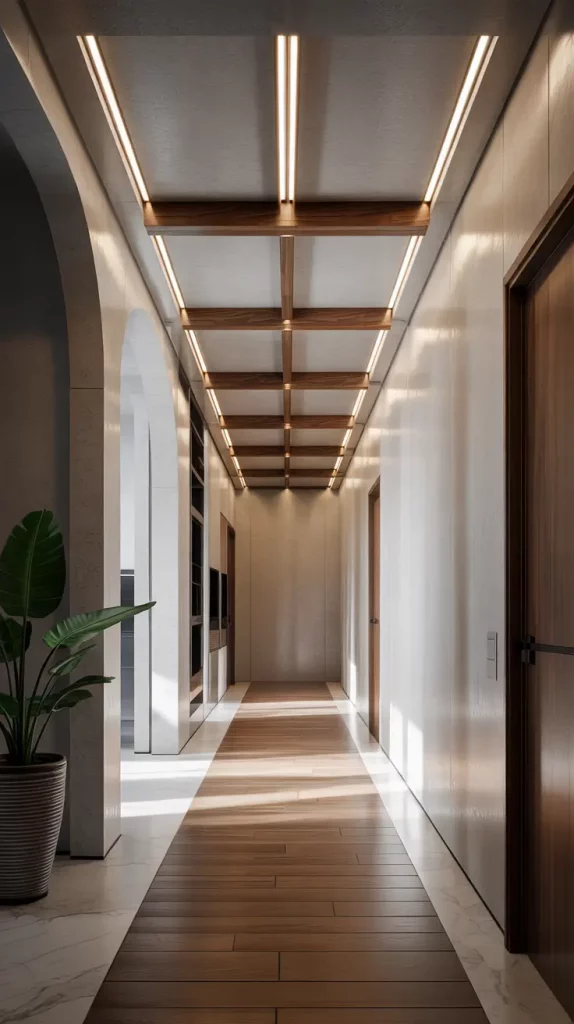
In furnishing nook I will typically incorporate built-in benches that have storage beneath, upholstered cushions, overhead shelves, and low lighting to make it a cozy place. In the event that the nook is applied to reading or working, I include a small desk, task lighting, and wall organization tools. All design features increase comfort and usability.

Hallway nooks have been extolled as creative ways of using squares of space in publications such as Apartment Therapy in my own professional experience. This has been used by me with numerous clients that require working areas but not an increase in the size of their home.
Having said that, I would add some suggestions regarding family-friendly functionality like adding concealed charging ports or backpack hooks to this.
Use Textures To Add Depth To Simple Hallway Layouts
Textures are key to transforming simple hallways into expressive, multi-dimensional spaces. I apply a combination of textured paint, natural fibers, warm wood colors, and nuanced patterns in halls when I remodel them so that they are not too visually overwhelming. The effect of this layering technique is a very welcoming ambience.
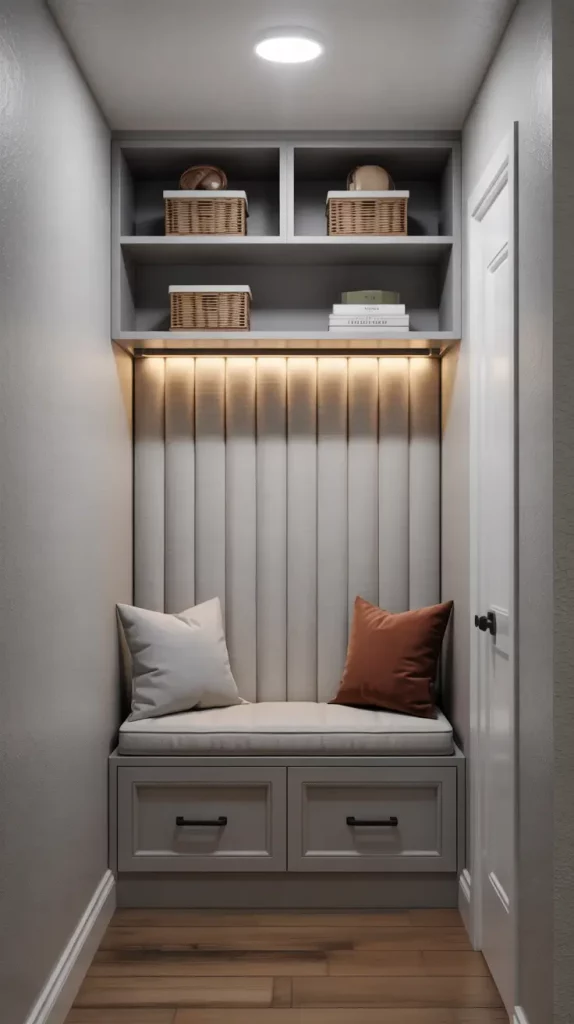
To make it tactile-rich I usually apply grasscloth wallpaper, fluted wall panels, woven runners and benches covered in linen. A rough ceramic vase or sculptural wall sconce can also make the design. Complementary textures also provide cohesion and depth as well as warmth.
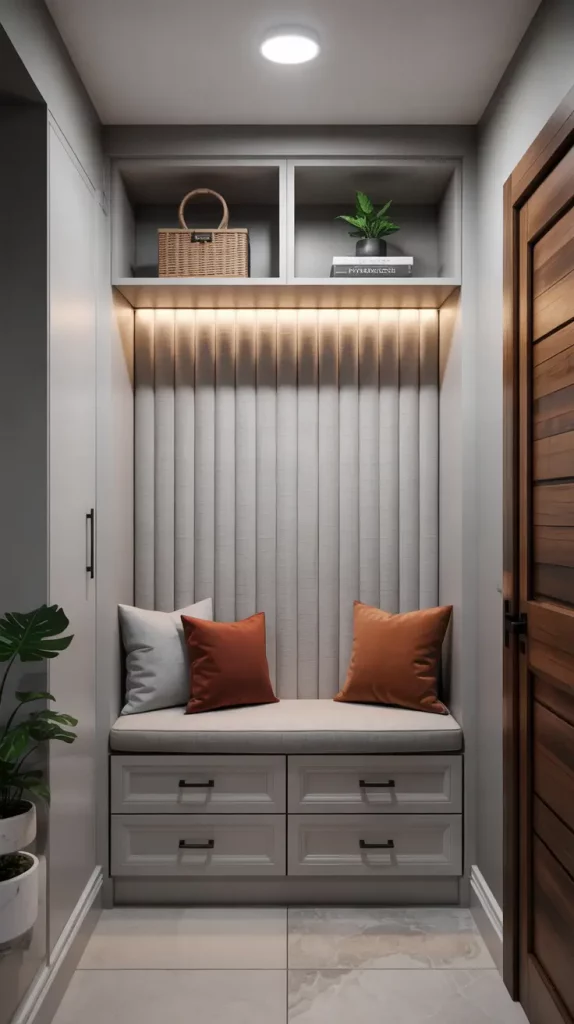
A lot of designers in Veranda Magazine stress out the fact that texture is used to distinguish a space without depending on the vivid colors. I have applied this knowledge on many occasions in a hallways that are either minimal or neutral.
I could include tips on blending natural and synthetic textures to unify the durability and beauty in the section to make it stronger.
Choose Hallway Hardware That Complements Modern Interiors
Hardware may seem like a small detail, but in hallway remodels, I view it as one of the most powerful finishing touches. Hardware trends in 2026 are based on matte metals, minimalist designs and durable finishes that can be used to blend with the modern designs. These subtle details are used to connect the whole corridor.
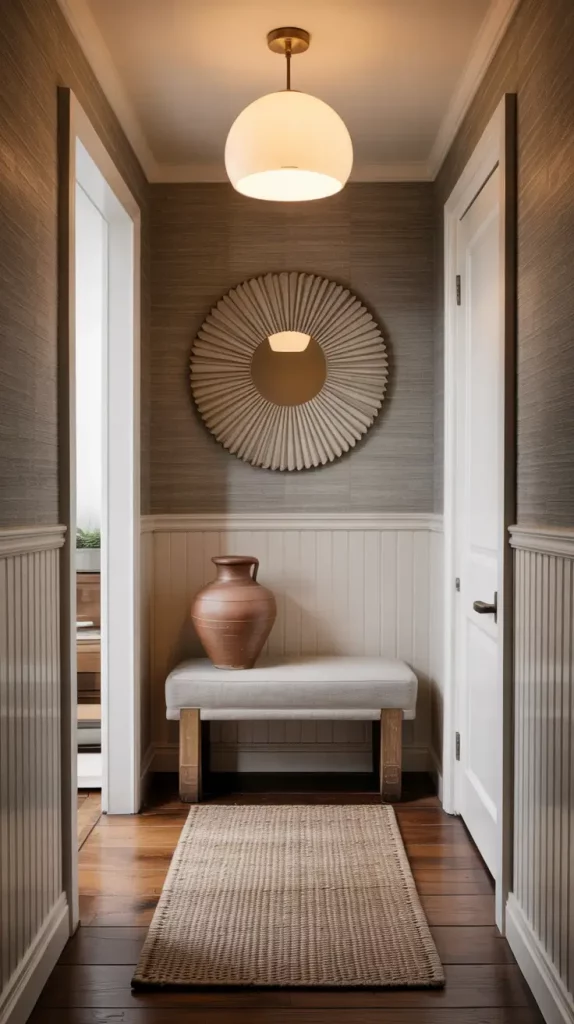
When working on my projects, I usually combine the use of matte black or brushed brass hardware, warm wood doors, and warm wood cabinetry. Handling on slimmer, along with hidden hinges and magnetic lockers keep the lines clean and aid in a sleek and un-cluttered appearance. To make a unified finish, door stops and hooks and railing brackets must be matched.
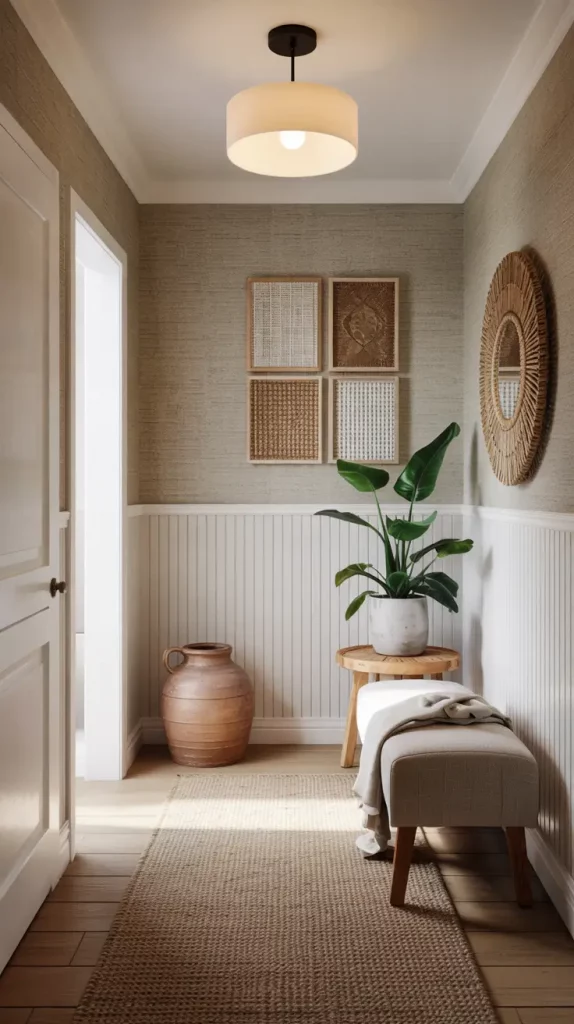
According to the hardware experts quoted in Home Remodeling Today, quality finishes are more aesthetical and durative. I completely concur, high-quality hardware upraises ordinary everyday utilization and gives the hallway a subtle aesthetic.
To add more to this section I would propose adding child safe or soft close features which will enhance comfort and ease of accessibility by the families.
Enhance Hallway Flooring With Durable, Stylish Options
Flooring plays a pivotal role in hallway design, especially because these areas endure heavy daily foot traffic. I usually use the materials that are durable at the same time have modern aesthesics, engineered hardwood, porcelain tiles, luxury vinyl plank, and polished concrete are the best materials to use in the remodel of 2026.
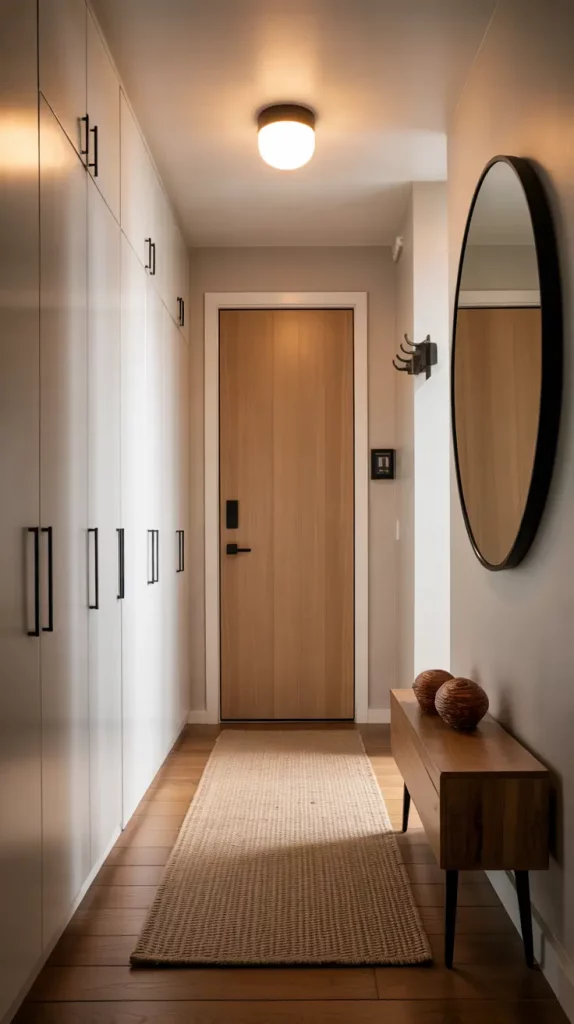
In designing hallways, I put into consideration texture, acoustics, and maintenance. An engineered wood floor finish should be in a matte finish as it is warmer, and porcelain tile is much stronger and resistant to stain. Patterned runner is not only comfortable but also safe to high wear parts. The combination of these factors produces a stunning and yet strong hallway.
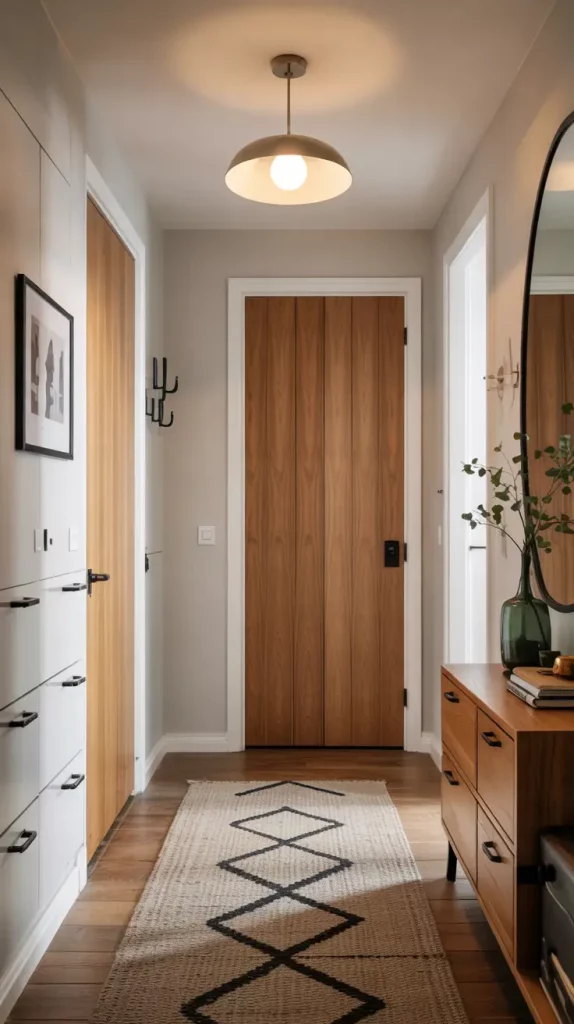
I have observed in my experience flooring experts in floor and decor focusing on material that is durable and attractive at the same time. I completely agree- hallway floors should not be subjected to everyday usage without being aesthetically pleasing.
In case of extending this section, I would also include information on the application of slip-resistant surfaces, which is particularly helpful in the household with children or very old people.
Install Sliding Or Pocket Doors To Optimize Hallway Space
When working with tighter hallways or homes where every inch counts, I often turn to sliding or pocket doors as a smart space-saving solution. The door styles do not require swing clearance and therefore the hallway is more open and useful. Pocket doors are now being further streamlined in 2026 remodels with interiors having more customizable finishes and smooth mechanisms.
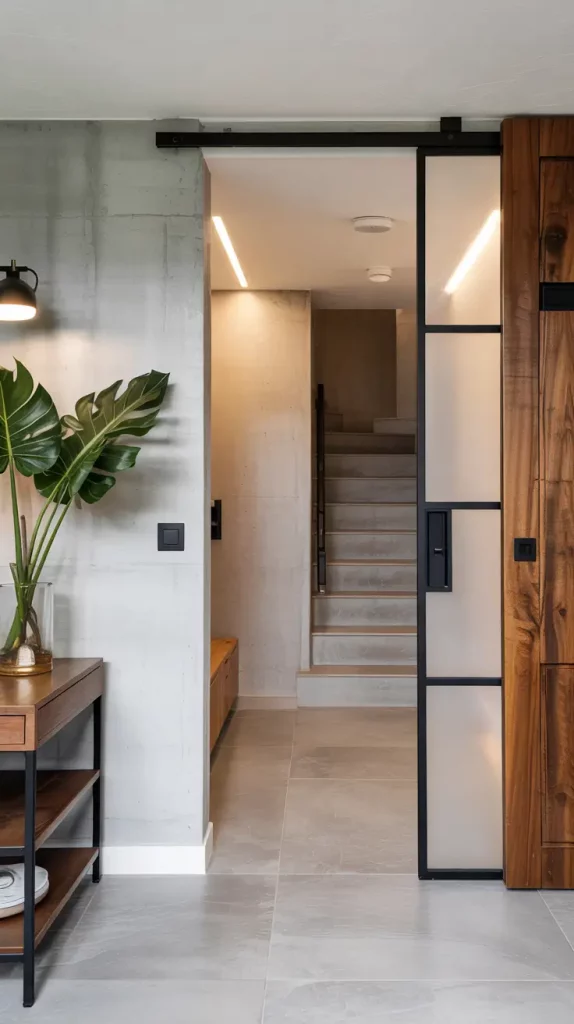
In terms of design, I prefer frosted or ribbed glass sliding doors to enhance transmission of light or the use of wood panel pocket doors that can be perfectly built into the wall. Modern look is promoted by sleek matte black or brass hardware that is very durable. These doors blend well with minimalist, Scandinavian as well as contemporary interiors.
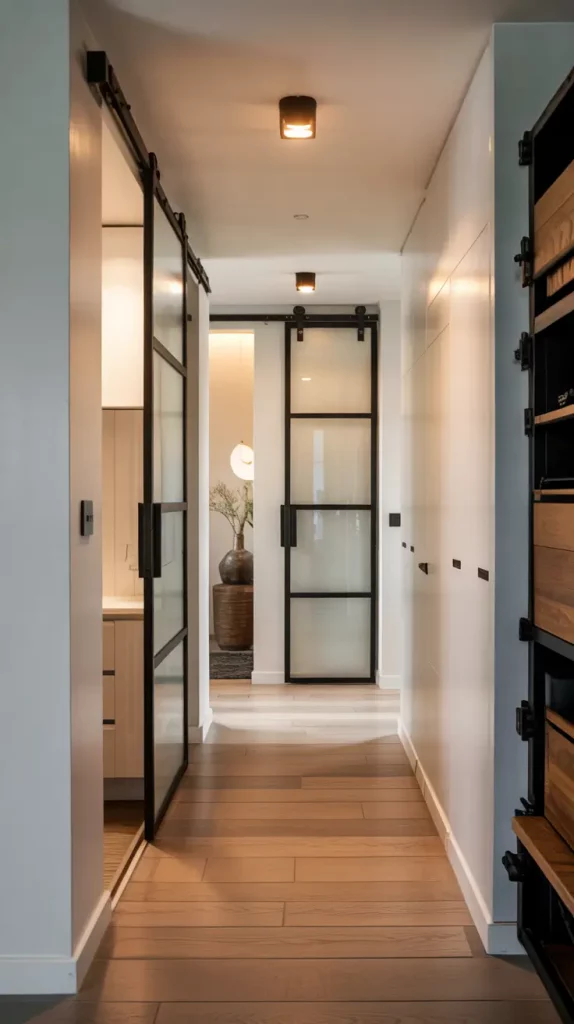
It is my personal experience and backed by knowledge I have gained in Architectural Digest that homeowners like the enhanced flow pocket doors give them, particularly in large-floorplan layouts or small-floorplan houses. I like to recommend them where there is a bathroom, a laundry area or at home offices where flexibility is wanted.
To further elaborate on this part, I would provide instructions on the soft-close tracks, which will enhance the functionality, and long life, particularly in family homes.
Personalize Hallway Entryways With Customized Décor Themes
Entryways set the emotional tone for the rest of the home, so I often recommend customizing hallway décor to reflect personal style. Minimalism, bold, or home rustic; regardless of the desired look, 2026 designs have plenty of materials and accents that can be used to enhance such transitional spaces. I never fail to begin by investigating the lifestyle and beauty choices of the homeowner to make a completely personal atmosphere.
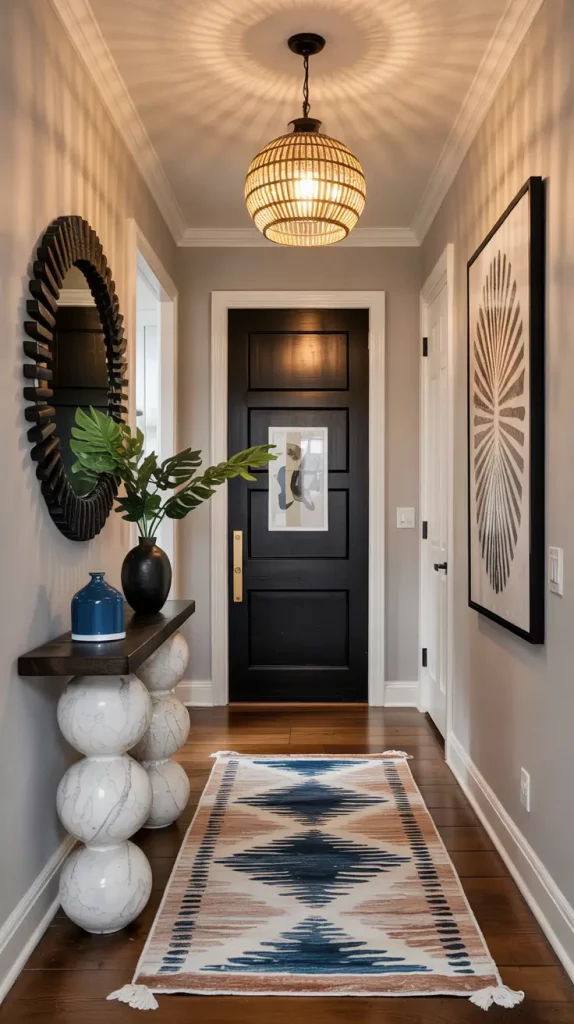
I also normally use high-end curated art, decorative bowls, sculptural lighting, themed rugs, and functional storage items that support the theme of design. The utility and beauty can be achieved through a console table that is designed with deliberate decorations (books, candles, flowers arrangements etc.). A coherent color scheme will be used to unite the entry point with the rest of the house.
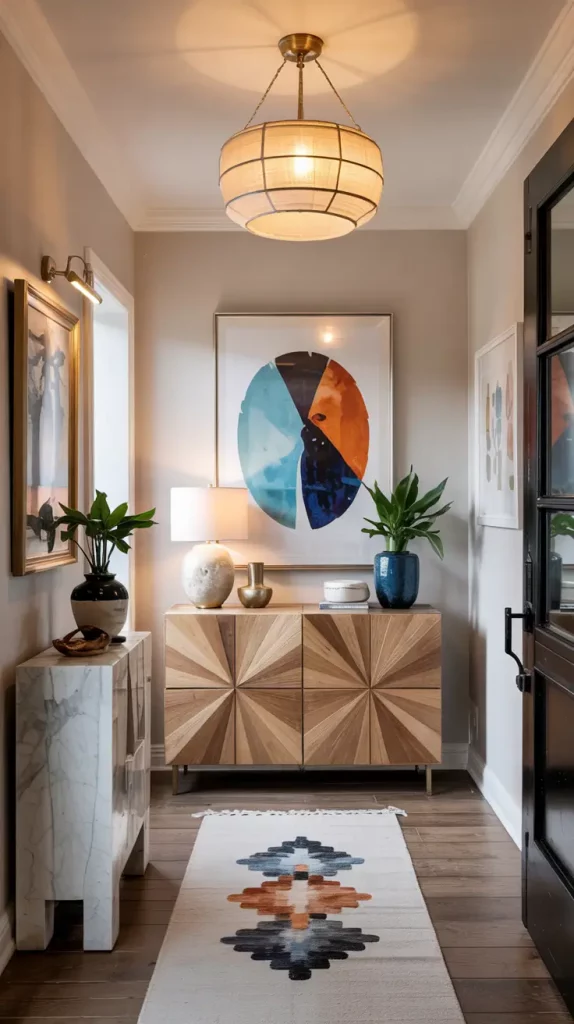
House Beautiful experts tend to stress that the ability to personalize a space is what transforms it into both an appealing sight and an aspect that has a deeper meaning. I find this reflected in my own design work there is a warmer touch to the home that is made when it makes a statement about the people who are staying.
To enhance this part, I would also include recommendations on scent diffusers or changing the seasonal decoration to make the entryway fresh and interesting.
Improve Hallway Acoustics With Sound-Absorbing Materials
Noise control is an often overlooked but incredibly important aspect of hallway remodeling. Hallways can be very effective at amplification of sound in busy or multi-level homes and I will often use acoustic solutions to provide a more calm and comfortable experience. These aspects enhance privacy and ambiance in the house to a great extent.
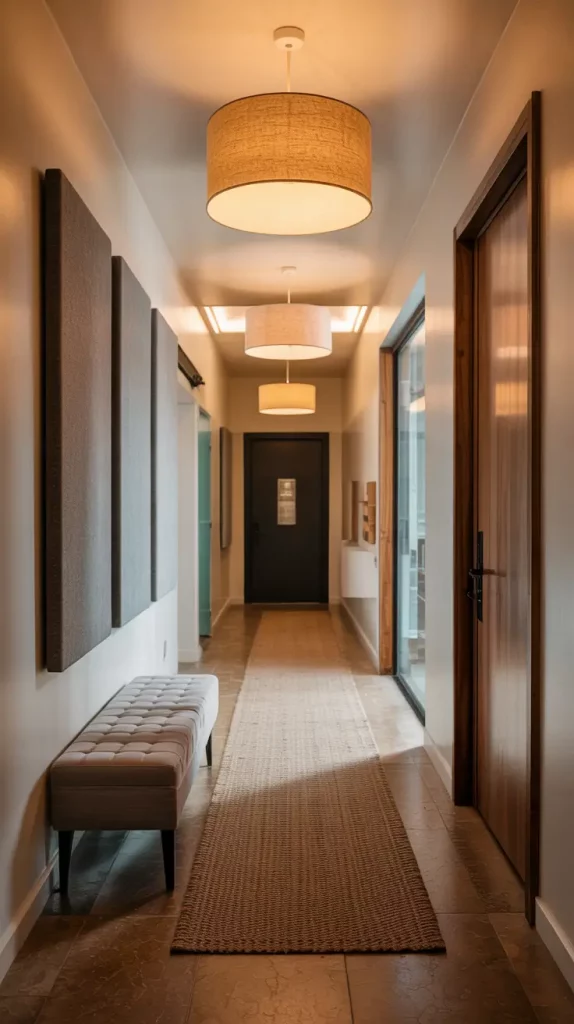
In improving acoustics, I use such materials as wool runners, upholstered benches, textured wall paneling, cork flooring, and acoustic ceiling tiles that are made to look like decorations. Even soft furnishings, e.g. drapery, or fabric wall art, can be used to absorb surplus sound. Fabric-shaded lighting fixtures are also a low-key contribution to sound management.
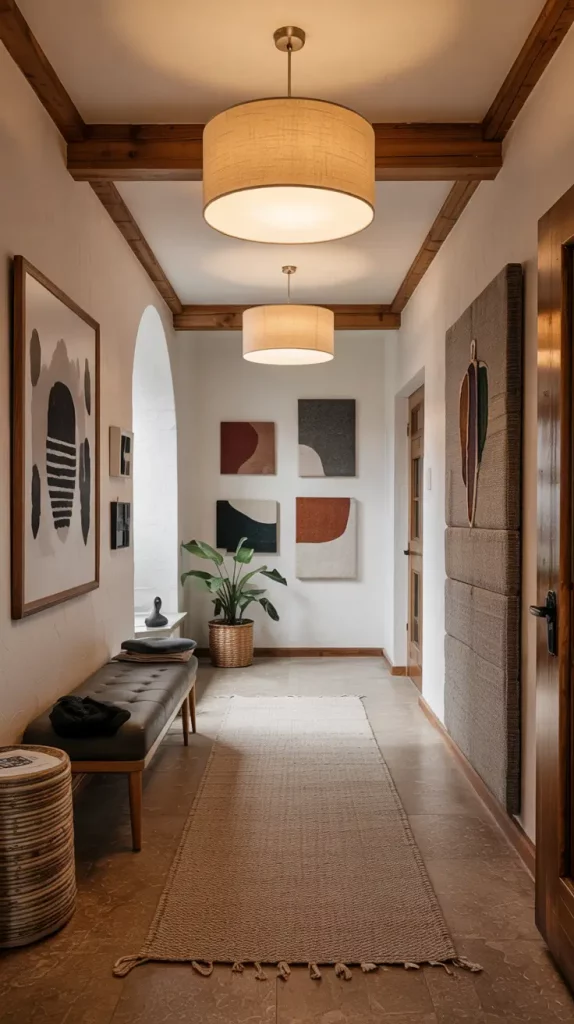
Designers included in Dwell note that noisy interiors are on the rise as the open-concept living is becoming more popular. I totally support this; the use of sound-dampening materials has changed numerous houses I have refurbished, especially where there is a child, or an animal.
Provided that I were elaborating on this section, I would also talk about the incorporation of acoustic undertakings beneath flooring as an extra form of sound control.
Add Vertical Storage To Make Use Of Empty Wall Space
Vertical storage solutions are essential when remodeling hallways, particularly in homes where square footage is limited. I frequently use the wall height that is not used by being used to provide storage that will not occupy the space of walking. This approach makes the hallway well-organized and makes it look better.
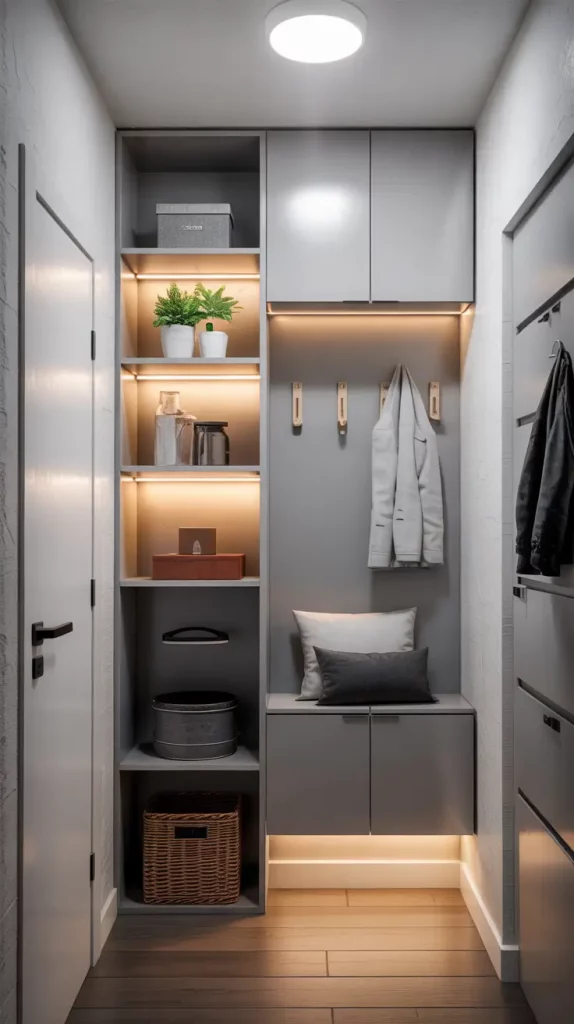
I also tend to use tall shelving systems, slim built-ins, floating wall cabinets, or even vertical coat hooks that are not designed to protrude but run vertically. Open shelving is also ideal in showcasing ornaments whereas closed cabinetry conceals the clutters. Vertical storage is in combination with regular hardware and finishes, a charismatic architectural element.
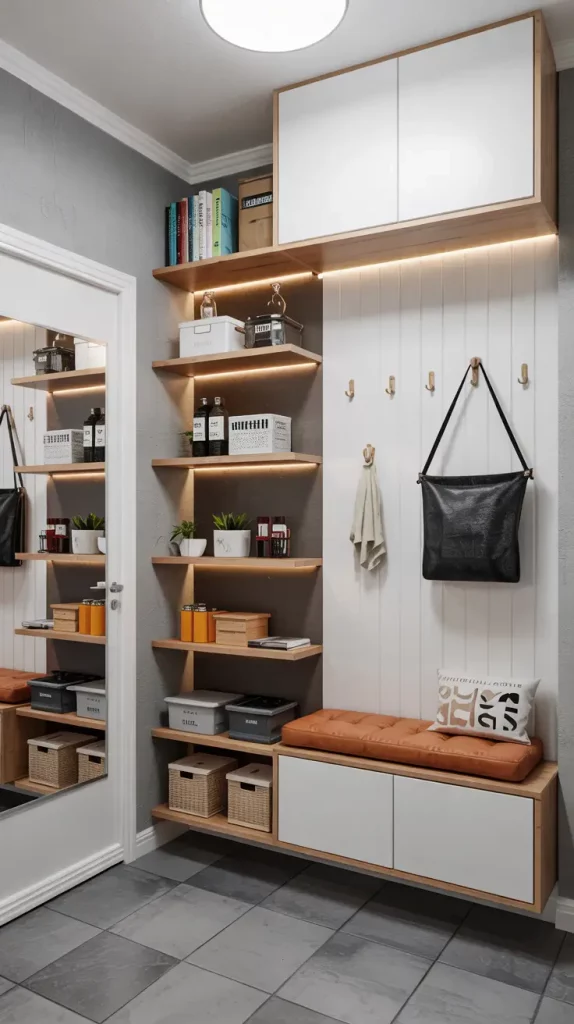
Those in the industry featured in Better Homes and Gardens always stress on the fact that vertical real estate should be maximized in small or limited spaces. I have used this observation on numerous remodels, and it has an instant effect on the capacity of storage and visual balance.
In order to accomplish this part, I would also recommend that the LED strip lighting be added to the vertical units to create more visibility and beauty.
Refresh Hallway Railings For Safer, More Stylish Stairs
Hallway railings rarely get the attention they deserve, but updating them can dramatically improve both style and safety. I have been attracted to designs that are sleek geometrical designs and long-lasting materials in 2026 remodels. The transition of stairs can be more sophisticated with the use of upgraded railings that will secure the space of the modern safety standards.
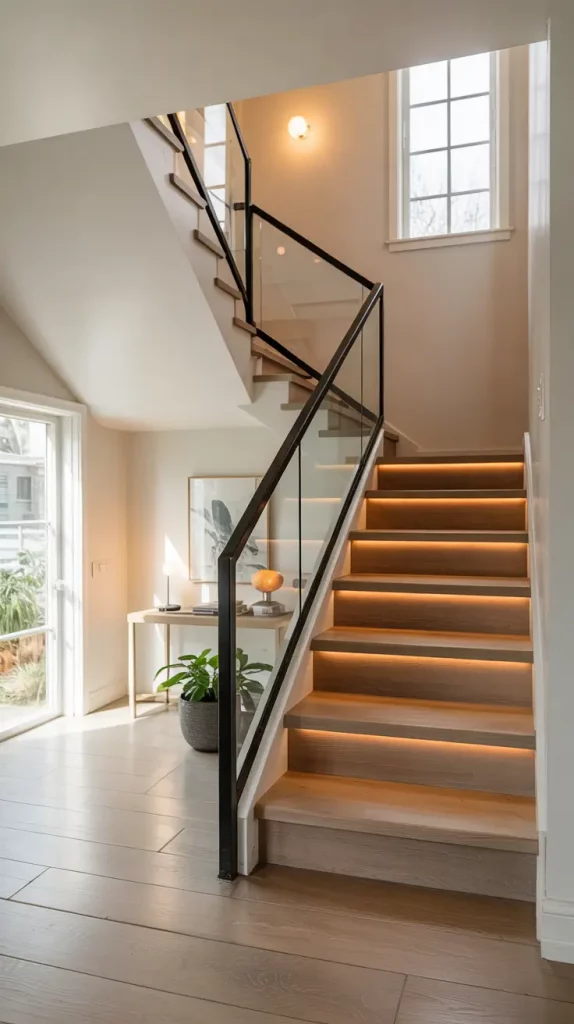
The balusters and glass panels or horizontal wood slats which I use often vary according to the architectural design of the house. Matte black railings are a good match with the light flooring whereas natural wood railings are cozy. Under the handrail, soft LED lights are fitted to give it a luxurious and practical appearance.
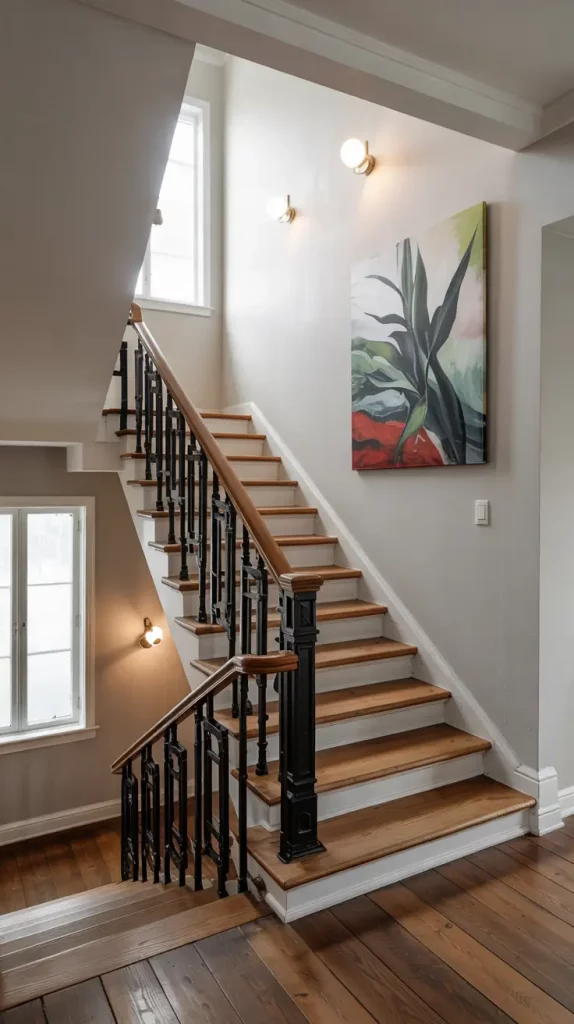
Through experience, and as stressed in Residential Design Magazine, railings are architectural features that are worth considering. Power, comfort, and beauty have to be in collaboration. I always find that new railings can be used to complete lower and upper hallway look.
In case of expansion of this part, I would also suggest slip-resistant stair treads to be used to complement railing enhancements.
Incorporate Biophilic Design Elements Into Hallways
Biophilic design remains a major influence in 2026, and hallways benefit greatly from the calming presence of natural materials and greenery. I also tend to use vegetation, natural textures, and natural color color schemes to make refreshing and re-invigorating transitional areas. These options not only enhance beauty, but they are also healthy.
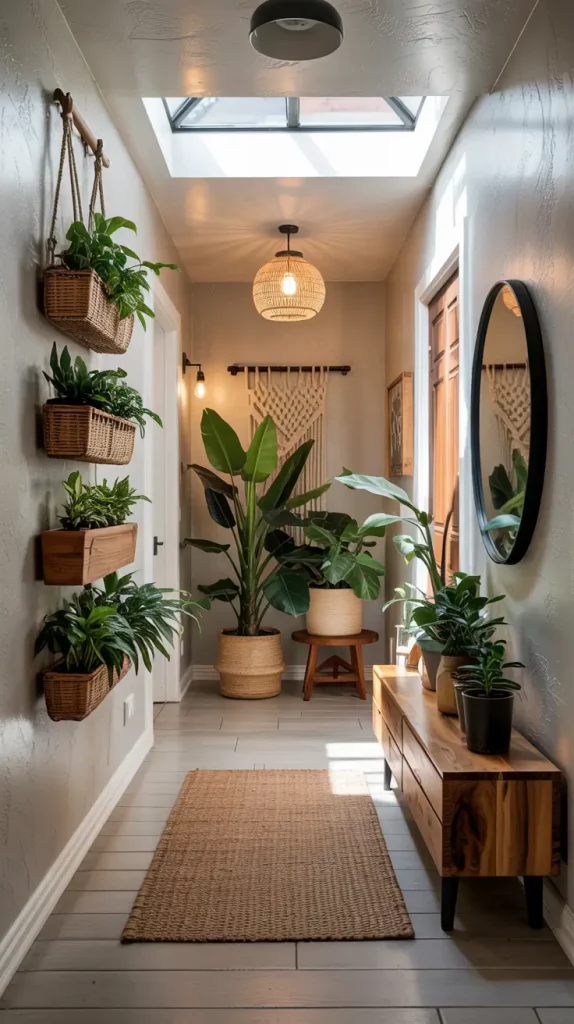
Wall-mounted planters, shelves made of natural wood, stone surfaces, and warm tones of terracotta are design elements that make halls soft. The living greenery is taken care of by the placement of a row of small potted plants or a single tree of excessive size in the entry to create organic movement. Bio-philic conditions are improved with the help of skylights or warm lighting.
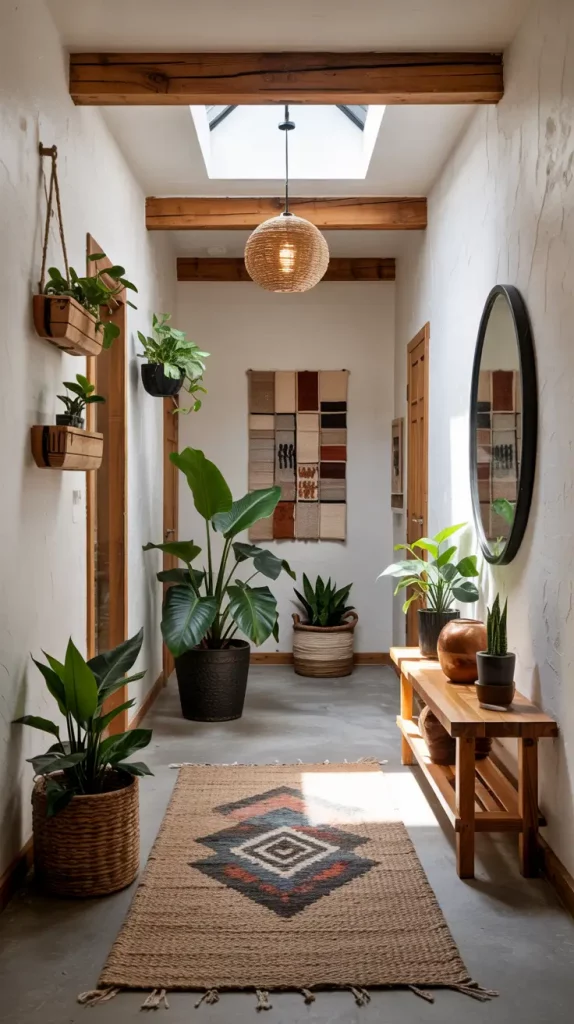
According to publications such as Dwell, there are always the psychological advantages of biophilic design, including the decreased stress levels and the significance of better air quality. I have personally experienced this; the clients usually tell me that their new hallways are more peaceful and inviting.
I would also provide recommendations on appropriate low-light indoor plants to use in corridors to add more weight to this section.
Use Transitional Designs To Connect Hallways To Adjacent Rooms
Hallways serve as connectors, and I always approach their design with the intention of creating visual flow between rooms. The transitional design is effective there, where the elements of modernity and tradition blend, so one should not feel the abrupt change between spaces but that they relate to one another.
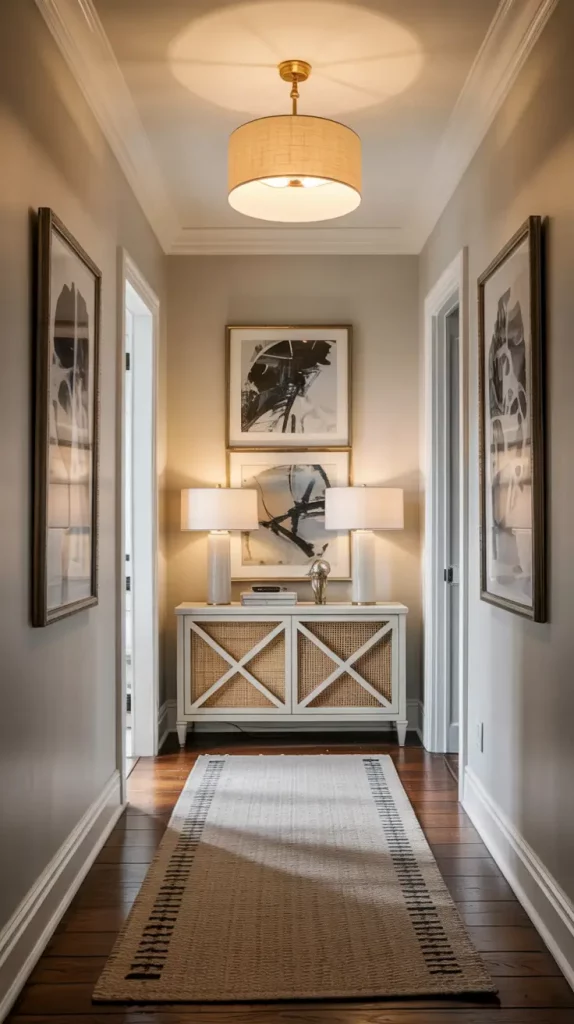
In this style, I tend to mix neutral palettes, mix materials, classic hardware and minimal detailing of buildings. An echoing runner that reflects sounds in the adjacent rooms is useful in unifying the route. Pieces of art or lighting that are in different areas that complement spaces of the nearby spaces make the rest of the home harmonized.
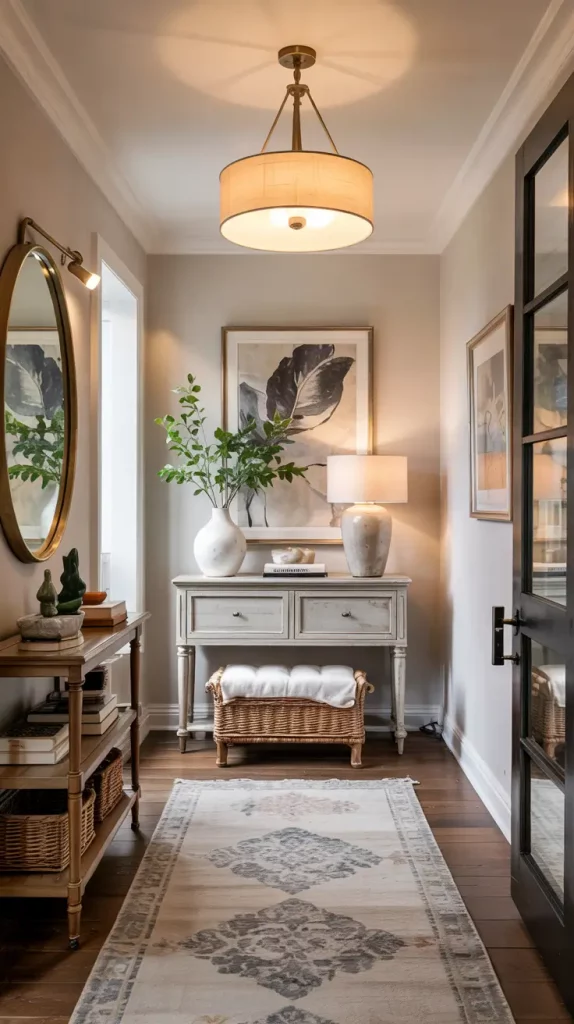
Interior experts working in Veranda constantly observe that the hallways need to connect, not divide. This is very much in line with my personal design philosophy particularly in open concept or multi-style houses. The design is transitional and the various areas are perceived to be connected without losing their character.
Should I expand on this section I would include thoughts about trim continuity and door frame alignment since this would contribute a lot to continuity.
Plan Multi-Purpose Hallway Zones For Modern Living
In 2026, hallways are no longer seen as simple passageways—they’ve evolved into functional extensions of living spaces. When I develop multi-purpose hallways, I seek the chance of adding working areas, reading space, or organization centers without interfering with the flow. This enables the homeowners to have a great functionality in the areas that they previously did not take seriously.
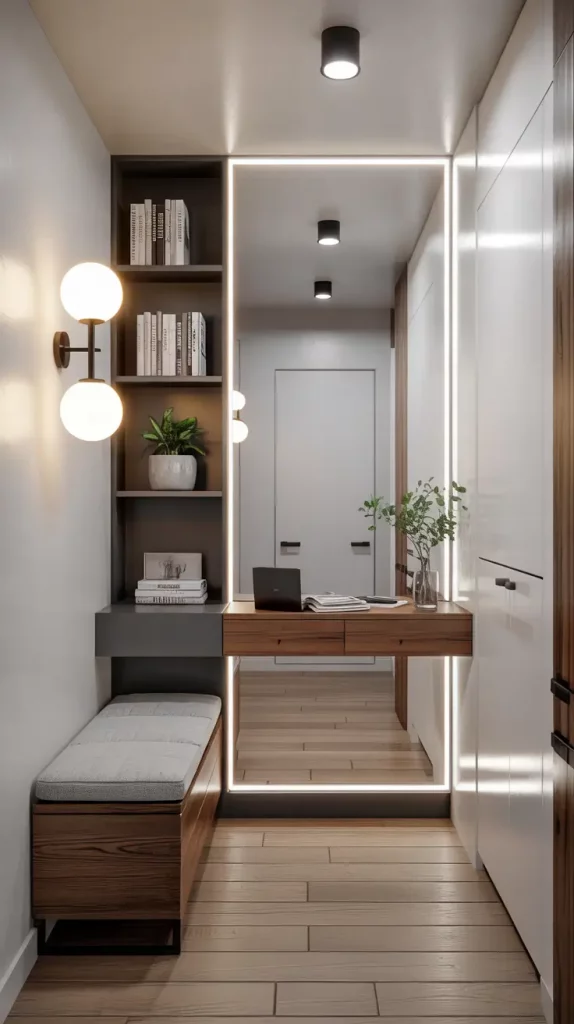
In these areas, I tend to use slender desks, built-in benches, pegboard, floating shelves or family message centers. The zone is defined by soft wall sconces, small sitting areas, and small console tables to allow circulation. Location: placement of the elements should be strategic and must result in higher usability, but without an introduction of a bottleneck.
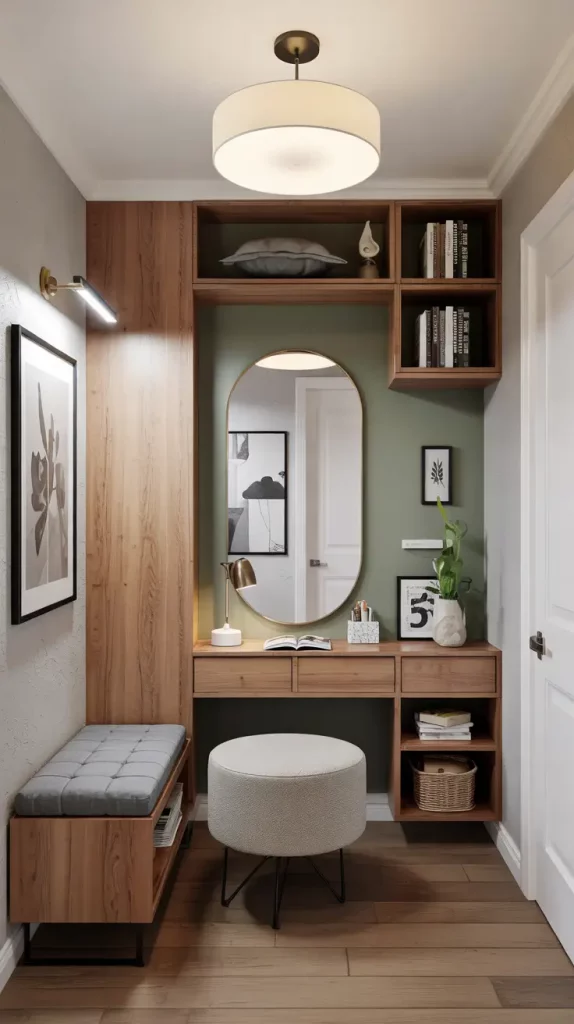
In my experience and knowledge published in Apartment Therapy, multi-purpose hallways help to improve the day-to-day convenience and make the house seem thoughtfully designed. I have effectively used this strategy with clients who require additional space either in the form of a workstation or storage area without increasing their space.
In order to further add to the content of this section, I would equally set in hidden cable management solutions that would ensure that a busy household has a clean and uncluttered appearance.
Apply Trend-Forward Finishes For A Future-Ready Hallway Remodel
Trend-forward finishes are essential for giving hallways a 2026-ready look that feels both modern and timeless. When designing these remodels, I consider finishes that would take the entire aesthetic to the next level, like textures of matte surfaces, warm metals, plasters that are extremely smooth, and eco-friendly materials. These finishes make hallways elegant and solid design messages.
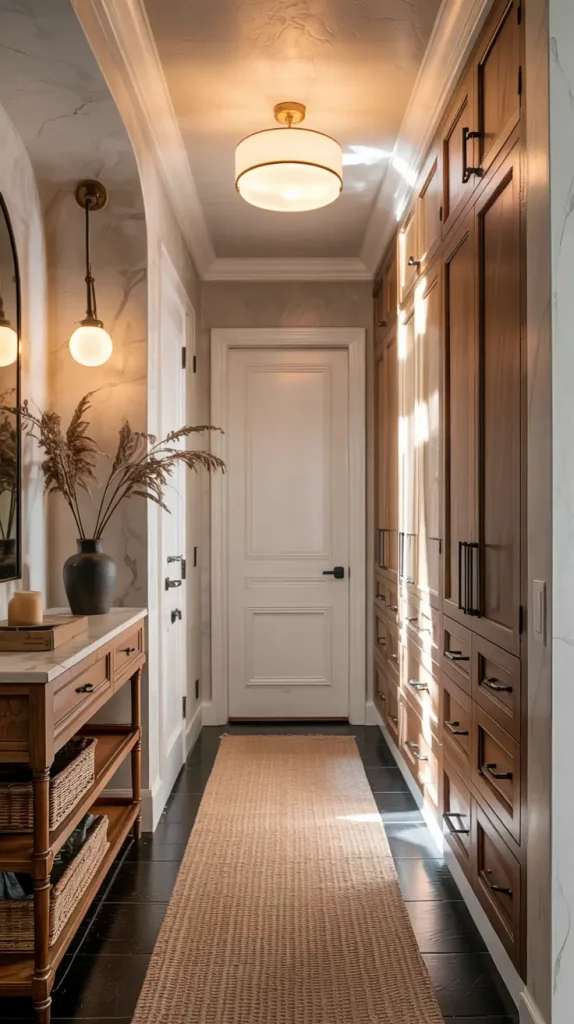
I tend to combine the use of matte cabinetry, brushed brass or bronze, Venetian plaster walls, fluted wood paneling, and high-performance flooring. These high elements combine effectively and augment the character of the hallway as well as being very durable. Avoiding heavy textures and colors, subtle textures and warm color can be used to reflect the newest design trends without overcrowding the room.
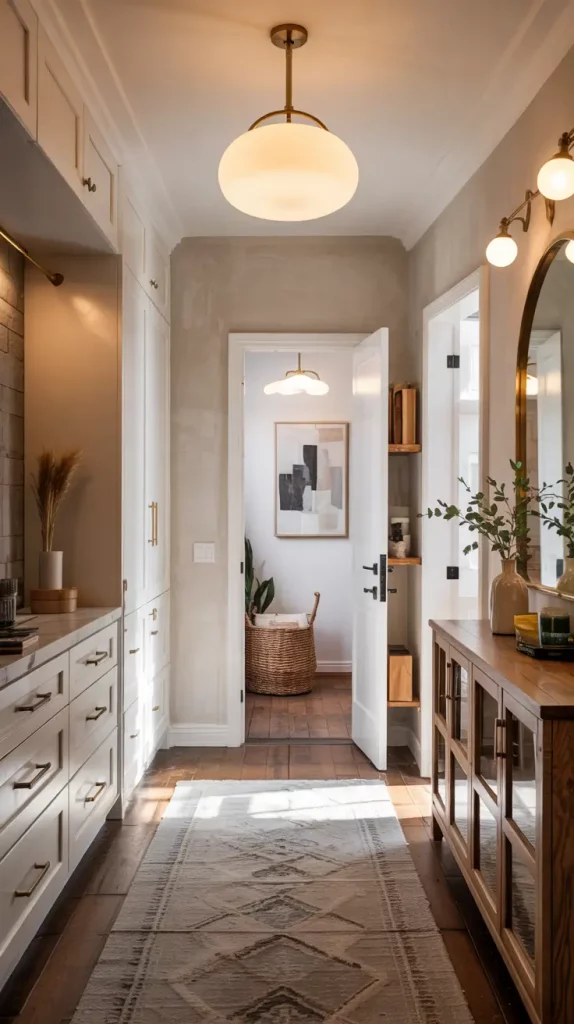
In Elle Decor, design professionals often emphasize the fact that finishes should be selected with the consideration of innovation and durability. I have taken this philosophy in my practice and I have been making my clients make choices that make them feel current but flexible at the same time.
To further enhance this section, what I would suggest would be to consider antimicrobial coatings and eco-resilient finishes that are becoming quite popular in the modern houses.
Conclusion
In 2026, the innovativeness of hallway remodels is more than ever before, more functional and refined in terms of appearance. Whether it be clever storage and biophilic details, high-tech lighting and future-proof finishes, all the design concepts in this article are designed to enable you to re-purpose the neglected transitional spaces to meaningful, aesthetically-fulfilling extensions of your home. I would be happy to listen to you–ask questions, share thoughts or any other experiences with remodeling in the comments below to keep the discussion going and help other people get inspired.