What will outdoor play look like for children in 2026, and how can parents design spaces that are both fun and functional? Today’s families are looking for bold, practical, and future-focused outdoor area ideas for kids that support creativity, safety, and healthy development. In this article, I explore modern outdoor area ideas for kids designed for real homes, real budgets, and real family needs. From nature-inspired zones to active play areas, I’ll share professional insights and practical solutions you can actually implement.
Nature-Inspired Outdoor Play Areas For Kids
I approach nature-inspired outdoor play areas as spaces that blend seamlessly with the surrounding environment while still offering structured opportunities for play. These designs prioritize organic layouts, natural textures, and open zones that encourage exploration. I focus on layouts that feel calm yet stimulating, using uneven pathways, greenery borders, and soft ground materials to make the space both practical and engaging for children.
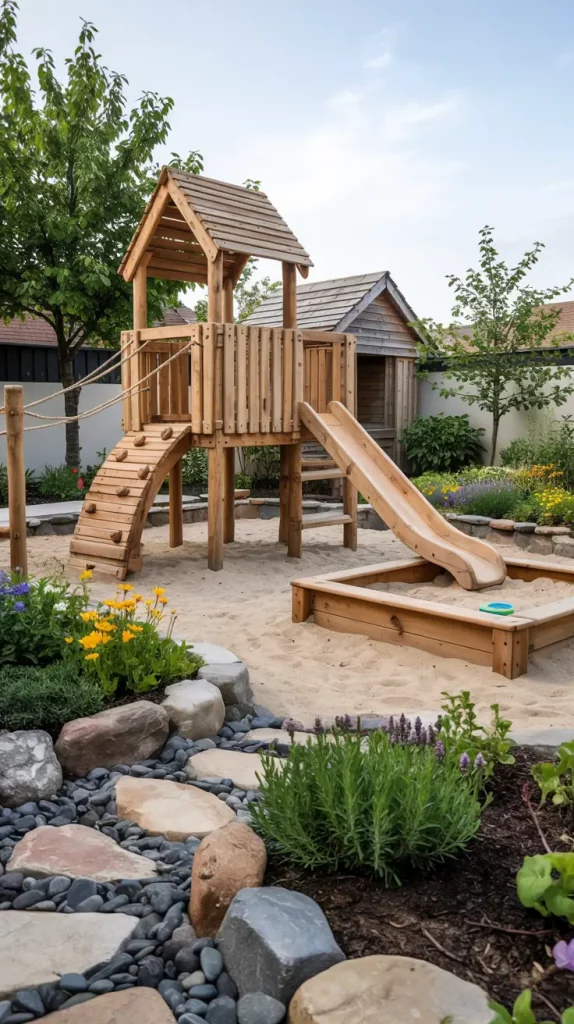
When selecting furniture and features, I rely on untreated wood play structures, log seating, climbing rocks, and low platforms. I often include raised garden beds, sand zones, and shallow water tables because they introduce tactile learning without overwhelming the space. These elements are chosen not for decoration alone, but because they support balance, coordination, and independent play.
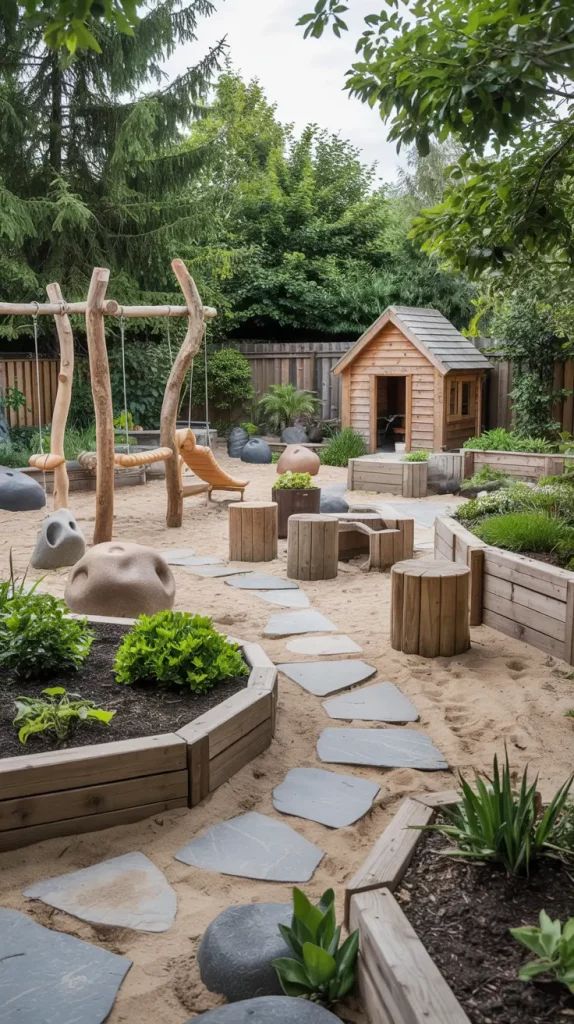
From my experience, many designers featured in Architectural Digest emphasize that children benefit most from outdoor spaces that aren’t overly scripted. I agree—natural play areas help kids develop creativity and emotional regulation. I’ve seen children spend longer periods engaged when the environment feels open-ended rather than theme-based.
What I would still add to this type of space is subtle lighting for early evenings and a simple weatherproof storage bench to keep natural play tools organized and accessible.
Backyard Adventure Zones That Encourage Exploration
When designing backyard adventure zones, I focus on creating a sense of journey rather than a single play structure. These outdoor areas are laid out in segments, allowing children to move from one activity to another. I prioritize safety through spacing and visibility while still making the environment feel exciting and exploratory.
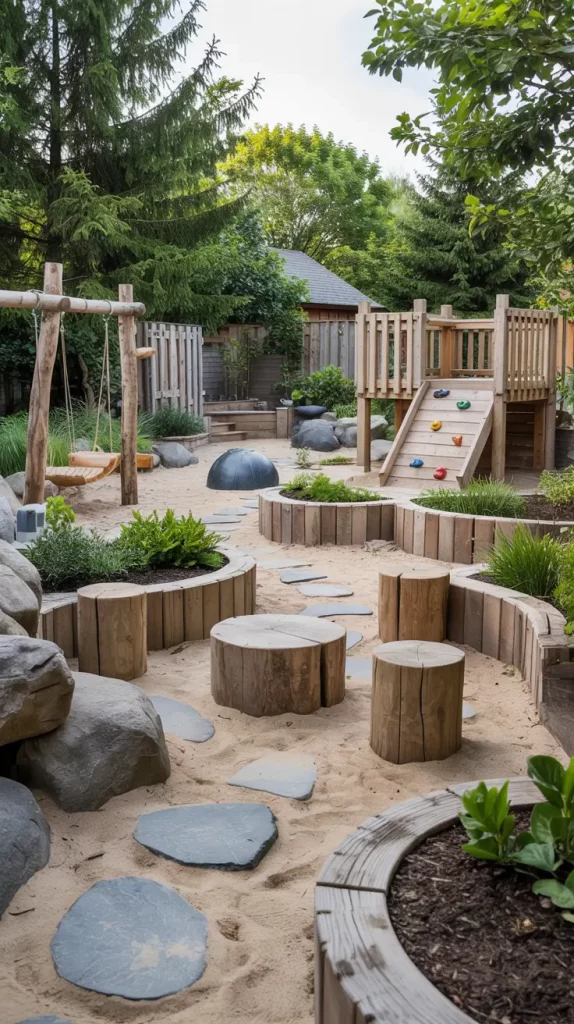
The core elements usually include climbing frames, rope bridges, balance beams, and stepping paths. I recommend modular adventure equipment that can be reconfigured as children grow. Ground materials like rubber mulch or compacted bark help reduce injury risks while maintaining a natural look.
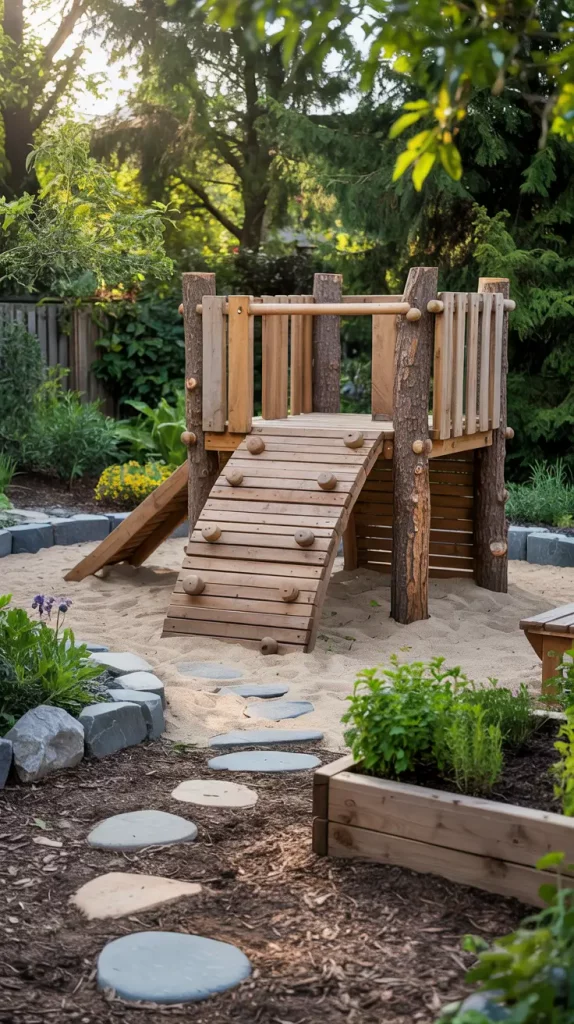
Personally, I’ve noticed that adventure-style outdoor spaces keep children physically active without needing constant adult direction. Experts from the American Academy of Pediatrics often highlight that free movement outdoors supports both physical and cognitive growth, and I’ve seen that reflected in real family settings.
To improve this section further, I would add a shaded rest zone with seating and hydration access to balance high-energy activity with recovery time.
Safe Outdoor Area Ideas For Toddlers And Preschoolers
For toddlers and preschoolers, safety defines every design decision I make. These outdoor areas are compact, enclosed, and visually open so caregivers can supervise easily. I focus on soft forms, rounded edges, and low-height structures that encourage confidence without risk.
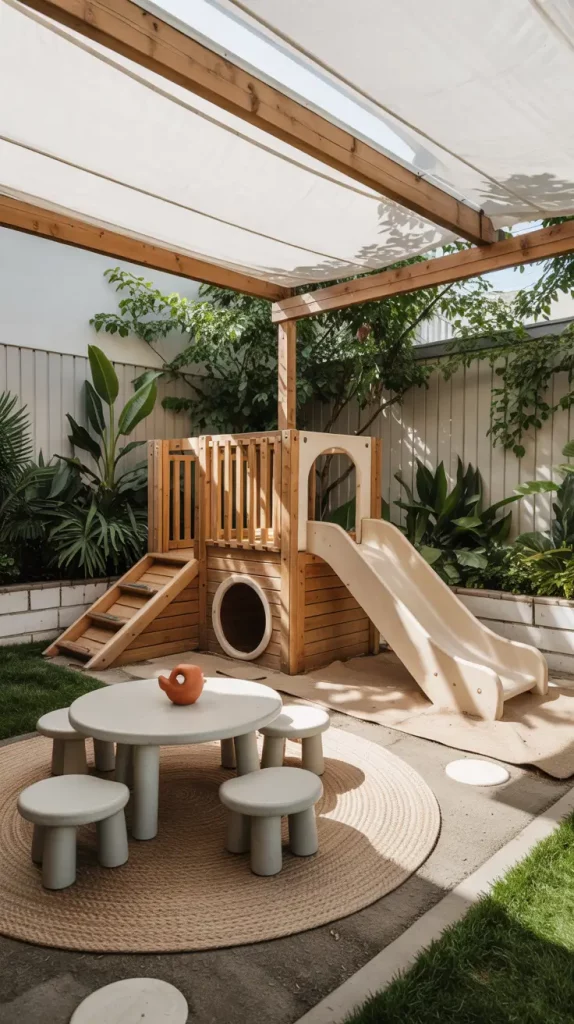
Furniture and features include low slides, crawl tunnels, sensory panels, and soft play mats designed for outdoor use. I always recommend non-toxic materials, slip-resistant surfaces, and child-height benches to promote independence. Each item has a purpose—supporting early motor skills and safe exploration.
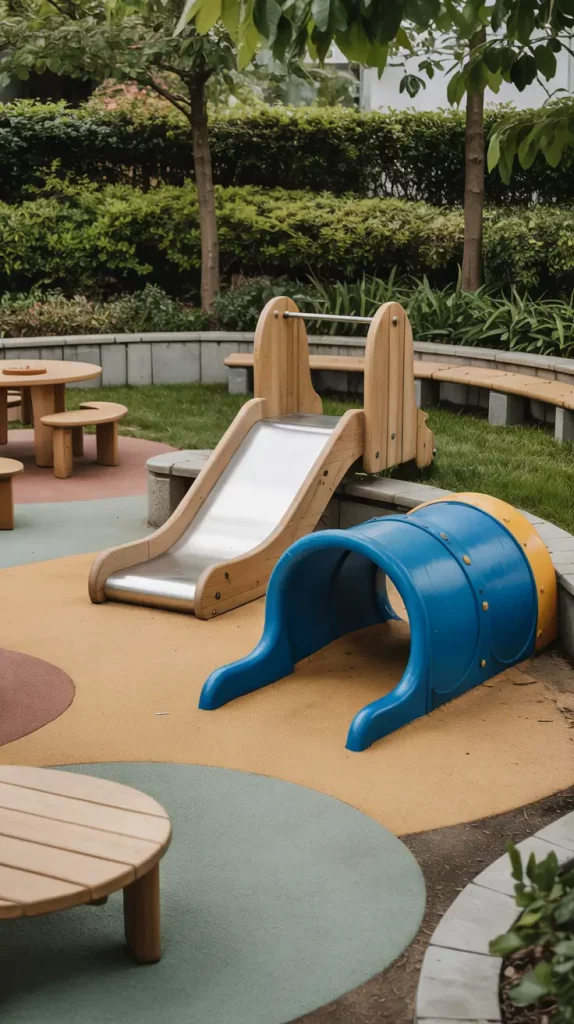
From my professional perspective, early childhood designers featured in Parents Magazine consistently stress the importance of predictable layouts. I’ve found that toddlers feel more secure when play zones are clearly defined and not overcrowded.
What could enhance these spaces further is the addition of a small covered area for shade and weather protection, allowing consistent outdoor time throughout the day.
Budget-Friendly Outdoor Area Ideas For Kids At Home
Budget-friendly outdoor areas are about smart planning, not cutting corners. I design these spaces using flexible layouts and multi-use zones that grow with the child. Simplicity is key—clear zones, open ground, and minimal but purposeful features.
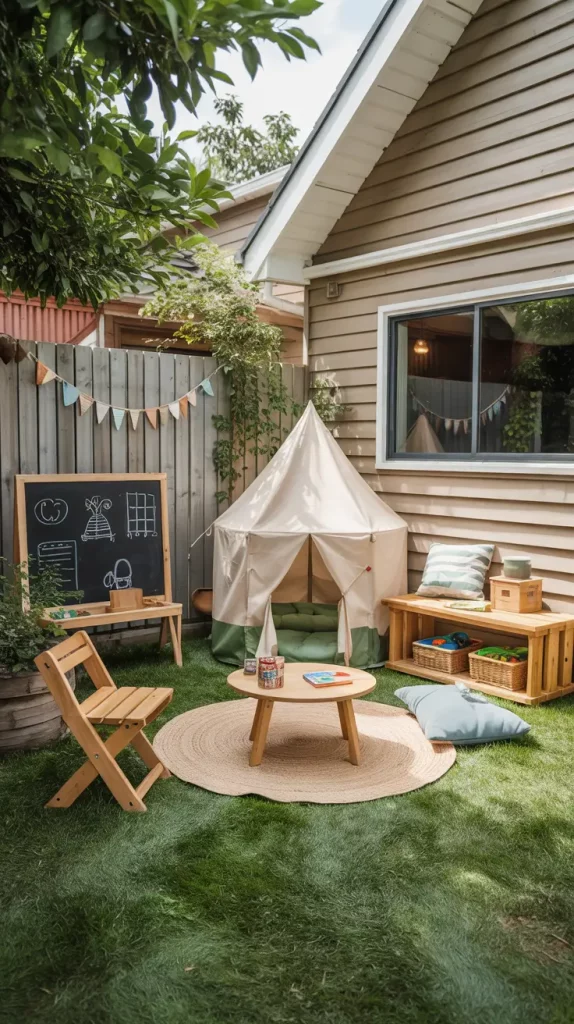
I often recommend repurposed furniture, DIY play elements, and affordable modular sets. Items like foldable tables, stackable stools, chalk walls, and portable play tents provide variety without high costs. Durable materials ensure longevity even with daily use.
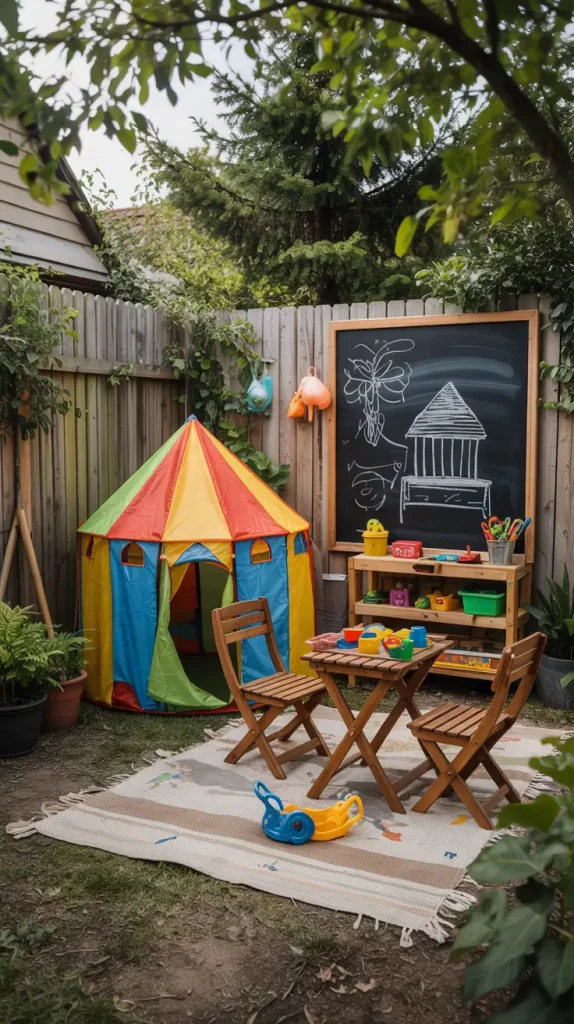
In my experience, many families featured in Better Homes & Gardens achieve impressive results by focusing on usability rather than aesthetics alone. I agree—children value function over design trends.
To complete these spaces, I would suggest adding a small storage solution to keep toys organized and extend the lifespan of budget-friendly materials.
Outdoor Play Areas That Support Physical Development
Outdoor play areas focused on physical development are structured to challenge strength, balance, and coordination. I design these layouts with intentional spacing, allowing children to move freely between activities without congestion.
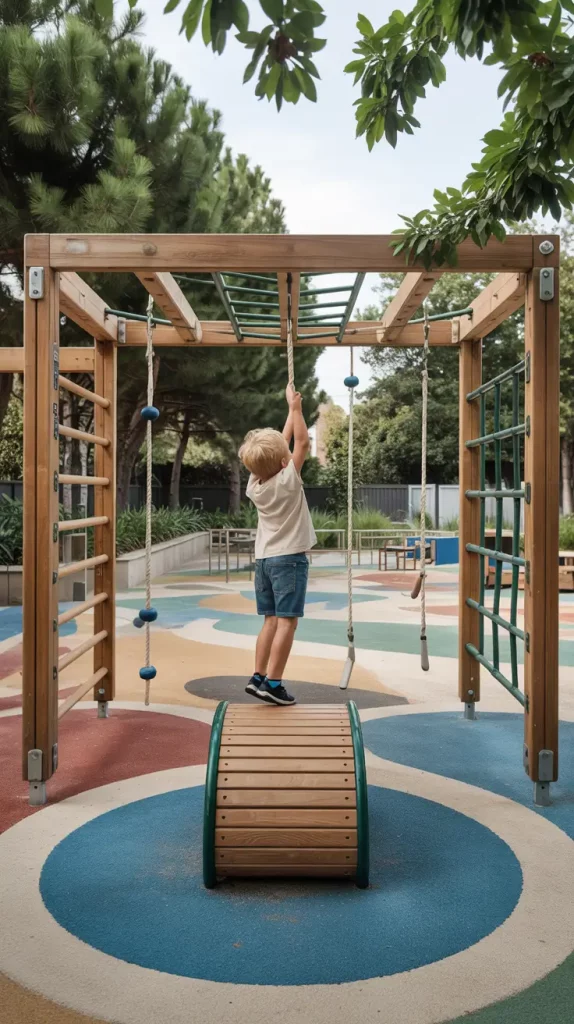
Key elements include climbing walls, monkey bars, balance boards, and open running zones. I carefully select equipment with adjustable difficulty levels so the space remains relevant as children grow. Flooring choices prioritize shock absorption and stability.
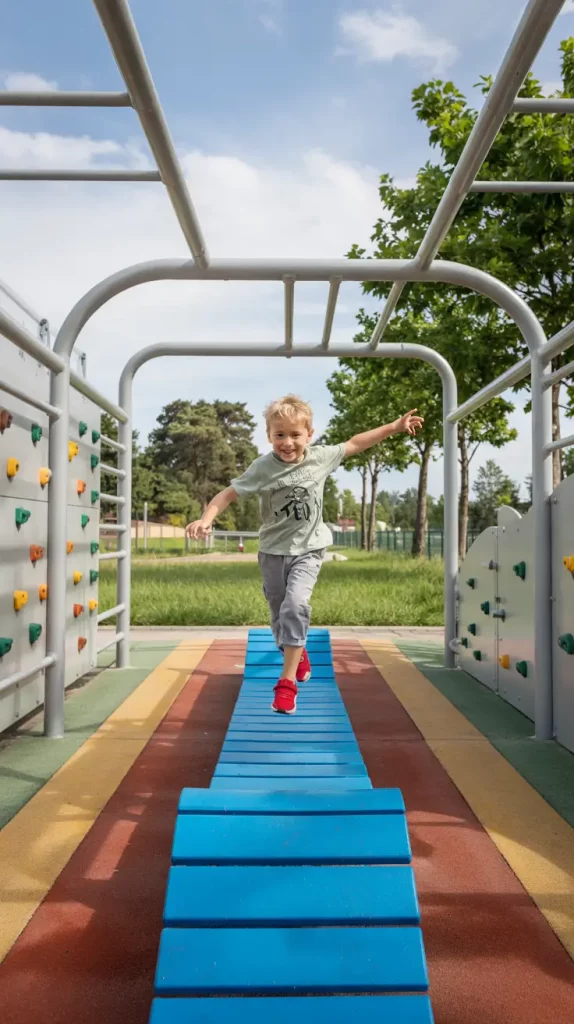
From my experience working with family-focused designers, physical play zones reduce screen dependency and improve confidence. Organizations like the CDC emphasize daily physical activity for children, and these spaces make movement a natural part of routine.
What’s often missing is a warm-up or stretching zone, which I recommend adding to support injury prevention and body awareness.
Sensory Outdoor Area Ideas For Kids Of All Ages
Sensory outdoor areas are designed to engage touch, sound, sight, and movement. I approach these spaces as calming yet stimulating environments, ideal for children of different ages and needs.
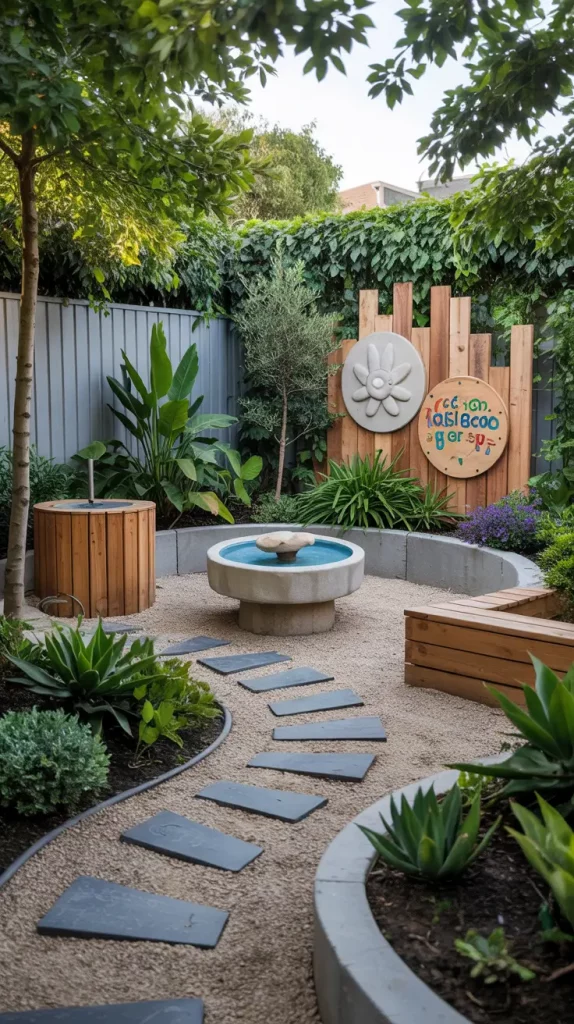
Furniture and features include textured paths, musical panels, water features, scented plants, and color-coded zones. I choose durable, weather-resistant sensory tools that maintain their function year-round.
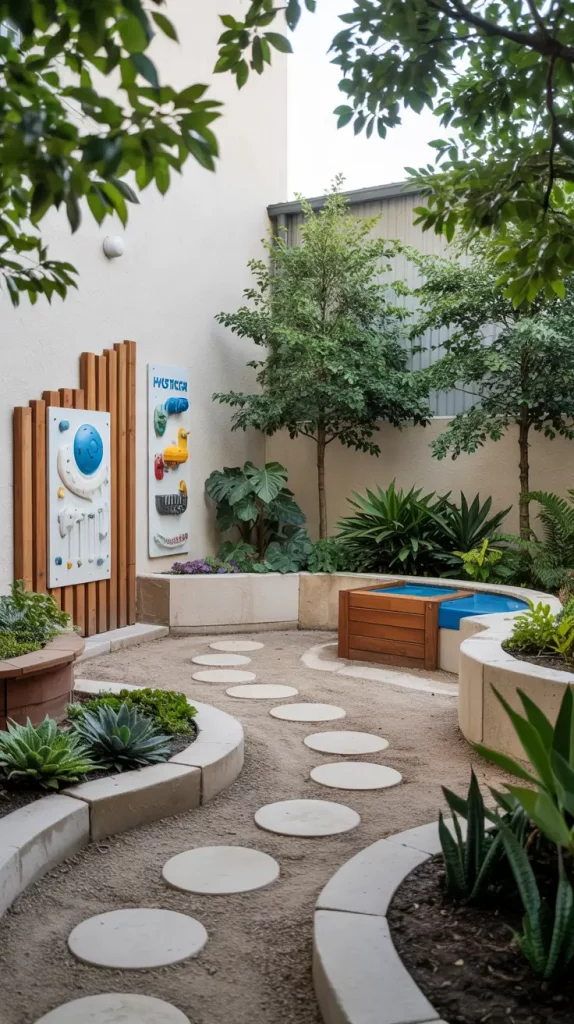
In my professional opinion, sensory-rich environments are essential for emotional regulation. Designers referenced by The New York Times often note that sensory play supports focus and stress reduction, which aligns with what I observe in practice.
To enhance these areas, I would incorporate quiet retreat corners where children can self-regulate when overstimulated.
Creative Garden Play Spaces For Children
Creative garden play spaces merge imagination with nature. I design these areas to feel like extensions of the garden rather than separate play zones. Curved paths, planting borders, and interactive garden elements define the layout.
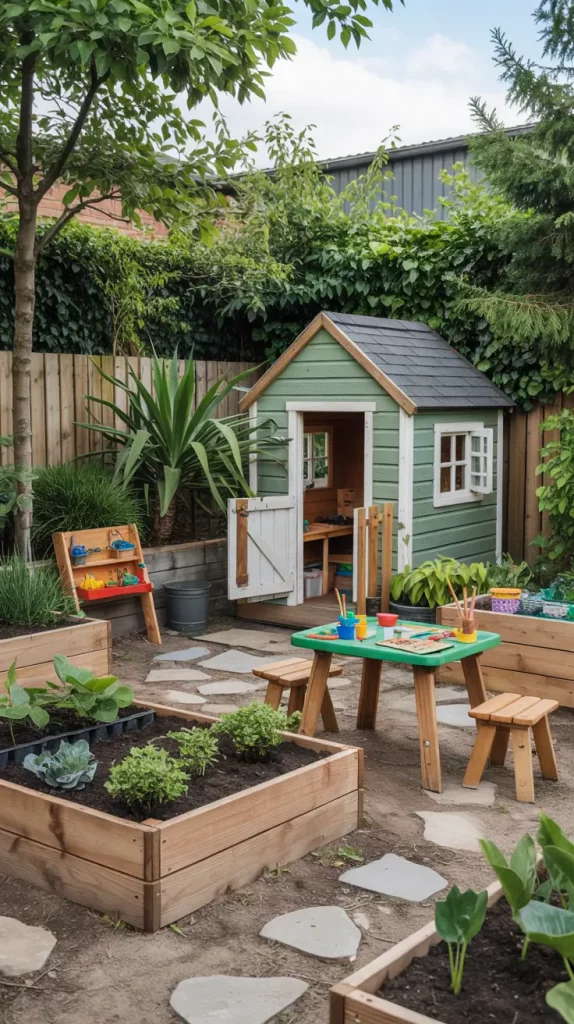
I include child-sized gardening tools, raised planting beds, outdoor art stations, and themed playhouses. Each element encourages responsibility, creativity, and engagement with the natural world.
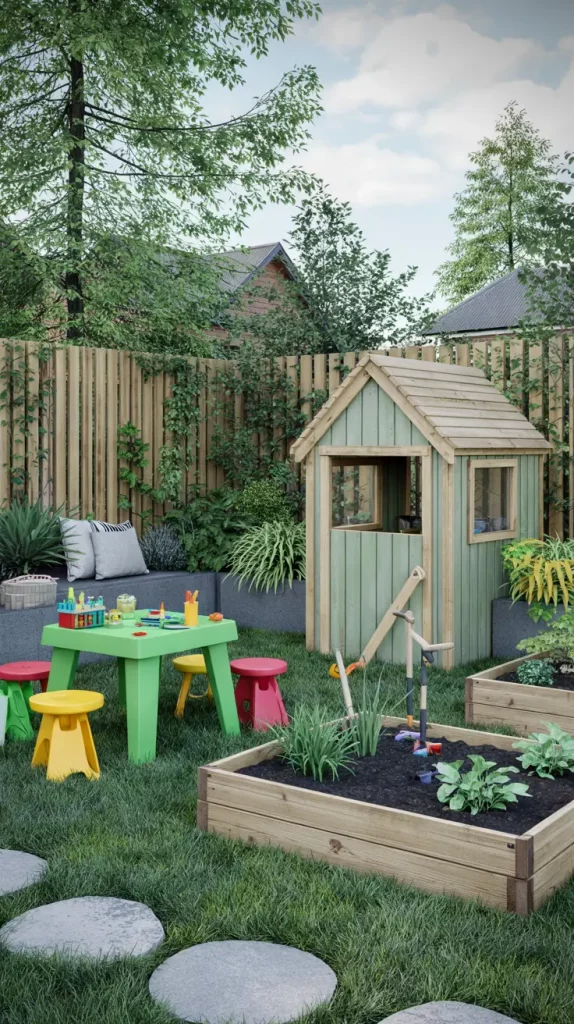
From my experience, many landscape architects featured in Dwell emphasize that garden-based play fosters patience and curiosity. I’ve seen children develop pride and confidence through simple gardening activities.
What I would still add is a seasonal planting plan and labeled garden markers to deepen learning and long-term engagement.
Outdoor Learning Areas That Combine Play And Education
When I design outdoor learning areas, my biggest priority is functionality merged with natural curiosity. These spaces must feel playful yet gently structured, allowing children to shift between exploration and guided learning. I usually incorporate outdoor desks, weatherproof chalkboards, modular seating, and educational stations that introduce math, science, or reading through hands-on engagement. The goal is to create an inviting environment where children instinctively connect learning with discovery.
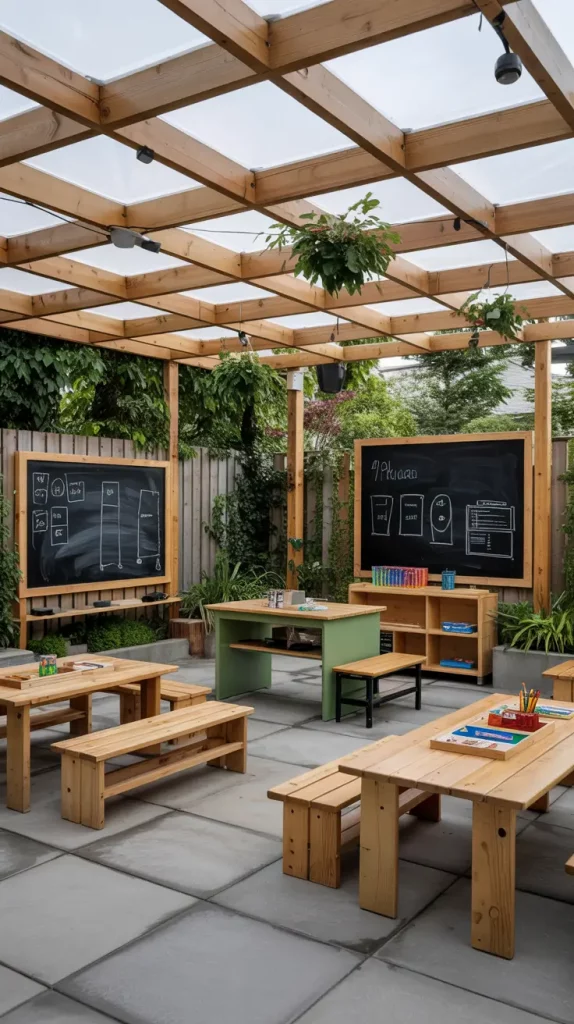
For furniture and design elements, I prefer wooden benches, portable tables, magnetic boards, child-height shelves, and planting beds used for science observations. Every piece has a clear purpose—outdoor chairs encourage group learning, chalkboards support creative expression, and weather-resistant storage keeps materials organized. Adding small shade structures ensures that the area remains usable through most weather conditions.
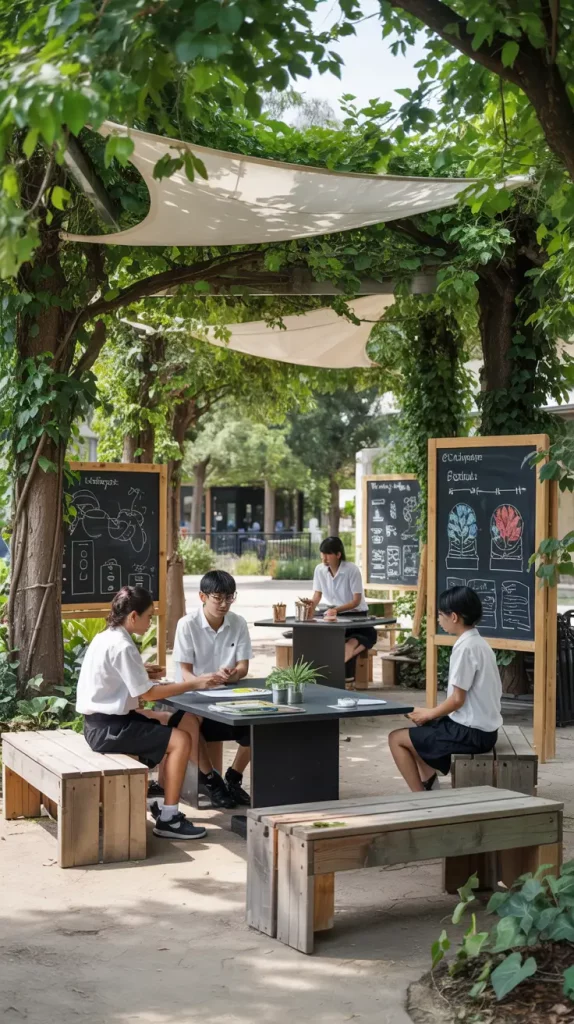
In my professional experience, education writers at Edutopia often highlight that outdoor learning boosts focus and retention in ways indoor classrooms can’t replicate. I’ve personally witnessed children demonstrate more enthusiasm for problem-solving when lessons happen outdoors. Natural surroundings reduce stress and spark intrinsic motivation.
One improvement I would add is a small technology-friendly station with solar-powered chargers for interactive learning tools, keeping the space adaptable for future educational trends.
Small Outdoor Area Ideas For Kids In Limited Spaces
Designing for small outdoor areas requires creativity and strategic layout planning. I focus on vertical structures, compact zones, and multi-use furniture to make the most of every square foot. My goal is always to avoid clutter while maximizing functionality, ensuring the space feels open despite its size.
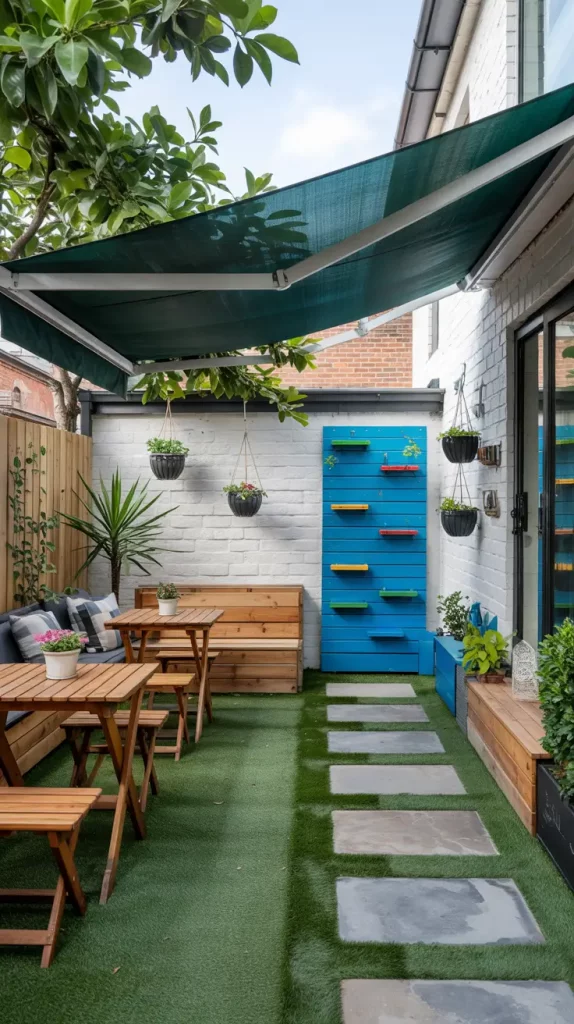
I typically include wall-mounted sensory boards, foldable play tables, hanging planters, and miniature climbing structures. Modular seating that doubles as storage is especially useful in tight outdoor environments. Soft turf or rubber tile flooring helps create a safe, clean, and low-maintenance base for play.
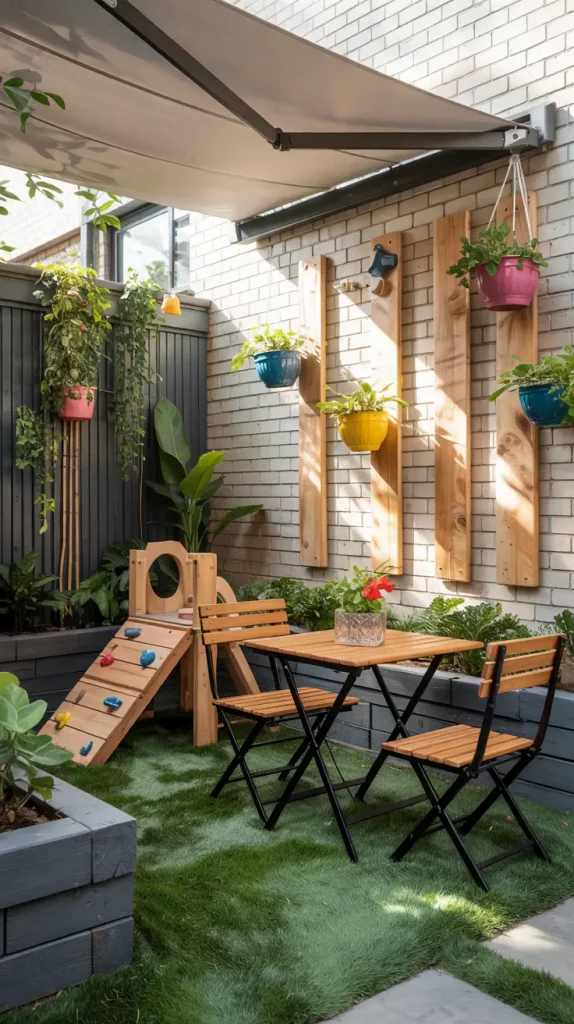
From experience, many urban families I work with are surprised at how much can be achieved with thoughtful space management. As experts from Apartment Therapy often note, vertical design is a powerful tool for small outdoor spaces—and I fully agree. Children don’t need a large yard to enjoy meaningful outdoor play.
To enhance this section, I would add a retractable awning or shade sail to make compact spaces functional throughout the day without overheating.
DIY Outdoor Area Ideas For Kids And Families
DIY outdoor spaces are some of the most rewarding designs I create because they engage both children and parents in the building process. These areas rely on creativity, affordable materials, and family-friendly projects that personalize the space. Whether it’s crafting a mud kitchen or painting stepping stones, DIY zones strengthen emotional connection to the outdoors.
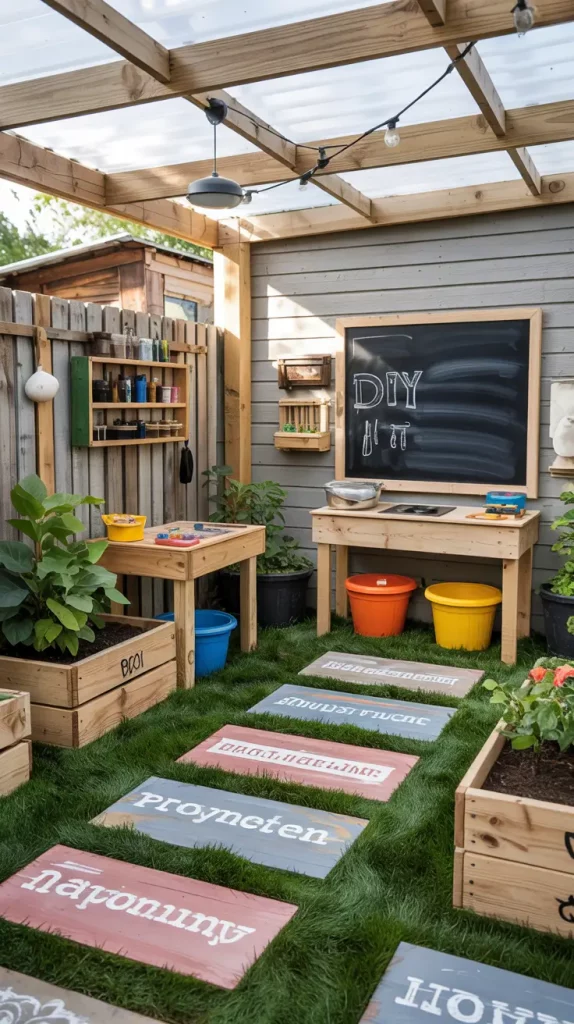
I recommend materials such as reclaimed wood, weatherproof paints, cinder blocks, crates, and simple hand tools. Projects often include DIY water tables, chalk wall panels, outdoor art frames, planter boxes, or handmade obstacle structures. Each element is chosen to be accessible for families with varying skill levels while remaining aesthetically cohesive.
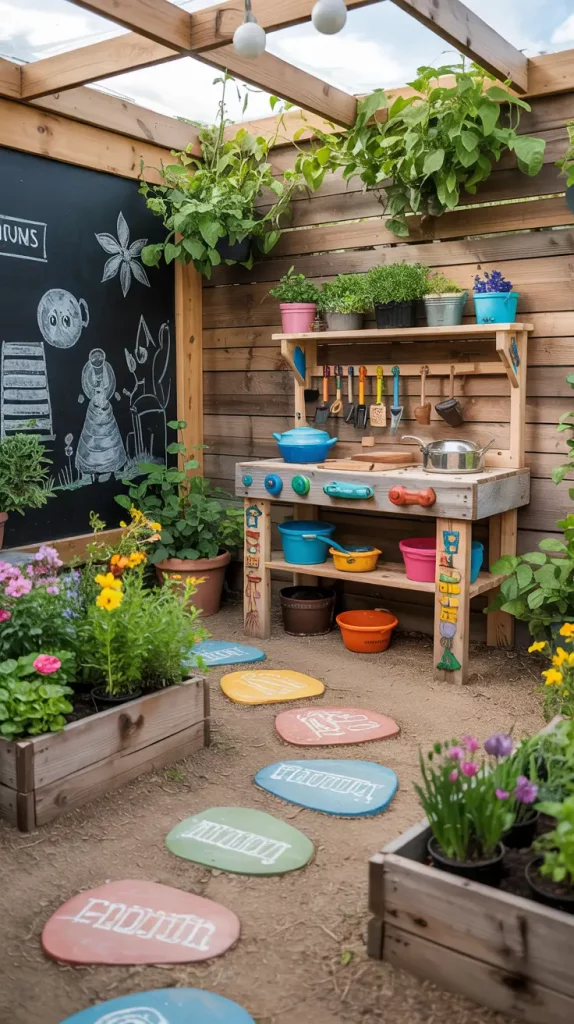
From my perspective, publications like Family Handyman frequently emphasize the bonding benefits of shared DIY projects. I’ve seen firsthand how working together outdoors creates pride and ownership for children. Even a simple DIY garden bed can become a treasured family project.
What I would add is a small dedicated workshop corner—a storage rack for tools and supplies—so families can easily maintain or expand their DIY outdoor creations.
Sustainable Outdoor Play Area Ideas For Eco-Friendly Homes
Sustainability shapes many of my outdoor designs, especially for families who want to reduce waste and foster eco-conscious habits in their children. I focus on natural materials, energy-saving features, and layouts that harmonize with the environment. These outdoor spaces aim to minimize ecological impact while offering enriching play experiences.
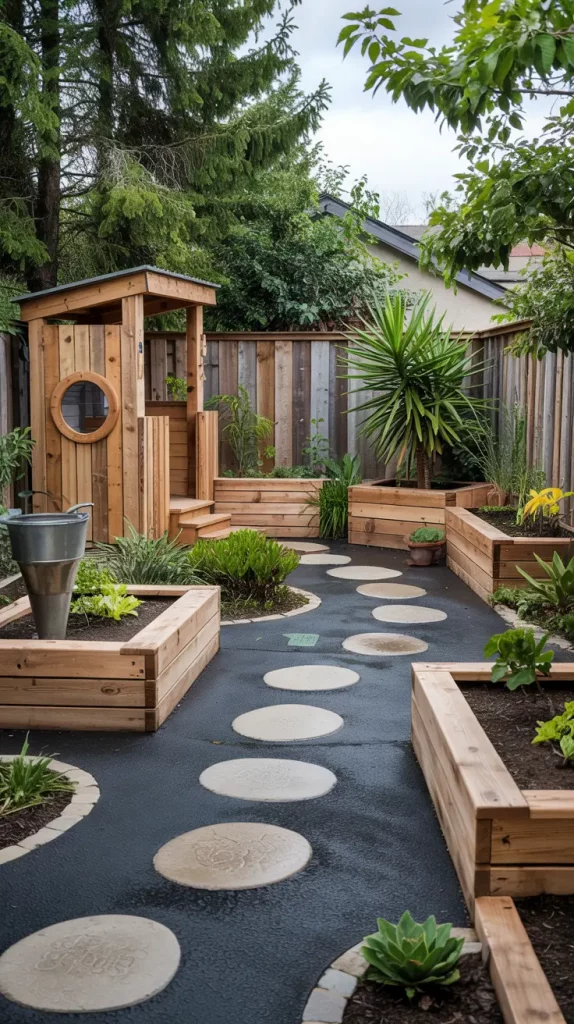
Furniture and design components include reclaimed wood playsets, solar-powered lighting, rainwater collection barrels, and compost-friendly garden beds. I often integrate native plants because they require less water and maintenance. Mulch paths, bamboo structures, and recycled rubber flooring all reinforce sustainable living.
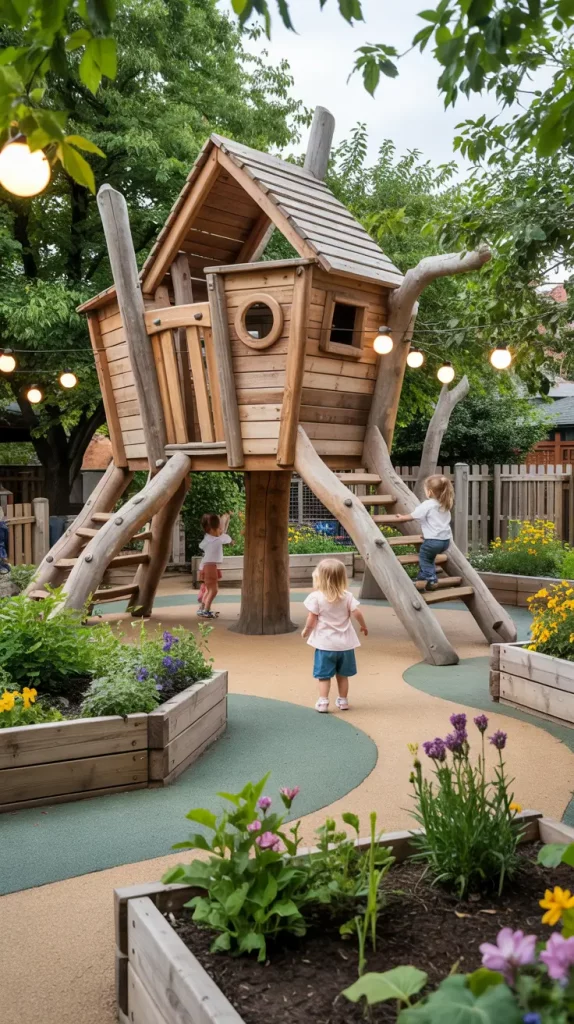
Professionals featured in Green Builder Media frequently highlight how environmentally friendly play spaces teach children valuable habits from an early age. I agree wholeheartedly—children who interact daily with sustainable elements naturally develop awareness and respect for the environment.
To further enhance these spaces, I would include a small educational corner that explains how rainwater harvesting or composting works, helping children understand the systems they interact with.
Outdoor Area Ideas That Boost Imagination And Creativity
When designing imaginative play areas, I focus on creating environments that encourage open-ended storytelling. These outdoor spaces should feel like blank canvases—versatile, expressive, and full of opportunities for pretend play. I incorporate flexible elements children can reinterpret in countless ways rather than fixed, theme-heavy structures.
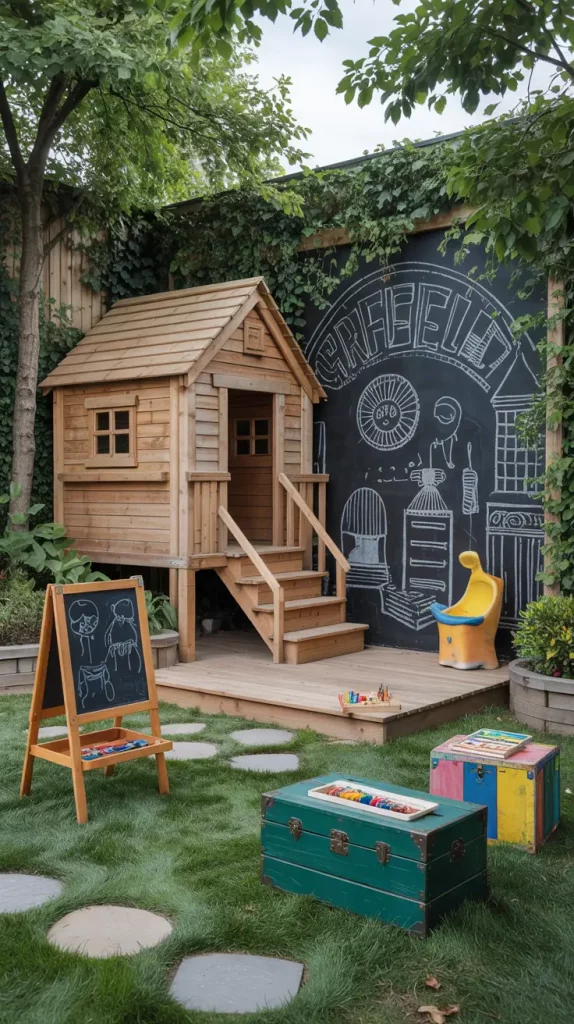
Items such as playhouses, costume trunks, art easels, stage platforms, and modular props make these areas dynamic. I also like adding chalk murals, free-paint surfaces, and natural materials (like stones or sticks) to fuel creativity. Every design choice encourages inventiveness, giving children the freedom to create their own worlds.
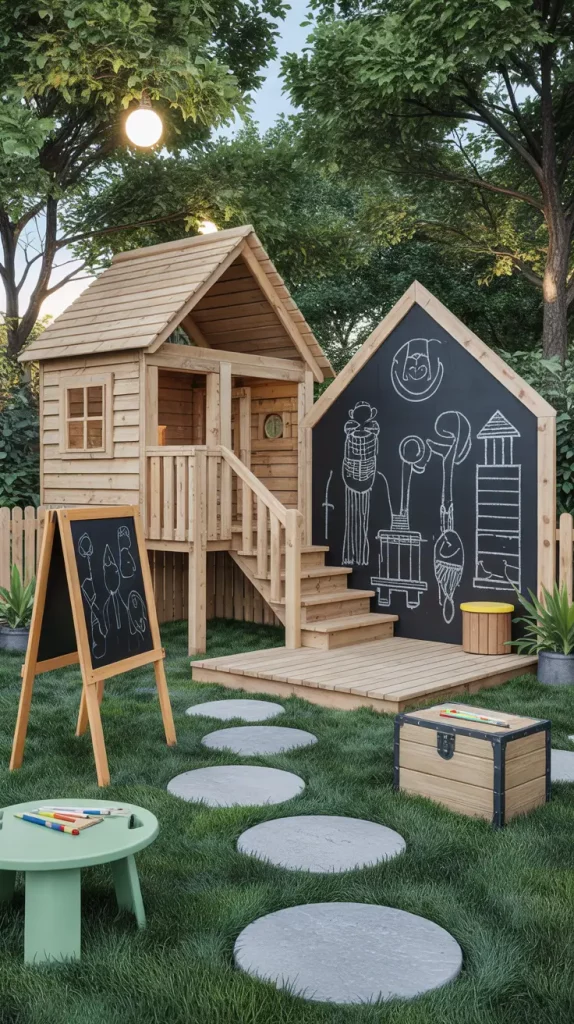
Experts in child development referenced by Scholastic emphasize how imaginative play supports emotional intelligence and communication skills. From my own work, I’ve witnessed how simple props and flexible spaces lead to richer play experiences than highly themed playgrounds.
To complete this section, I would add a weather-safe storage solution for costumes, craft supplies, and props so children can easily switch between creative activities.
Inclusive Outdoor Area Ideas For Kids With Different Abilities
Inclusive outdoor spaces require careful consideration of accessibility, sensory needs, and diverse physical abilities. I design these environments to be navigable, predictable, and welcoming for every child, ensuring no one feels limited or left out. Wide pathways, soft surfacing, and clear visibility are foundational elements of inclusive design.
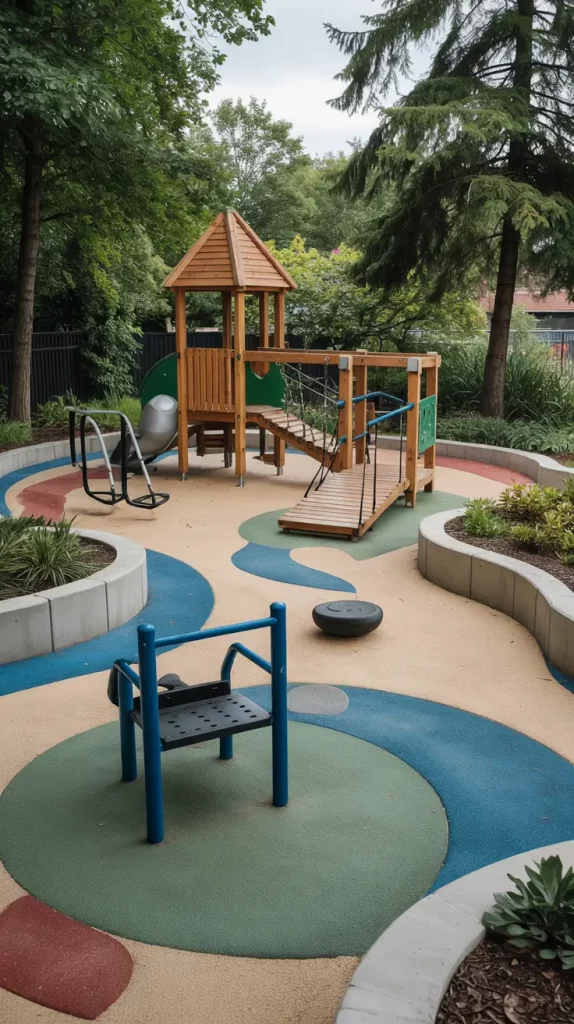
I use wheelchair-accessible ramps, ground-level play features, adaptive swings, supportive seating, and tactile sensory elements. Musical instruments, interactive panels, and quiet zones help children of different neurological profiles feel comfortable and engaged. Every element is selected for usability and adaptability.
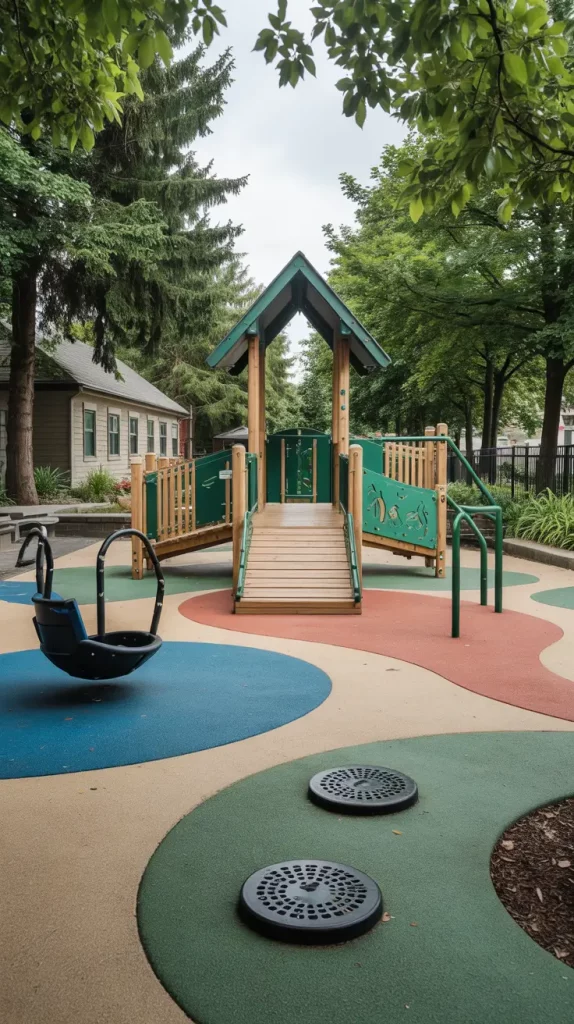
Professionals at the National Association for Special Education Services often highlight the importance of predictable layouts and safe transitions, and I fully agree. From my experience, children thrive when outdoor environments honor their unique needs without drawing unnecessary attention to differences.
To elevate this section, I would add gentle landscape lighting to improve visibility and safety for children with visual sensitivities.
Outdoor Sports And Activity Zones For Active Kids
Outdoor sports zones are designed for movement, challenge, and endurance-building. I create layouts that mimic scaled-down versions of athletic fields while remaining child-friendly and safe. Open turf areas, clear boundaries, and accessible storage help keep the space organized and ready for active play.
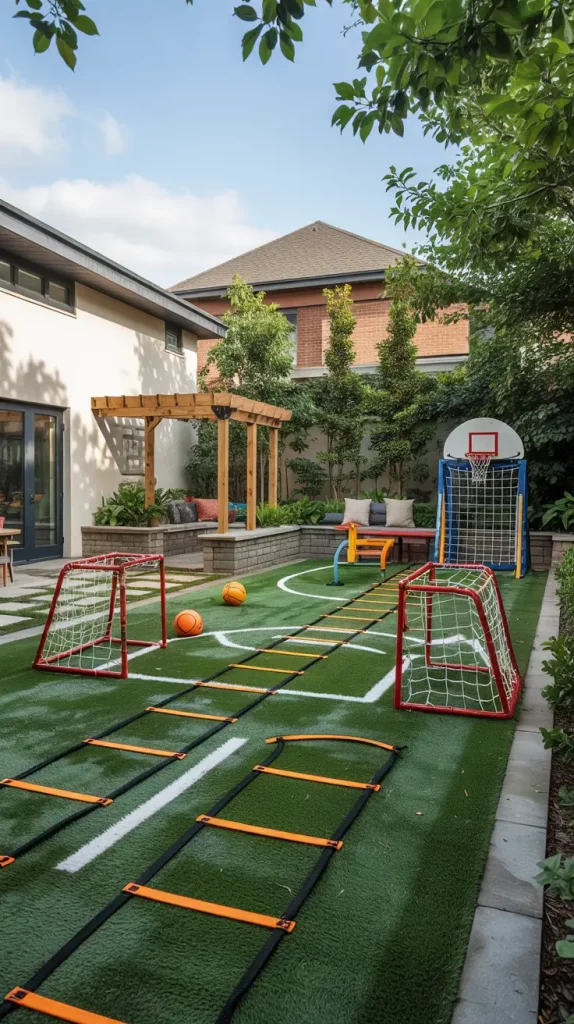
Key items include soccer goals, mini basketball hoops, agility ladders, running lanes, and portable nets. I suggest shock-absorbing turf or rubber surfaces to reduce impact during exercise. Each piece of equipment encourages healthy movement and helps children build coordination and athletic confidence.
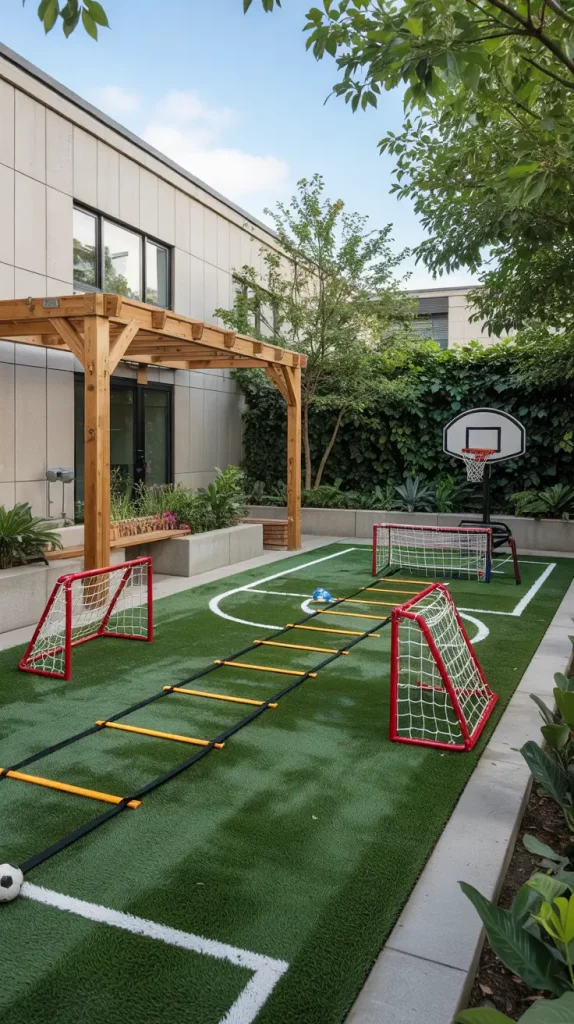
From my perspective, the sports medicine community—including experts featured on Mayo Clinic’s wellness platform—emphasizes that outdoor physical activity supports cardiovascular health and emotional balance. I’ve consistently seen these benefits reflected in families who prioritize active play zones.
One addition I would make is a simple hydration station or shaded rest area to help children recharge safely during vigorous play.
Shaded Outdoor Area Ideas For Kids In Hot Climates
When I design shaded outdoor areas for hot climates, I focus on creating cool, breathable spaces where children can play safely without overheating. These areas rely heavily on strategic coverage—using natural shade, pergolas, and UV-resistant canopies. My goal is to blend comfort with functionality, ensuring that children can stay outdoors longer even during peak sunlight hours.
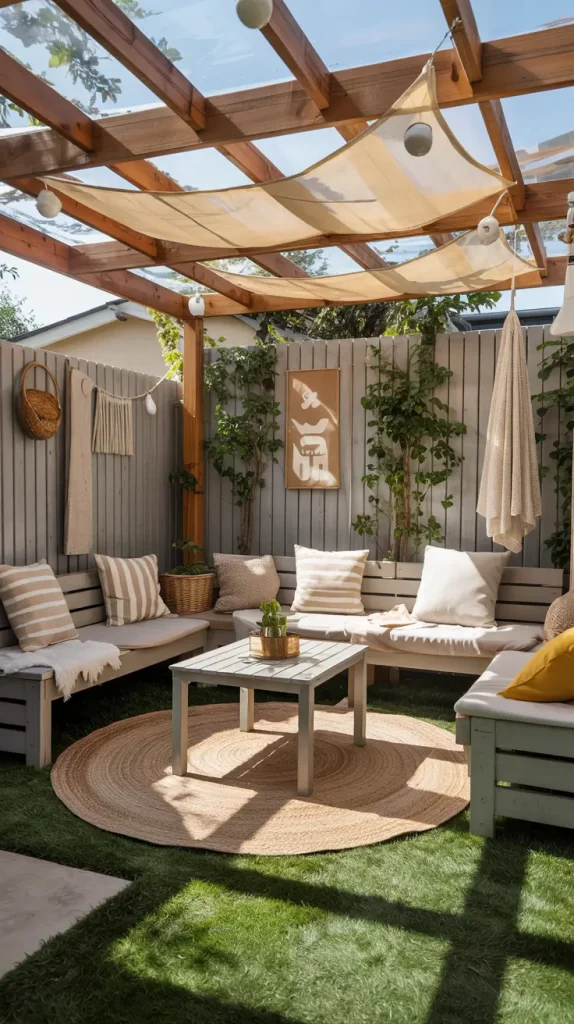
I often include pergolas with translucent panels, shade sails, outdoor rugs, misting systems, and lightweight seating. These features work together to reduce heat while maintaining airflow. I choose furniture made of heat-resistant materials like resin wicker or powder-coated metal to prevent discomfort and ensure durability under intense sun conditions.
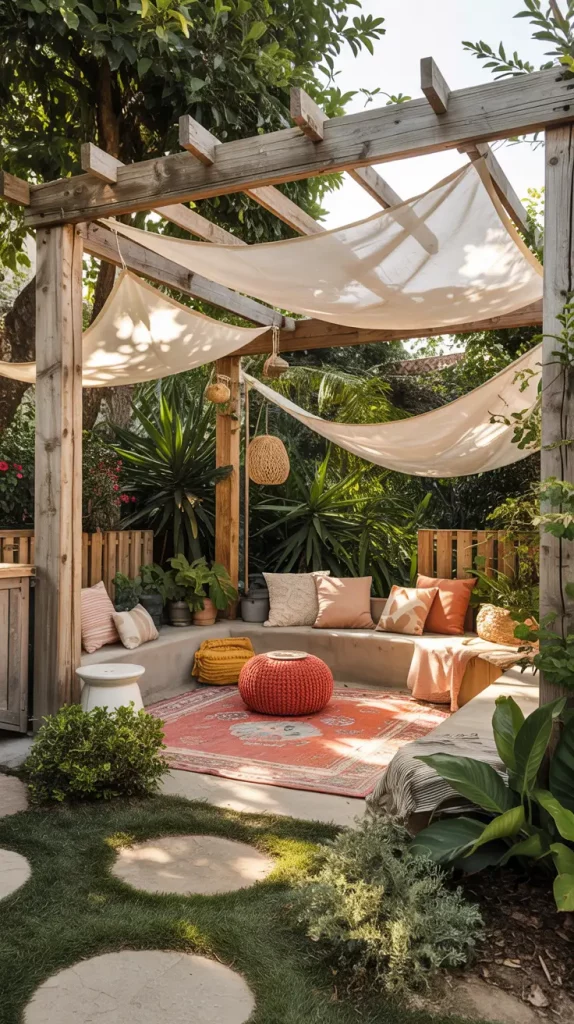
Experts from Sun Safety Alliance emphasize that shaded play areas significantly reduce the risk of UV exposure for children. From my experience, shaded designs also make outdoor play more inviting, especially for families living in consistently warm regions. A well-shaded zone quickly becomes the most used part of the yard.
What I would add to this layout is integrated solar-powered fans, which enhance comfort while aligning with energy efficiency and modern outdoor design principles.
Weather-Resistant Outdoor Play Areas For Year-Round Fun
Creating weather-resistant outdoor play areas requires an understanding of how materials behave in different climates. I prioritize durability, drainage, and flexibility so children can enjoy the space whether it’s sunny, rainy, or chilly. These zones must be easy to maintain while still offering engaging play features.
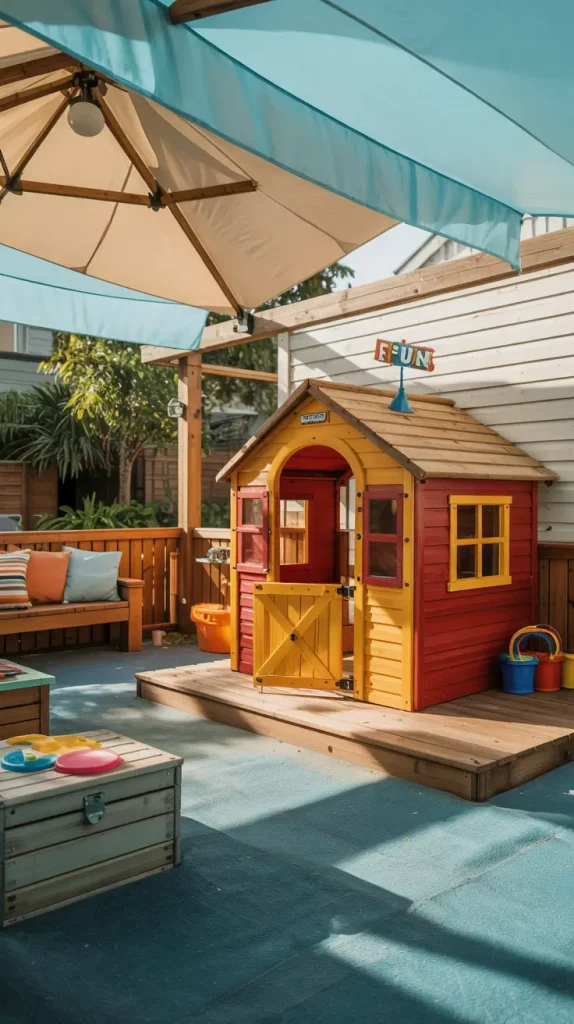
I incorporate waterproof playhouses, rust-resistant metal frames, composite decking, outdoor storage chests, and all-weather seating. Canopies or retractable roofs extend the usability of the space, while rubber flooring ensures safety and prevents slipping. Every design choice is made to withstand seasonal changes without losing its appeal.
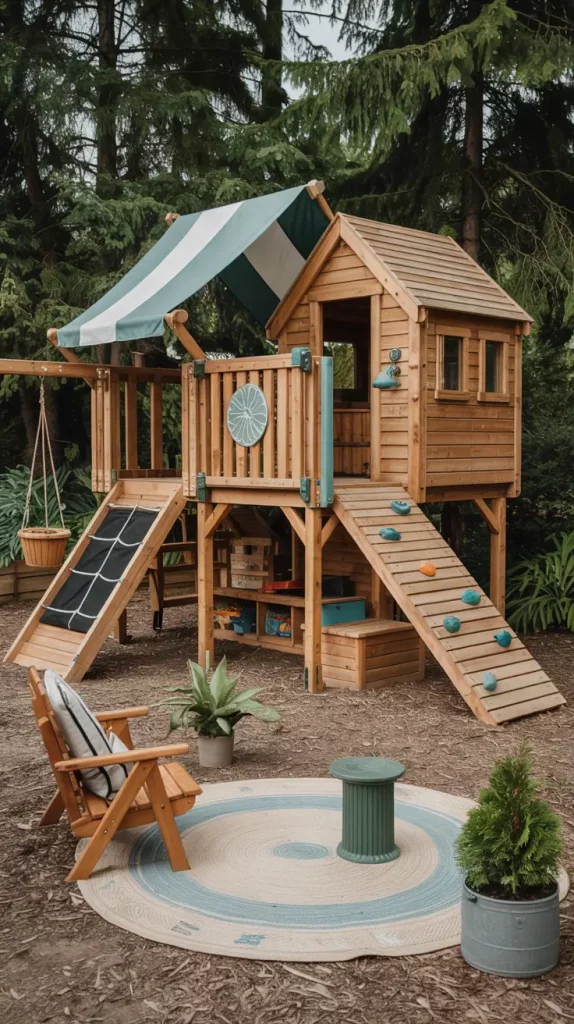
Publications like House Beautiful often highlight the importance of investing in weatherproof materials to reduce long-term maintenance costs. I’ve seen firsthand how weather-resistant setups offer better returns for families who want year-round outdoor functionality.
To complete this design, I’d include a small heating element or portable fire-safe heater for cooler months, enhancing comfort during colder seasons.
Outdoor Art And Craft Areas For Creative Kids
Outdoor art areas are some of the most joyful spaces I design. These environments give children freedom to explore creativity without the mess concerns of indoor settings. I layout these zones with open seating, washable surfaces, and multiple activity stations so children can paint, sculpt, draw, and experiment freely.
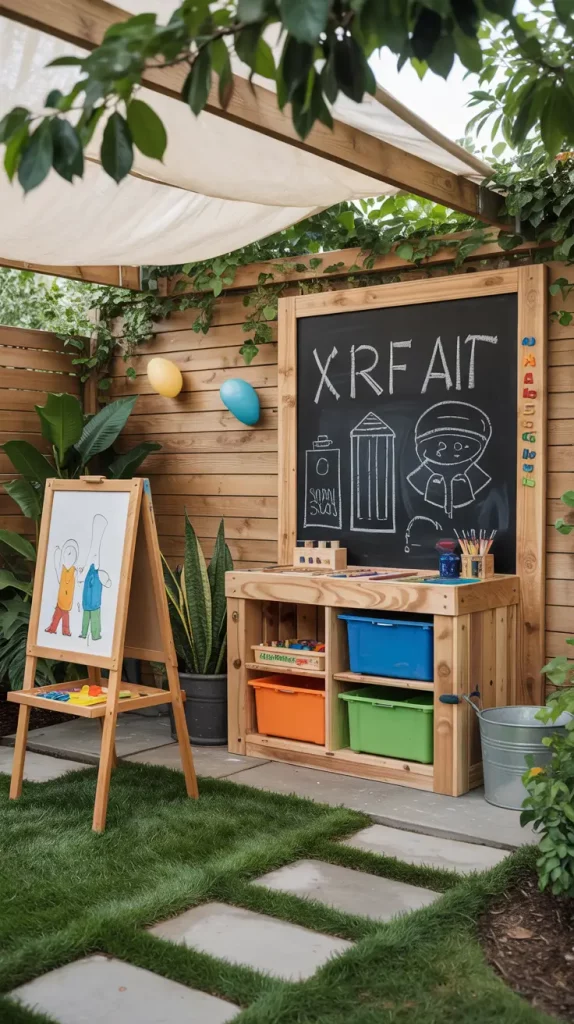
For this setup, I use weatherproof art tables, easels, chalk walls, supply cabinets, rinse basins, and tarped flooring. I frequently select materials like UV-resistant plastics, stainless steel sinks, and resin-coated tablets because they are simple to clean and maintain. A partial shade covering keeps the workspace cool while preventing sun glare on art surfaces.
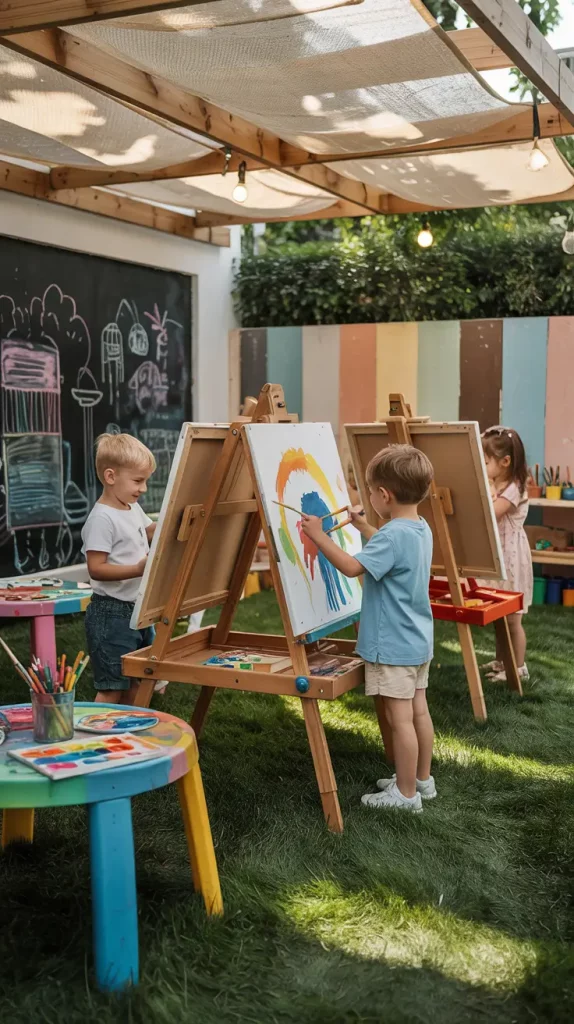
According to creative educators featured in Art Education Journal, outdoor creative play improves focus and emotional well-being. I’ve experienced similar results when designing for families—children remain engaged longer and produce more imaginative work outdoors.
What I would add is a rotating display board where kids can hang finished artwork, turning the space into an evolving open-air gallery.
Nature Play Outdoor Area Ideas Using Natural Materials
Nature play areas rely on organic textures, loose parts, and unstructured landscapes. I design these spaces to feel intentionally wild yet safe, giving children opportunities to connect deeply with natural environments. These zones often include uneven terrain, plant tunnels, and elements that shift with the seasons.
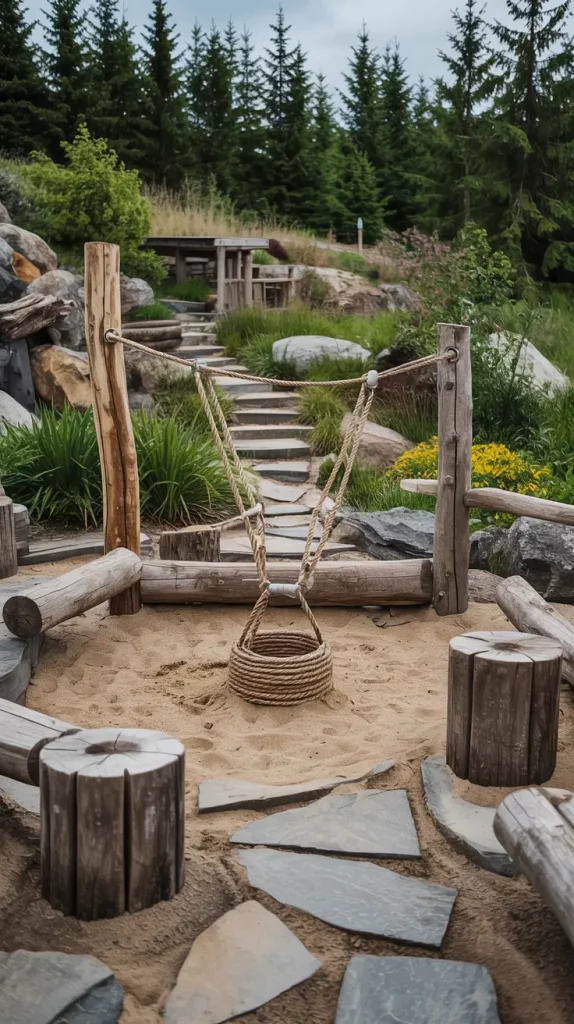
I incorporate tree stumps, logs, stone pathways, sand pits, rope elements, and collections of natural loose materials such as pinecones, shells, sticks, and pebbles. Every item is chosen to stimulate creativity, sensory exploration, and motor development. I prefer untreated wood and stone because they age beautifully and require little maintenance.
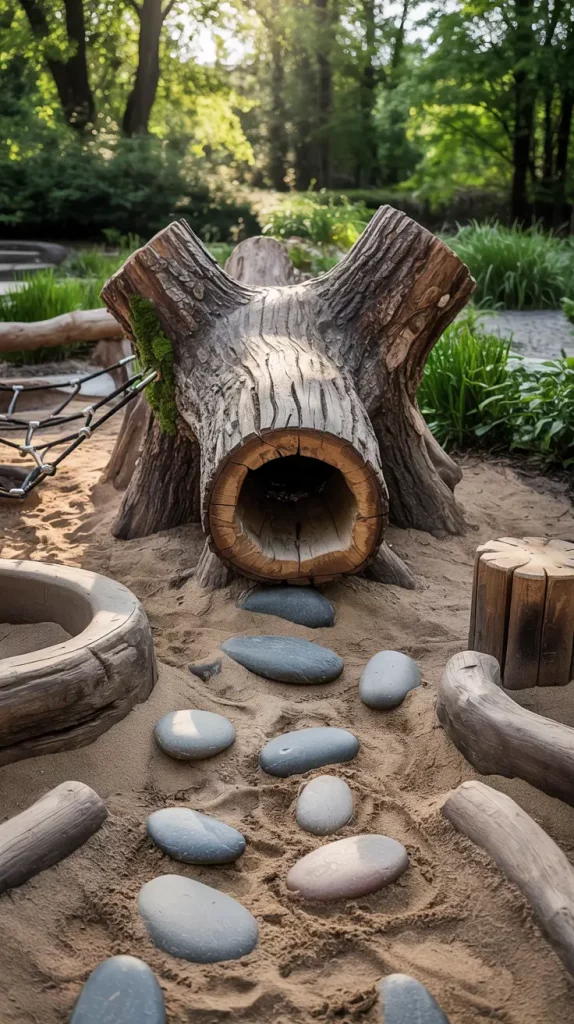
Experts in outdoor education, like those cited in Forest School Studies, emphasize the importance of nature play for resilience and problem-solving skills. I’ve personally witnessed children become calmer, more confident, and more imaginative in natural play settings.
What I’d add is a weatherproof storage crate for organizing loose natural materials while preserving the organic aesthetic.
Outdoor Area Ideas That Promote Social Play And Teamwork
Social play areas encourage cooperation, negotiation, and communication. When I design these spaces, I focus on features that naturally bring children together in shared experiences. A good social play area fosters group interaction without forcing participation.
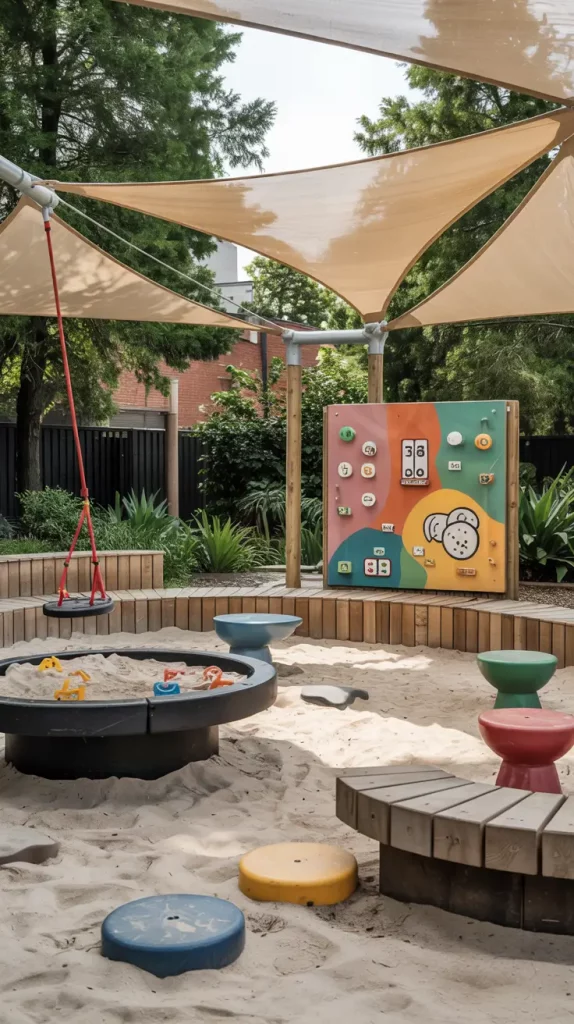
I include group games like oversized outdoor board games, communal sand tables, shared building blocks, dual swings, and open play stages. Circular seating areas and collaborative art walls also help kids engage as teams. Durable, weatherproof materials keep the environment inviting for long-term use.
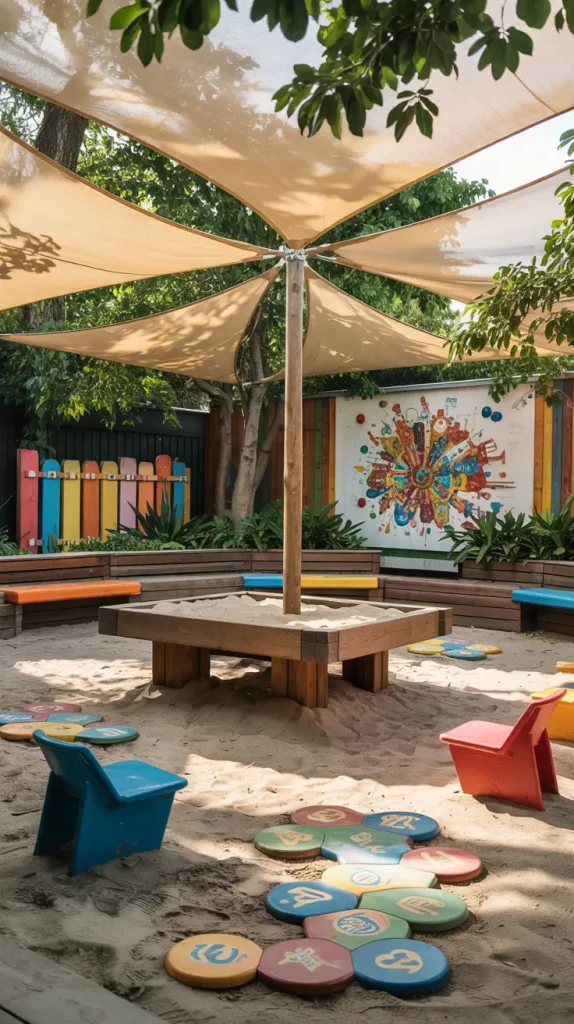
In my professional practice, I’ve seen social play zones dramatically improve children’s cooperation skills. Psychologists referenced in Child Mind Institute highlight that unstructured group play builds emotional intelligence, and I’ve consistently observed that children thrive when provided with shared play opportunities.
If I were to enhance this design, I’d add flexible shade canopies so groups can comfortably gather in sunny or warm weather.
Modern Outdoor Area Designs For Kids In 2026
Modern outdoor areas for 2026 emphasize minimalism, multifunctionality, and technology integration. I design these spaces with clean lines, muted palettes, and adaptive layouts that evolve with a child’s growth. The goal is to stay visually sophisticated while remaining practical for everyday family life.
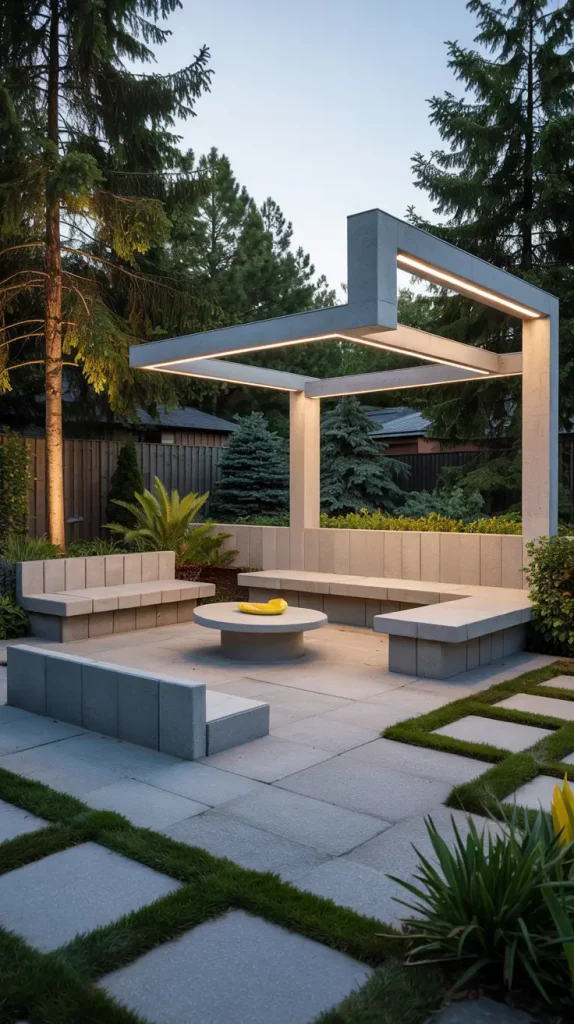
Furniture includes modular seating, geometric play structures, LED pathway lights, and multi-use platforms. Materials like composite wood, aluminum, and durable fabrics reflect current design trends. Smart elements such as weather sensors or app-controlled lighting enhance usability without overwhelming the space.
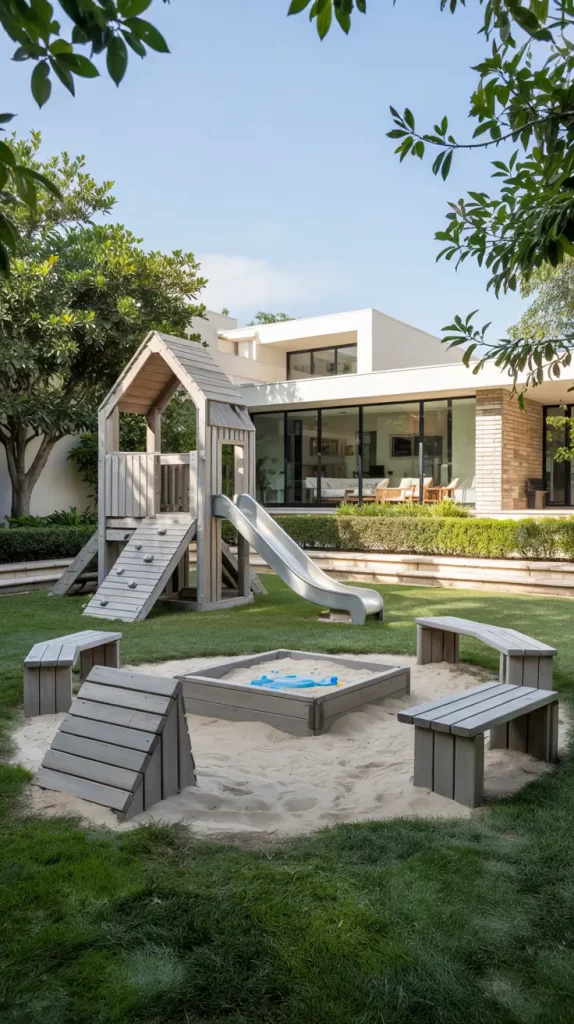
Design forecasts from Interior Design Magazine note that 2026 will continue prioritizing modularity and sustainability. I find this accurate—families increasingly want play spaces that feel modern yet blend seamlessly into contemporary garden layouts.
To elevate this area further, I would install a small outdoor charging hub for solar-powered devices to keep modern elements running efficiently.
Outdoor Area Ideas That Grow With Your Child
Designing spaces that adapt as children grow has become a major focus in my work. These areas are flexible, modular, and designed with long-term functionality in mind. Instead of static play structures, I prefer interchangeable elements that shift from toddler-friendly to preteen-ready setups.
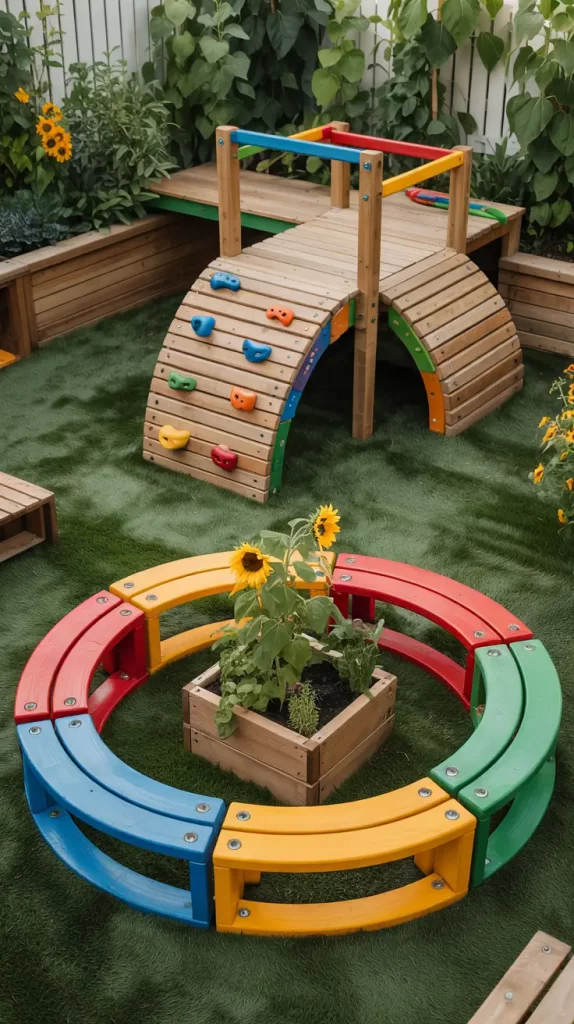
I include adjustable climbing walls, modular seating, evolving garden beds, multi-level platforms, and rearrangeable storage. Each item is selected for its ability to transform without requiring a full redesign. Soft surfaces transition into sports-ready turf, and toddler playhouses become reading nooks or craft corners with age.
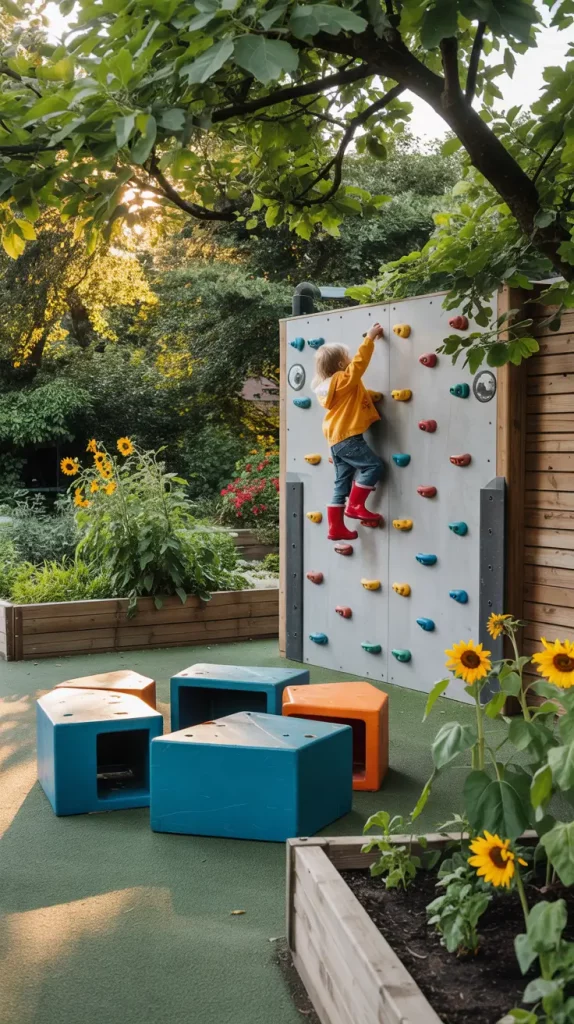
Several design experts featured in HGTV emphasize the value of long-term planning in outdoor spaces. I’ve seen families save significant money by investing in adaptable features rather than replacing equipment every few years.
To improve this layout, I would add an accessory rail or interchangeable hook system for hanging swings, hammocks, or sports gear as needs evolve.
Montessori-Inspired Outdoor Area Ideas For Kids
When designing Montessori-inspired outdoor areas, I focus on independence, order, and freedom within safe boundaries. These spaces allow children to explore at their own pace through hands-on materials placed at child height. I keep the layout open, predictable, and separated into clear activity zones so children can choose tasks independently.
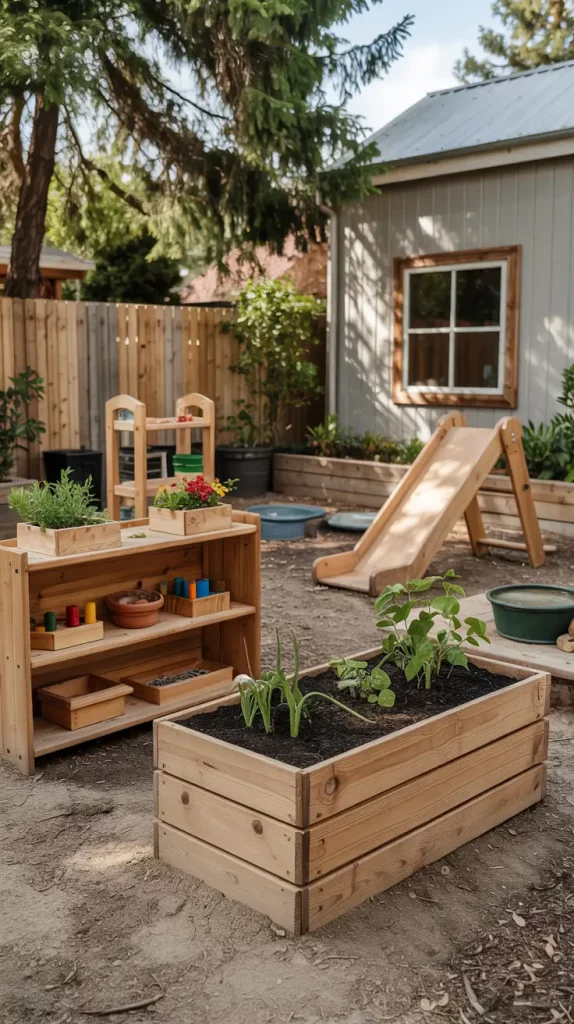
The features I use include low shelves with accessible tools, child-sized gardening beds, water basins for practical life activities, natural climbing elements, and tactile learning objects. I choose neutral colors, natural wood, and organic textures because they reflect Montessori principles of simplicity and connection to nature. Every piece of furniture is intentionally selected so children can manipulate it safely and confidently.
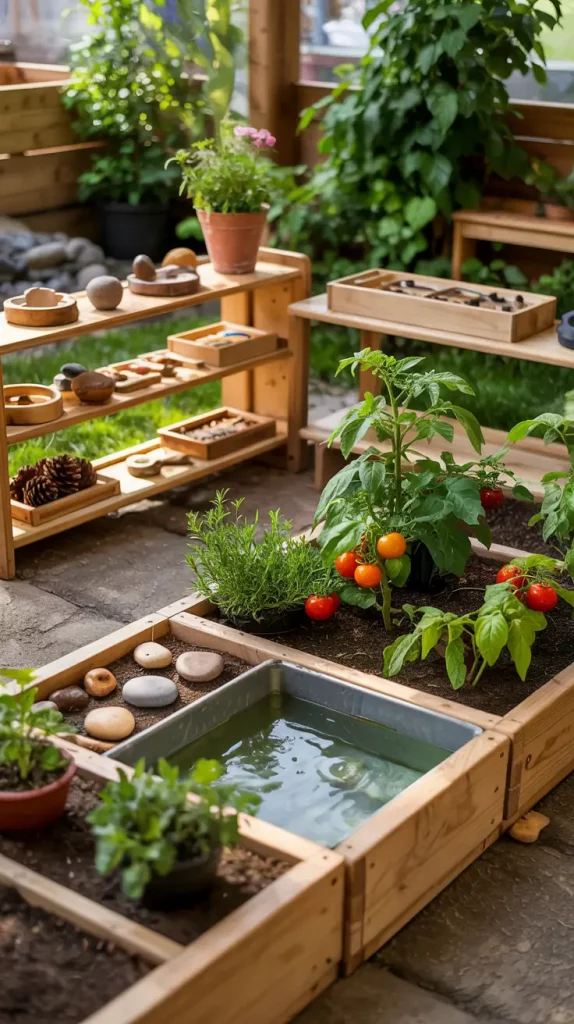
Montessori educators frequently highlighted in Montessori Life Magazine emphasize that outdoor environments should mirror indoor Montessori classrooms in structure and philosophy. I’ve seen how children flourish in these balanced, predictable spaces—they become more confident, calm, and focused when their environment supports autonomy.
To refine these areas further, I would suggest adding rotating seasonal activities such as leaf sorting, seed planting, or water pouring stations to maintain engagement throughout the year.
Outdoor Area Ideas For Kids In Schools And Daycares
Designing outdoor areas for schools and daycares requires scalability, safety, and high durability. I create open layouts that accommodate large groups while still offering structured zones for various developmental needs. Visibility is critical, so I maintain clear sightlines for staff supervision.
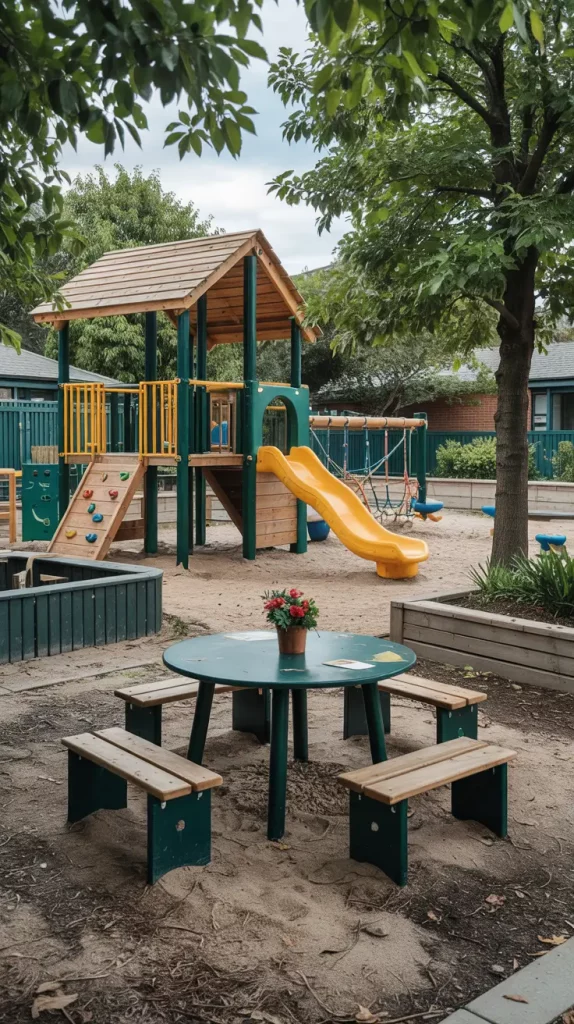
Typical features include covered play stations, climbing structures with safety surfacing, communal sandboxes, outdoor classrooms, and group activity tables. All materials must withstand daily use, so I rely on commercial-grade components and reinforced structures. Storage sheds, shade sails, and first-aid access points also play important roles in the overall design.
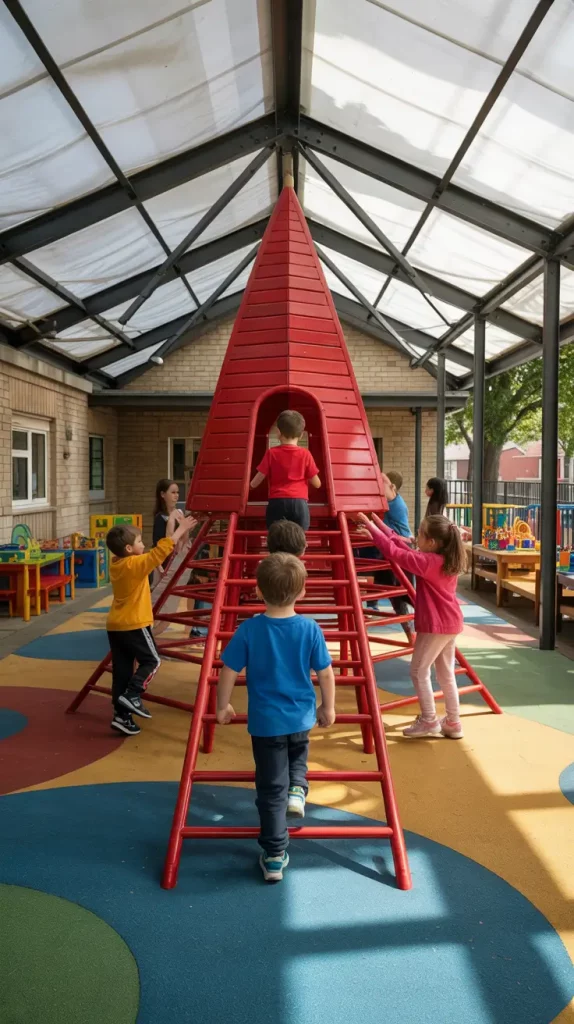
From my experience working with educational facilities, trends highlighted by Education Week consistently show the importance of outdoor play in academic readiness. Children in well-designed outdoor areas tend to be more engaged and cooperative during indoor learning time.
If expanding this area, I would add sensory-inclusive elements such as sound panels or textured paths to better support children with differing learning needs.
Backyard Obstacle Courses And Challenge Areas For Kids
Obstacle courses add excitement and movement to any outdoor space. When designing them, I aim to create varied levels of difficulty so children stay motivated and continuously challenged. These areas are especially effective for energetic kids who benefit from structured physical activity.
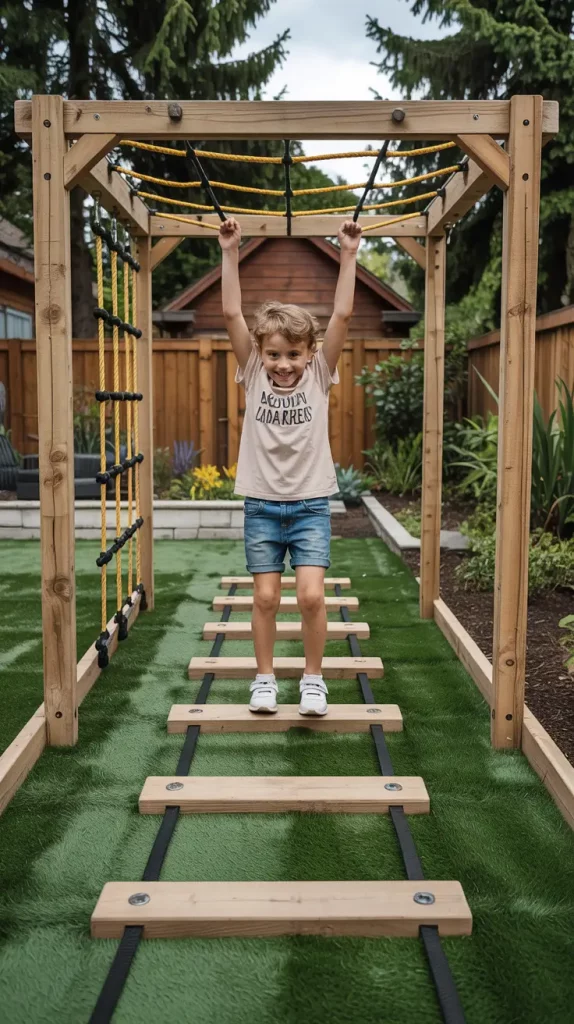
I include balance beams, rope climbs, stepping stones, hanging rings, low walls, tunnels, and agility ladders. Safety surfacing such as rubber mulch or turf is essential. Every element is arranged in a thoughtful sequence to help children build coordination, stamina, and problem-solving skills.
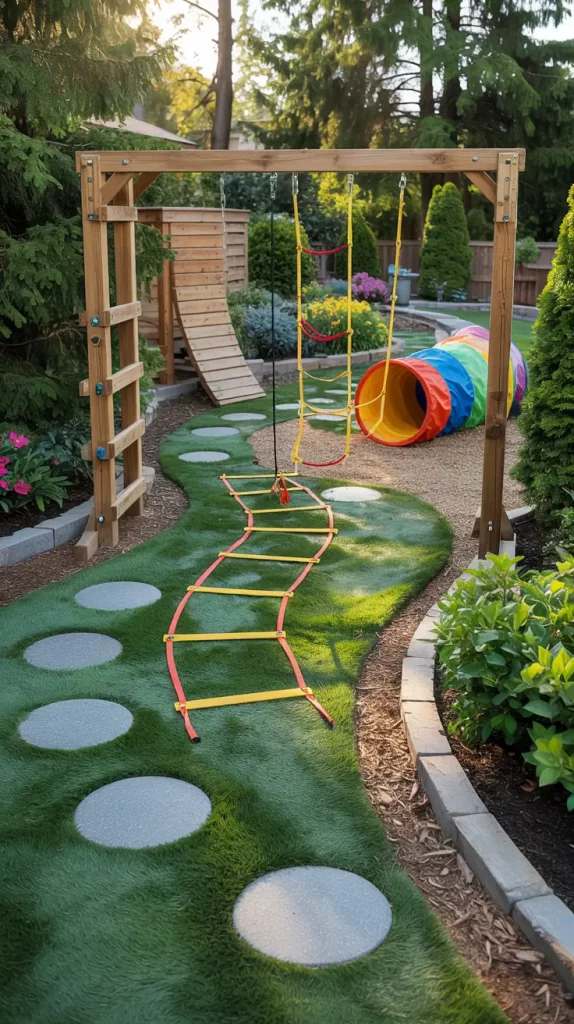
According to youth fitness specialists featured by KidsHealth, obstacle play encourages perseverance and improves overall motor development. I’ve consistently observed that children who use obstacle courses develop stronger confidence and body awareness over time.
One improvement I’d add is modular attachments that allow parents to adjust the course intensity as their children grow.
Outdoor Area Safety Tips Every Parent Should Know
Safety is the foundation of every outdoor area I design. My goal is to create environments where children can explore freely while minimizing preventable hazards. Good safety planning begins with material selection, layout planning, and ongoing maintenance.
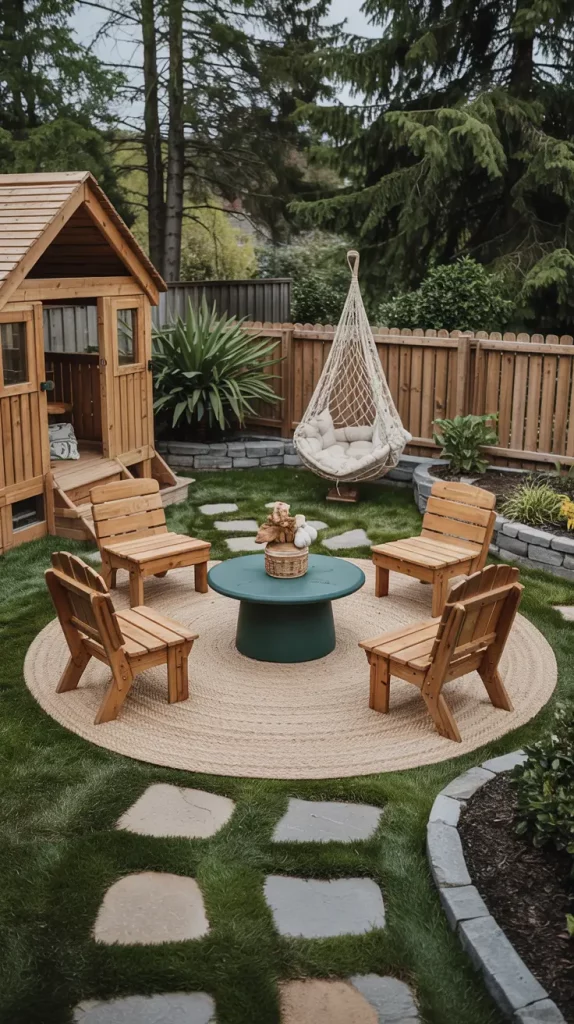
I recommend soft surfacing under all climbing or jumping structures, rounded furniture edges, non-toxic paints, UV protection elements, and secure fencing. Regular inspections for loose bolts, splintering wood, or worn surfaces are essential. Lighting and clear pathways also support safe navigation at dusk.
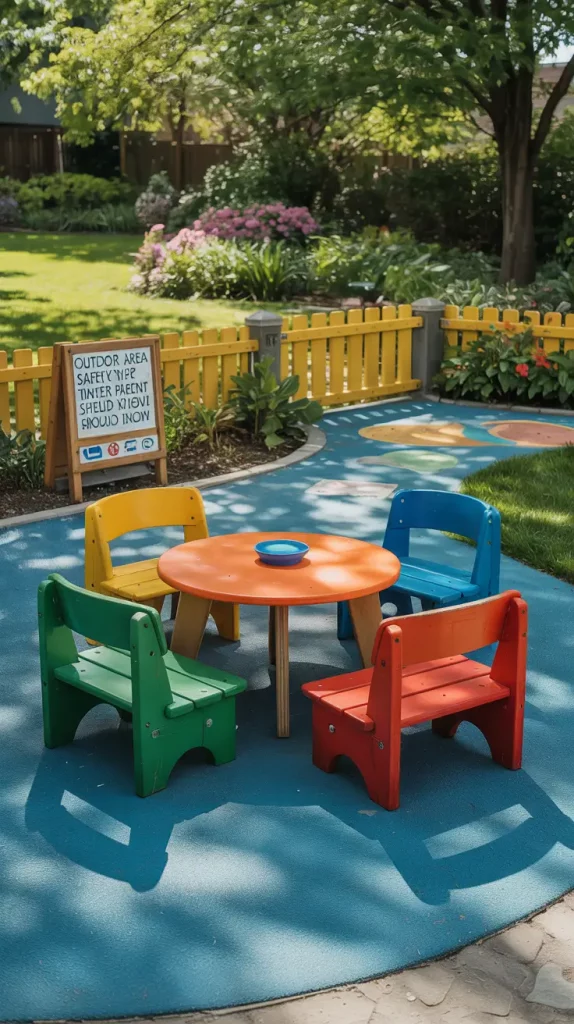
Organizations such as the National Safety Council emphasize the importance of supervision and routine equipment checks. I’ve found that parents who implement simple safety protocols feel more at ease and observe fewer accidents.
If adding to this section, I would include a laminated safety checklist for parents to keep near the outdoor area for quick reference.
Seasonal Outdoor Area Ideas For Kids Throughout The Year
Seasonal outdoor areas keep play fresh and engaging by adapting to weather changes. I design these spaces with flexible components that shift easily from summer play to winter exploration. This allows children to enjoy the outdoors in all seasons.
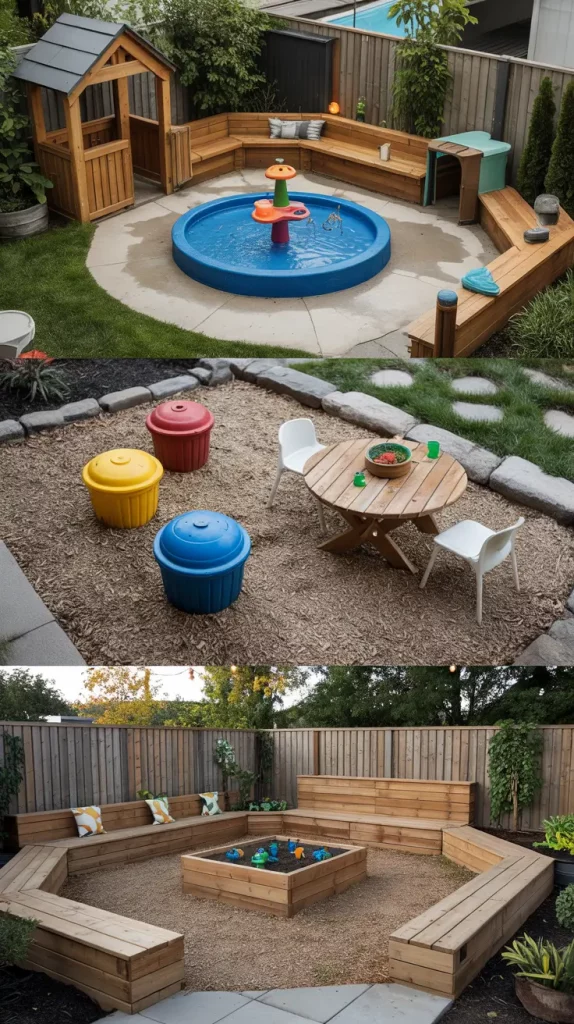
I often include removable splash pads, portable heaters, fall-themed sensory bins, chalk murals, gardening plots, and snow-friendly zones. Furniture is chosen for durability and fast transitions—folding tables, modular seating, and roll-away storage simplify seasonal updates. Each element supports sensory, cognitive, and physical development year-round.
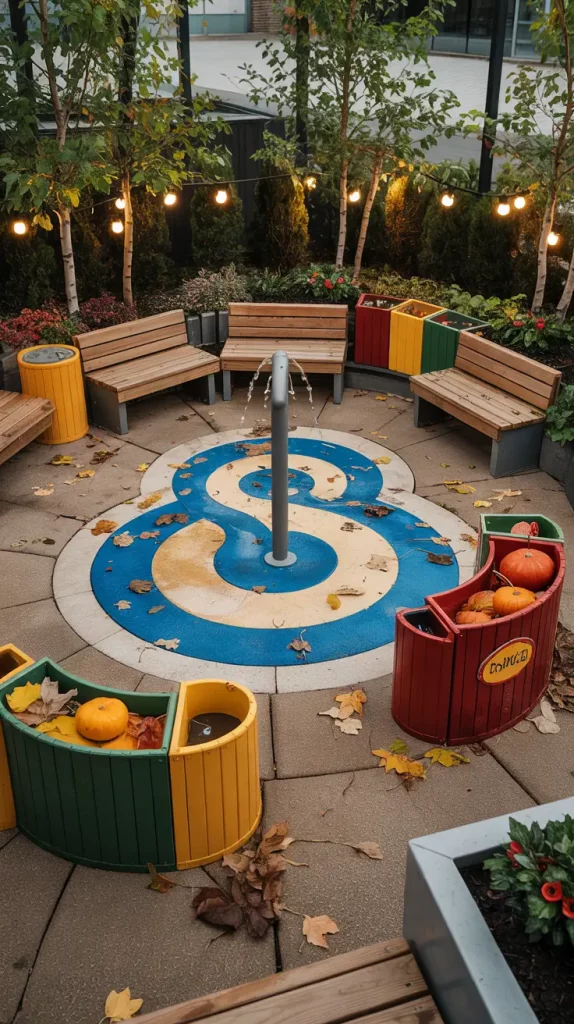
Design experts from Better Homes & Gardens frequently promote seasonal adaptability as a key to outdoor longevity, and I agree. I’ve seen how rotating activities maintain children’s excitement and curiosity.
To make this design even more effective, I’d add seasonal lighting—string lights in summer and warm-toned lamps in winter—to enhance ambiance and comfort.
Smart Outdoor Area Ideas Using Technology And Play
Smart outdoor spaces combine physical play with modern technology. I create these areas to introduce children to interactive experiences without overwhelming natural play elements. The balance between analog and digital features is crucial.
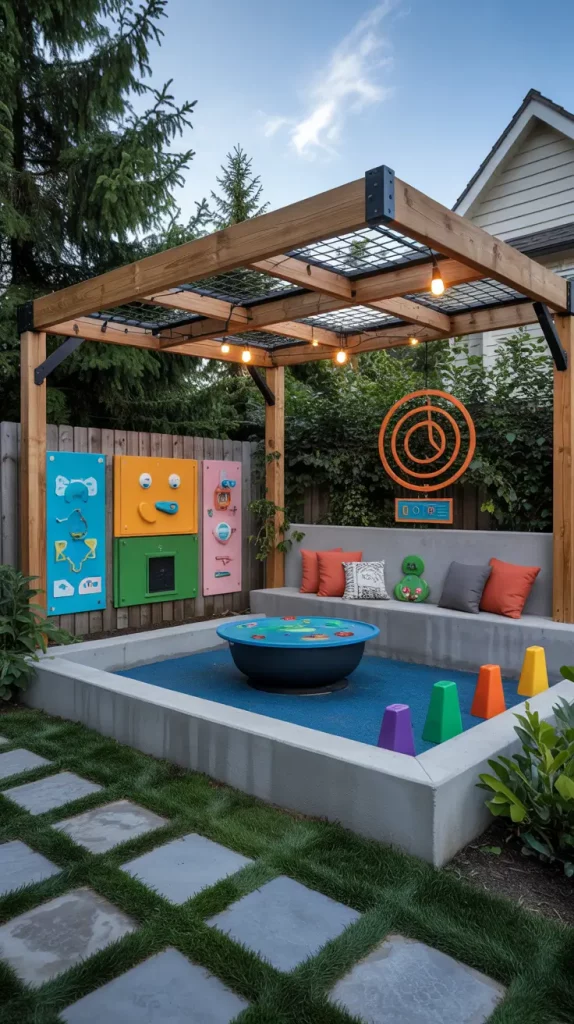
I incorporate app-controlled lighting, solar-powered speakers, motion-activated games, and interactive sensory panels. Smart irrigation systems support child-led gardening, while weather sensors help regulate shade or misting systems. All devices are selected for durability and child safety.
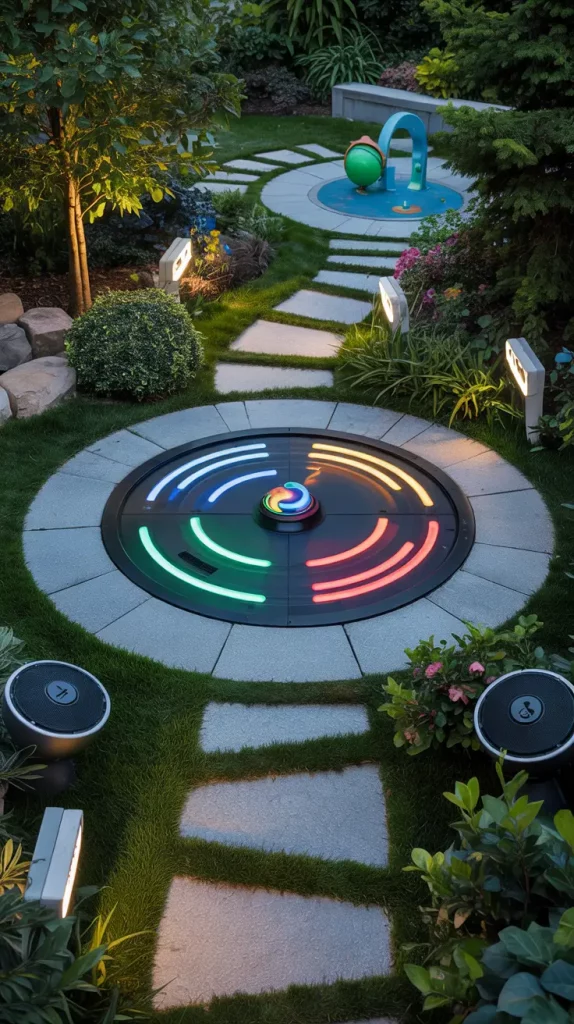
Technology writers featured in Wired often highlight that well-designed smart play zones keep children engaged while teaching early problem-solving. From what I’ve seen, integrating light or sound-responsive features encourages children to explore cause and effect through play.
To enhance these areas, I would add a child-friendly charging hub with solar energy to keep all tech components sustainable and functional.
How To Plan The Perfect Outdoor Area For Kids At Home
Planning the perfect outdoor area begins with understanding your child’s interests, your available space, and your long-term goals. I start by mapping out zones—creative, physical, sensory, and rest areas—and determining how they’ll transition as children grow. A clear plan prevents overcrowding and ensures safe, functional flow.
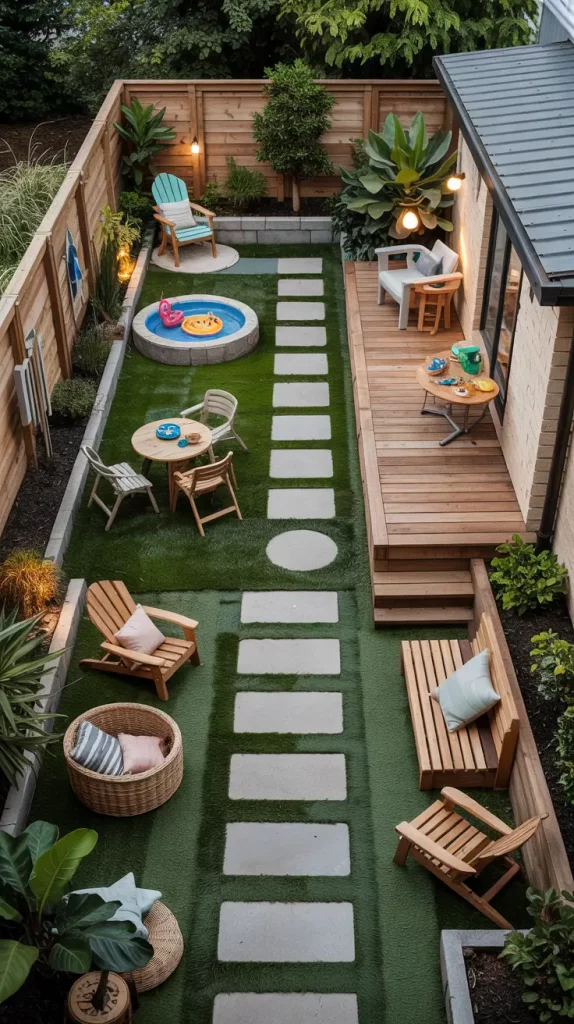
I recommend creating a materials list that includes surface types, furniture, shade options, and activity structures. Measuring the space carefully helps determine proportions and prevents overbuying. Incorporating storage solutions early keeps the area tidy, while thoughtful lighting extends usability into the evening. I also advise selecting durable, weather-resistant furnishings to protect the investment.
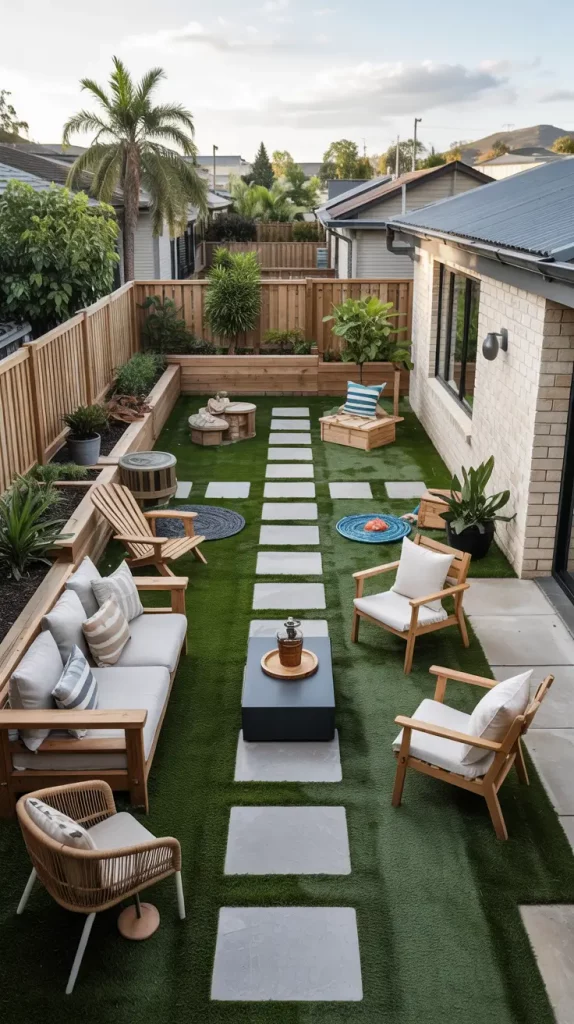
From my experience and guidance often shared in Martha Stewart Living, planning is everything. Families who take time to visualize layouts before building enjoy safer, longer-lasting, and more harmonious outdoor spaces.
To complete this section, I’d suggest adding a printable planning checklist with sections for budgeting, materials, safety, and long-term upgrades.
Conclusion
Designing meaningful outdoor areas for kids in 2026 is all about blending creativity, safety, and long-term functionality. By choosing thoughtful layouts, natural elements, and engaging activity zones, parents can create spaces that inspire learning, imagination, and active play. I encourage readers to explore these ideas, adapt them to their homes, and share their experiences or questions in the comments below.