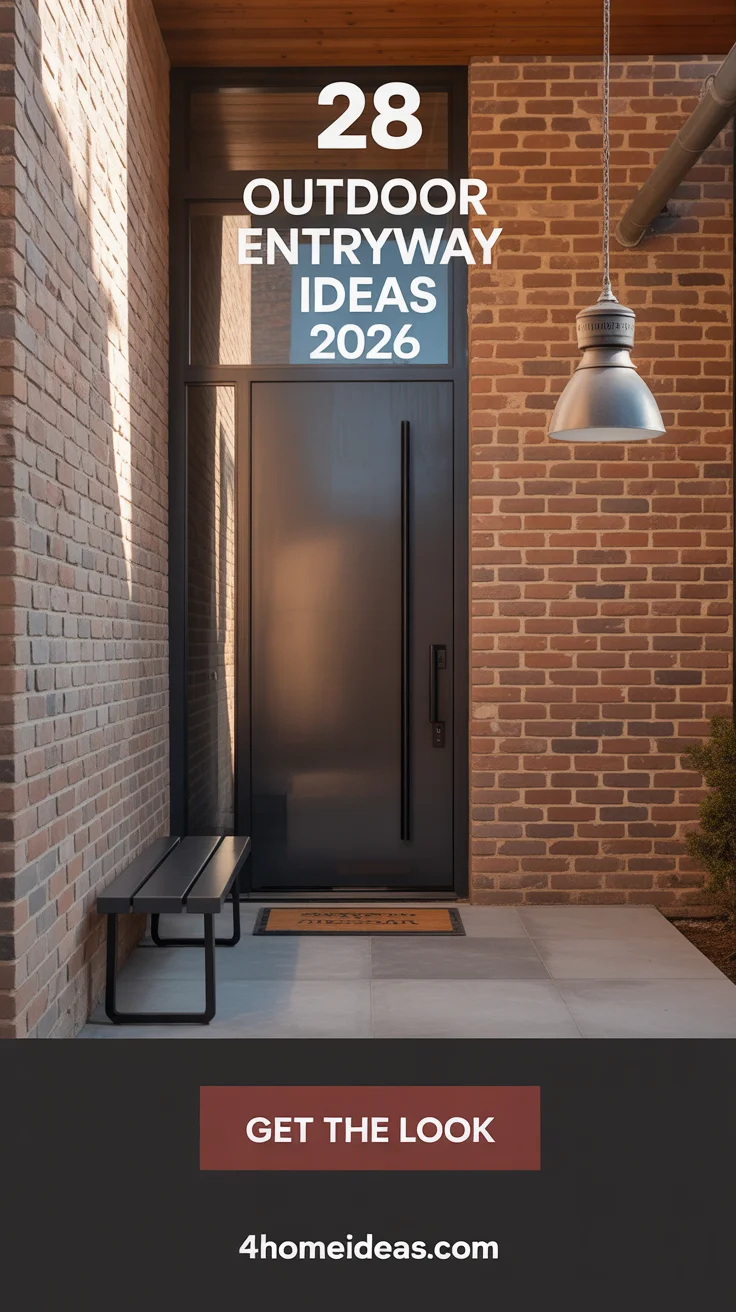
Are you planning to refresh your home’s first impression in 2026? Wondering how to combine functionality, curb appeal, and personality in one cohesive space? In this guide, I’ll walk you through the most актуальные outdoor entryway ideas 2026, from outdoor entryway ideas exterior upgrades to stylish outdoor entryway ideas entrance concepts that truly transform how guests experience your home.
Today’s trends go far beyond a simple front door update. Homeowners are rethinking outdoor entryway ideas walkways, optimizing outdoor entryway ideas small spaces, integrating outdoor entryway ideas with bench, and even adapting outdoor entryway ideas apartment layouts. Whether you’re considering outdoor entryway ideas with stairs, adding outdoor entryway ideas wood accents, exploring outdoor entryway ideas coastal themes, redesigning your outdoor entryway ideas staircase, embracing outdoor entryway ideas modern aesthetics, or installing outdoor entryway ideas double door statements, this article will help you design with confidence and clarity.
Let’s begin with the first seven key design directions shaping outdoor entryways in 2026.
Outdoor Entryway Ideas Exterior Design Trends For 2026
In 2026, I see outdoor entryway ideas exterior shifting toward architectural cohesion and layered textures. The entry zone is no longer an isolated porch; it is treated as a seamless extension of the facade. I prioritize balanced proportions, integrated lighting, and materials that echo the main structure. Clean lines mixed with organic elements dominate current projects, creating a refined but welcoming look.
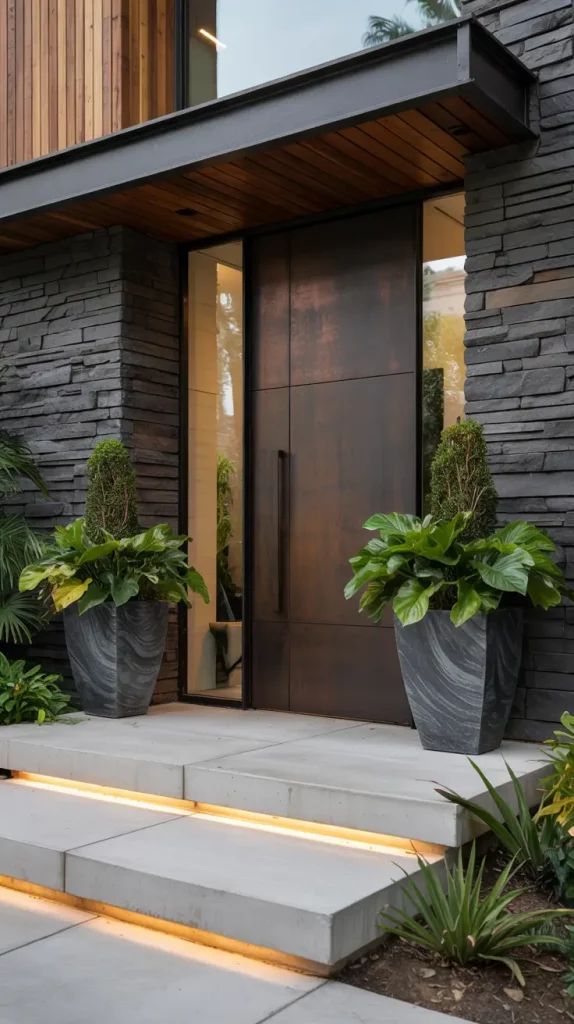
I typically incorporate oversized pivot or paneled doors, textured wall cladding (such as stone veneer or vertical wood slats), integrated LED step lighting, and statement house numbers in matte black or brushed brass. A wide-format concrete or porcelain tile platform grounds the space, while large planters with sculptural greenery add vertical balance. These elements strengthen visual impact without overwhelming the architecture.
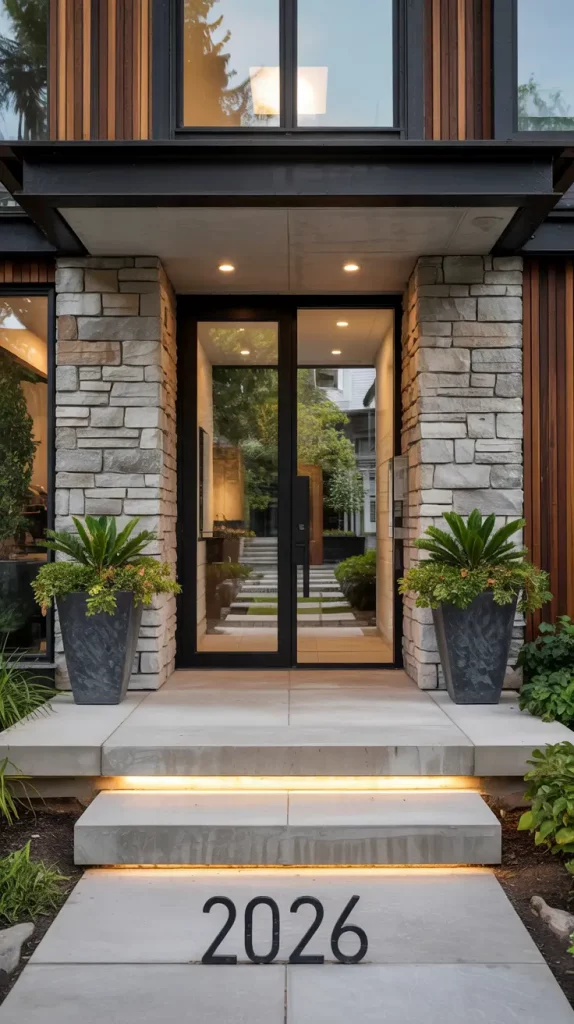
In my experience, publications like Architectural Digest often emphasize continuity between exterior and interior palettes—and I fully agree. When finishes on the entry subtly reflect interior tones, the home feels intentional and curated.
What’s often missing is smart drainage and weather-resistant detailing. I always recommend concealed drainage channels and UV-resistant finishes to maintain longevity and protect your investment.
Outdoor Entryway Ideas Entrance Inspiration For A Welcoming First Impression
When designing outdoor entryway ideas entrance, I focus on emotional impact. The entrance should signal warmth and personality while remaining practical. I approach it as a transitional space—neither fully outdoors nor indoors—but something in between.
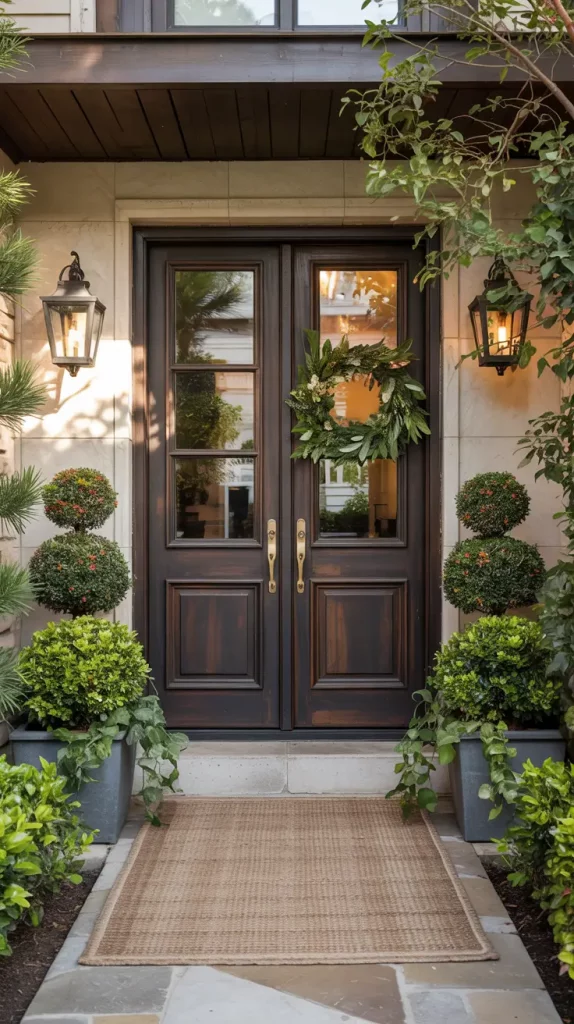
I incorporate layered lighting (wall sconces + overhead pendant), a durable yet elegant door finish, textured welcome mats, and coordinated hardware. Symmetry works beautifully here: matching planters, twin lanterns, and centered decor create visual calm. A seasonal wreath or minimalist door art personalizes the space without clutter.
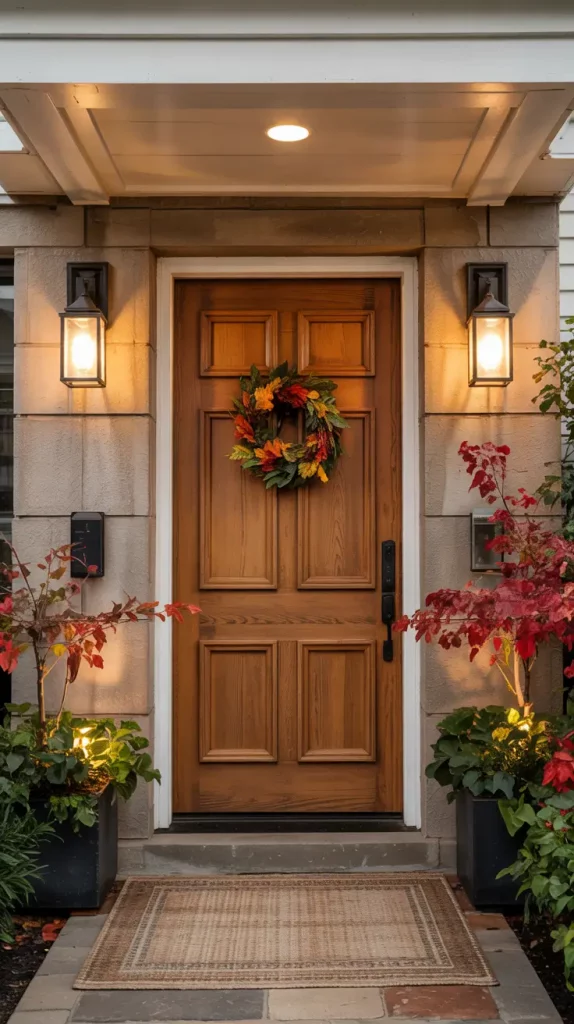
Personally, I’ve noticed that even small upgrades—like upgrading to quality hardware or installing dimmable lighting—dramatically elevate the perception of the home. First impressions are formed within seconds, and the entrance defines expectations.
What could be added here is subtle scent integration—like potted lavender or rosemary—enhancing the sensory experience beyond visual appeal.
Outdoor Entryway Ideas Walkways That Elevate Curb Appeal
Strategic outdoor entryway ideas walkways define how guests approach your home. I design walkways to guide movement naturally while enhancing landscaping. In 2026, curved paths, mixed materials, and integrated lighting are especially popular.
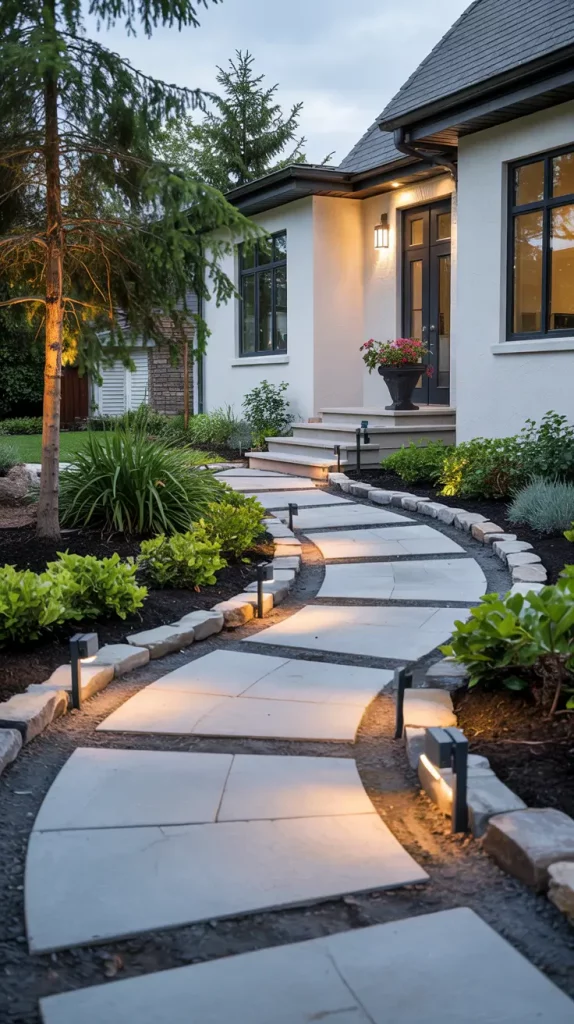
I recommend large concrete pavers spaced with gravel or ground cover, subtle path lighting embedded at ground level, and edging that visually frames the route. Natural stone remains timeless, but modern porcelain slabs are increasingly used for durability. The walkway should visually connect driveway, landscaping, and entry platform.
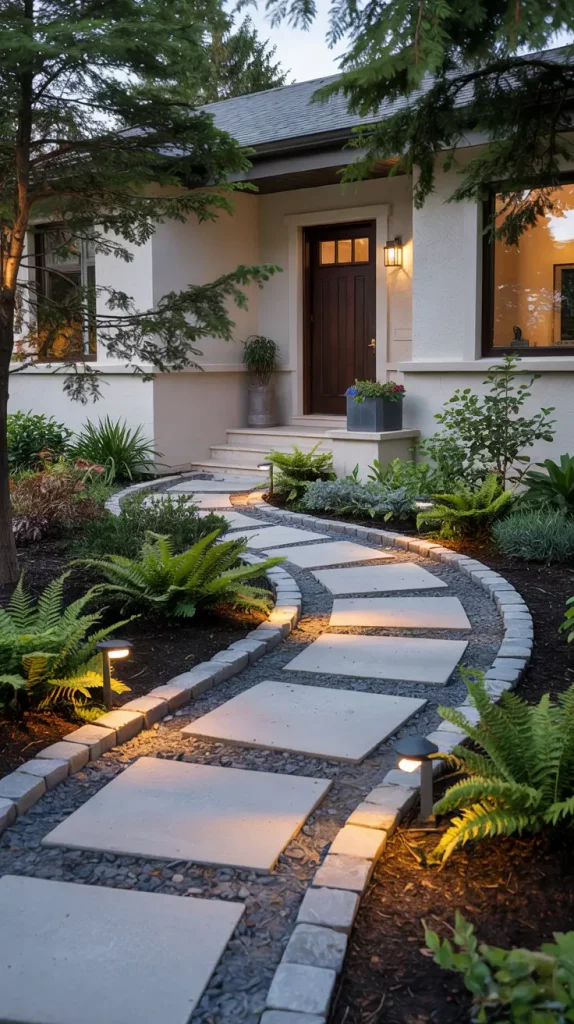
From my experience, uneven or poorly lit paths undermine even the most beautiful entrance. The National Association of Home Builders often highlights safety as a top exterior priority—and I completely agree.
What is often missing is intentional width. I always suggest at least 42–48 inches for comfort and accessibility.
Outdoor Entryway Ideas Small Spaces With Smart Layout Solutions
Designing outdoor entryway ideas small spaces requires precision. I approach compact entryways with vertical thinking—maximizing wall surfaces and minimizing floor clutter.
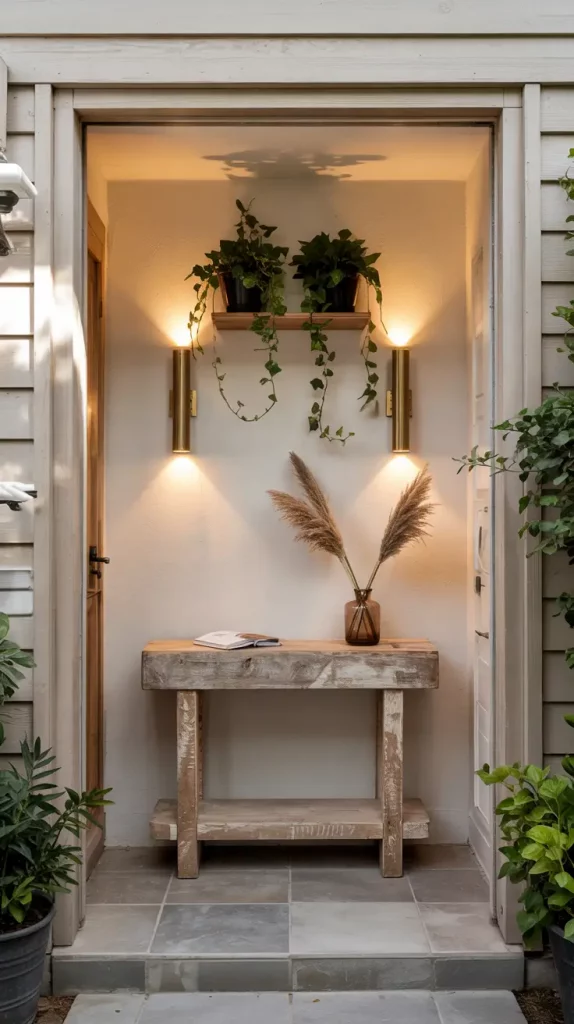
I use slim wall-mounted lighting, floating shelves for decor, narrow console tables, and vertical planters. Mirrors rated for exterior use can visually expand tight areas. Light-colored flooring materials also help reflect natural light, making the space feel open.
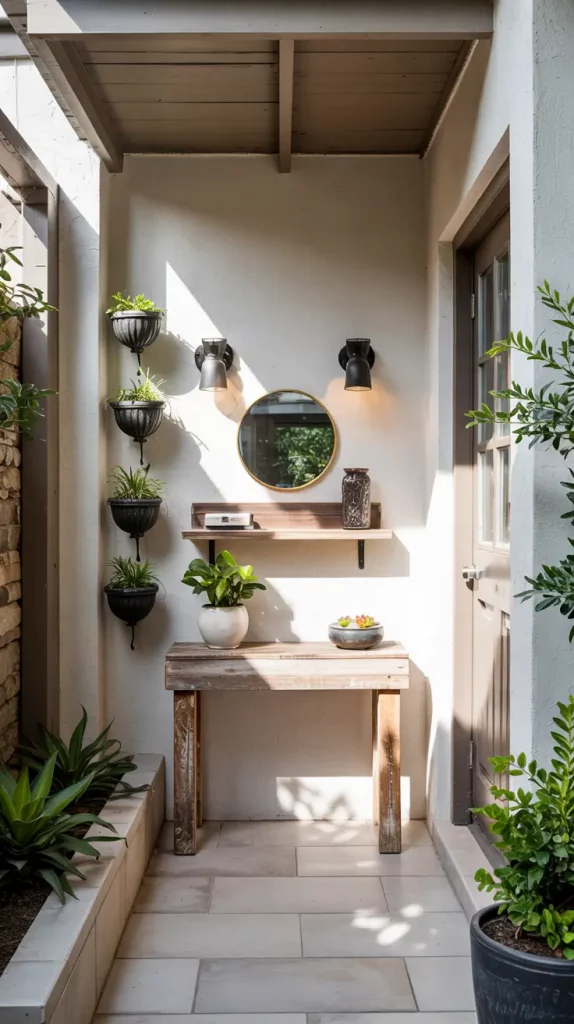
In my practice, restraint is key. Overdecorating small spaces creates visual noise. I recommend choosing two or three focal elements and keeping the rest minimal.
What may be missing in many small entryways is concealed storage—like built-in shoe drawers or hidden compartments within benches—to maintain visual cleanliness.
Outdoor Entryway Ideas With Bench For Style And Functionality
Integrating outdoor entryway ideas with bench enhances both comfort and usability. I see benches as architectural elements rather than accessories.
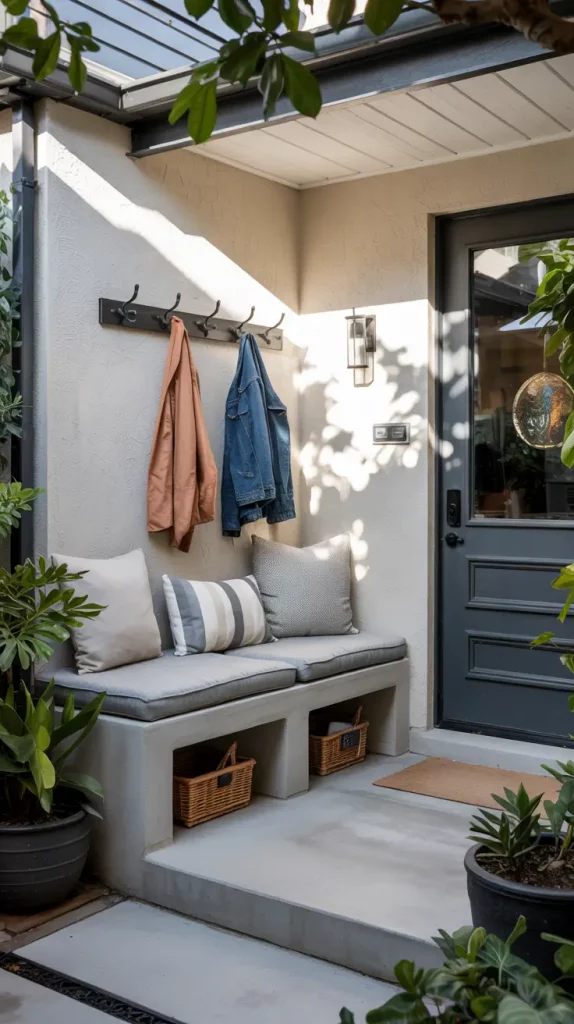
I prefer built-in benches crafted from concrete, teak, or powder-coated metal. Cushions in weather-resistant fabrics add comfort, while integrated storage below keeps shoes or packages organized. Adding wall hooks above the bench increases practicality.
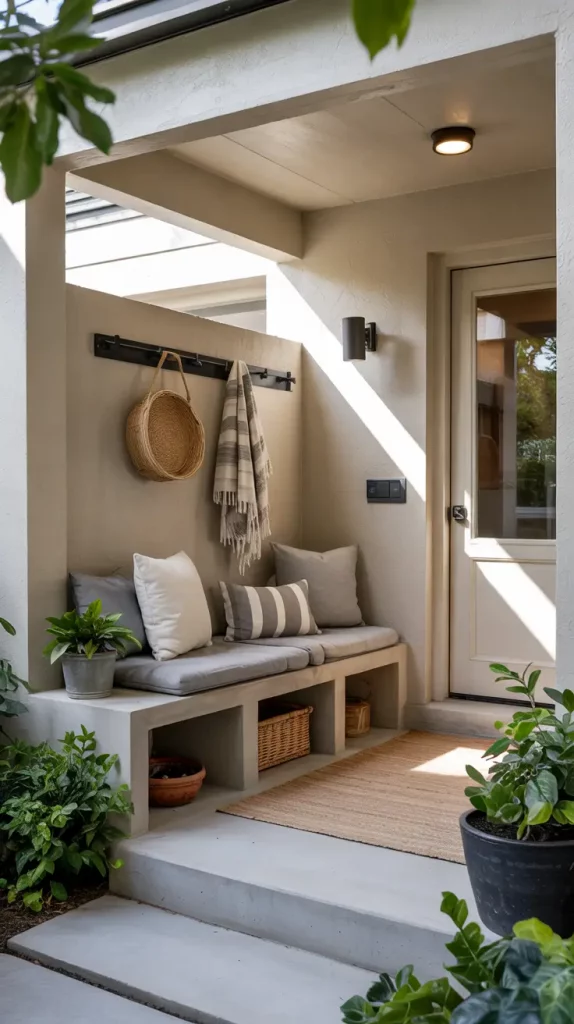
From experience, clients appreciate having a place to sit when removing shoes or waiting. As Better Homes & Gardens often notes, functional seating increases daily convenience—especially for families.
What could enhance this section is overhead coverage—like a pergola or awning—to protect seating from rain and sun exposure.
Outdoor Entryway Ideas Apartment-Friendly Designs For Compact Living
When working on outdoor entryway ideas apartment, I focus on portability and non-permanent upgrades. Many apartment dwellers must respect building rules while still personalizing their entry.
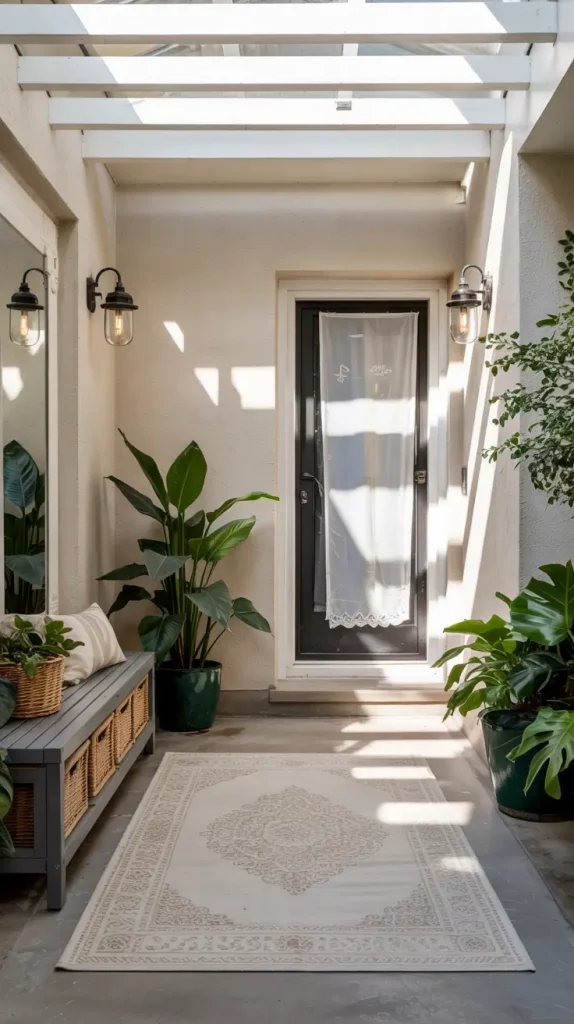
I recommend removable outdoor rugs, potted plants instead of planted landscaping, wall-mounted battery sconces, and decorative door wraps. Compact storage benches and vertical shoe racks are practical solutions for narrow corridors.
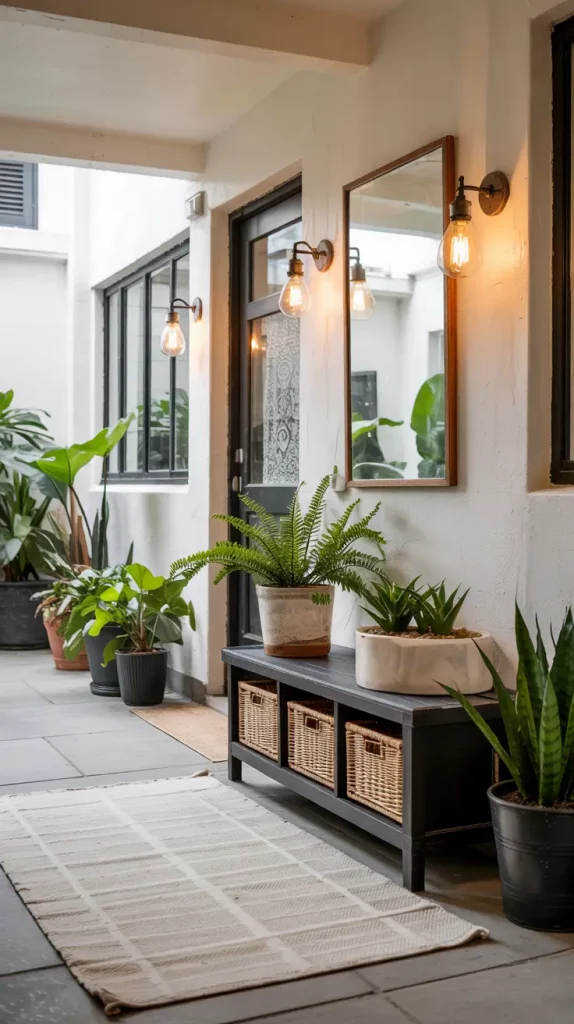
Personally, I’ve found that layering textures—like woven baskets, metal accents, and greenery—adds warmth without structural changes.
What’s often overlooked is coordination with neighboring units. I advise maintaining a cohesive aesthetic with the building’s design language.
Outdoor Entryway Ideas With Stairs That Create Visual Impact
Well-designed outdoor entryway ideas with stairs create a dramatic approach. I treat stairs as sculptural features rather than mere functional elements.
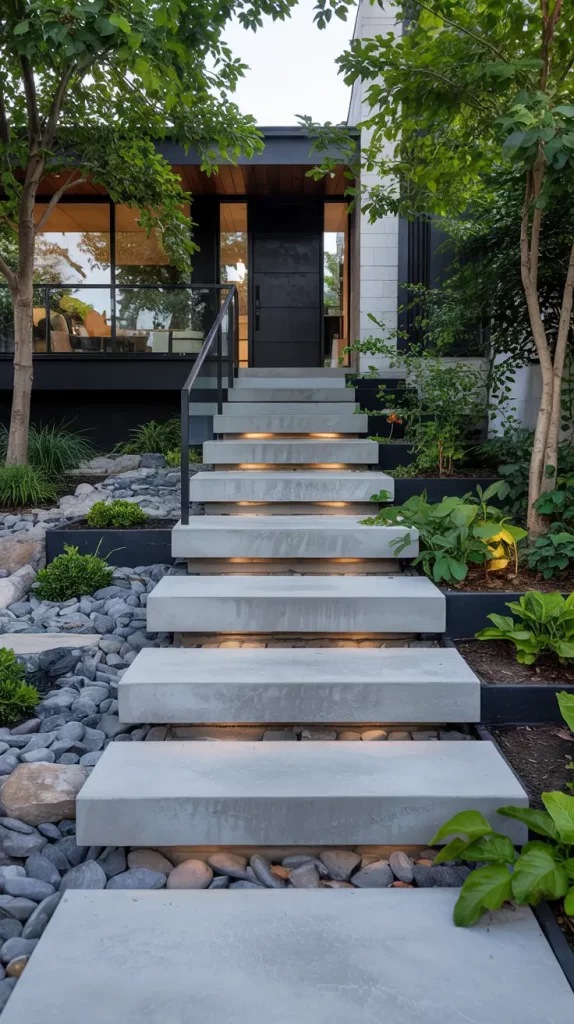
I favor wide steps with consistent riser heights, integrated LED strip lighting, and materials that match the main walkway. Floating concrete steps over gravel or grass are especially modern. Safety railings in matte black steel add subtle structure without visual heaviness.
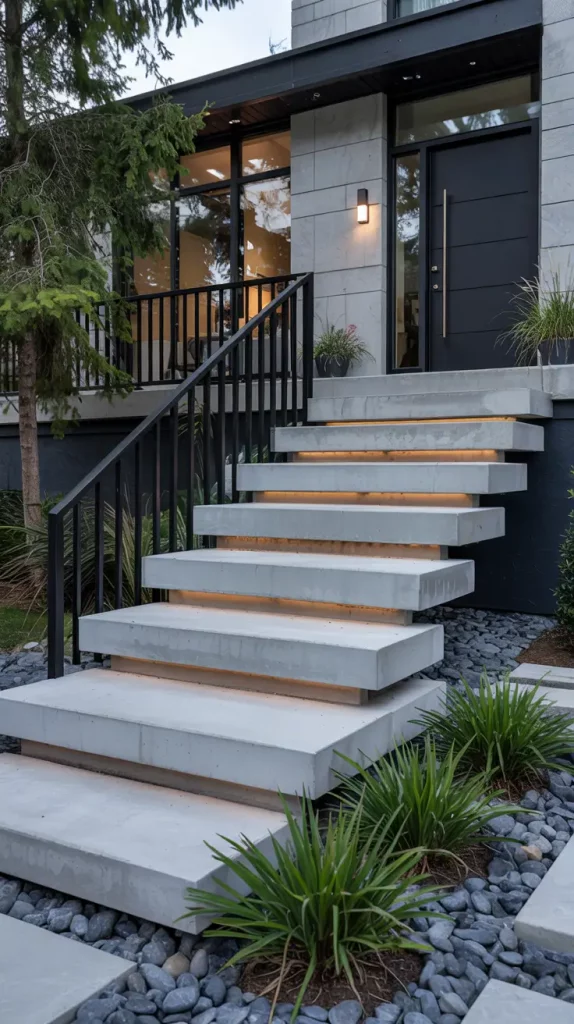
In my experience, proportion matters more than ornamentation. A well-balanced staircase immediately elevates curb appeal and improves accessibility.
What should be added here is anti-slip treatment—textured finishes or grip strips—to ensure safety in wet conditions.
Outdoor Entryway Ideas Wood Accents For Natural Warmth
When I incorporate outdoor entryway ideas wood, my primary goal is to soften architectural lines and introduce organic warmth. Wood elements create an inviting contrast against stone, concrete, or stucco facades. In 2026, I see a strong preference for vertical slat panels, timber-framed overhangs, and statement wooden doors that anchor the entire exterior composition.
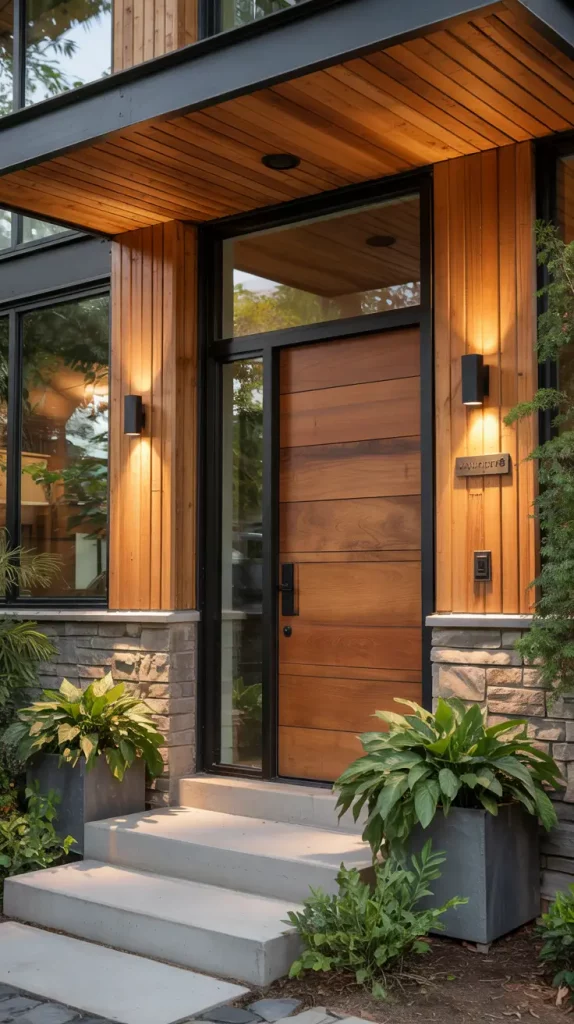
I typically choose thermally modified wood, cedar, or teak because they withstand weather conditions while aging beautifully. Vertical wood screens add privacy without blocking light, while a solid wood door with horizontal grain emphasizes modern proportions. I also like integrating wooden ceiling panels above the porch to visually “wrap” the entry and create cohesion. Pairing wood with black steel hardware keeps the look contemporary rather than rustic.
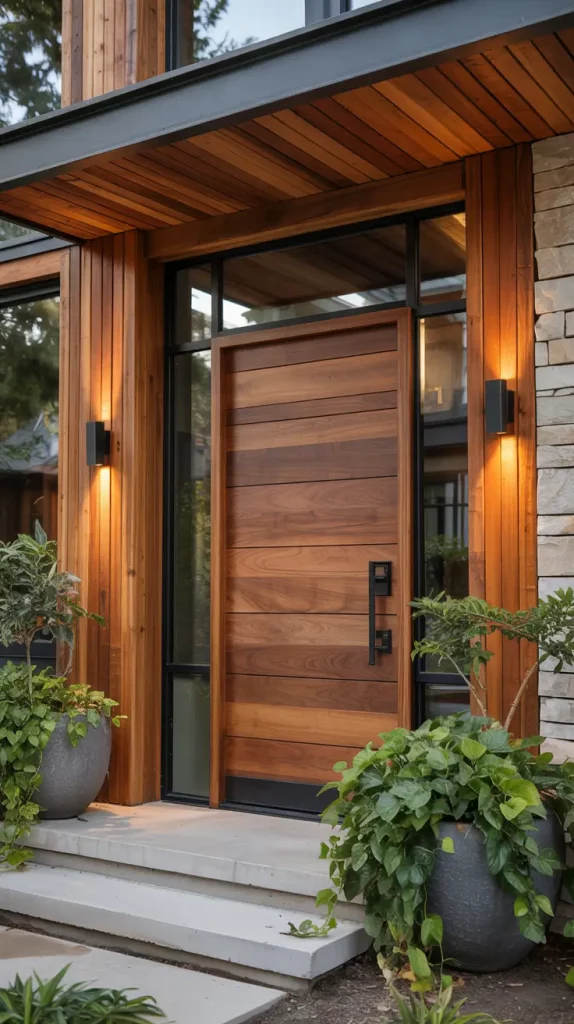
In my professional experience, balance is essential. Too much exposed wood without protective treatment can lead to maintenance issues. I always recommend UV-protective sealants and proper spacing for ventilation.
What may be missing in many wood-focused entries is subtle lighting that highlights grain texture at night. I suggest concealed uplighting to enhance depth and architectural character.
Outdoor Entryway Ideas Coastal Style With Breezy Details
Designing outdoor entryway ideas coastal requires restraint and a light touch. I approach coastal style not as a theme filled with décor, but as a palette and atmosphere—airy, relaxed, and sun-washed. The key is creating brightness and openness while maintaining durability.
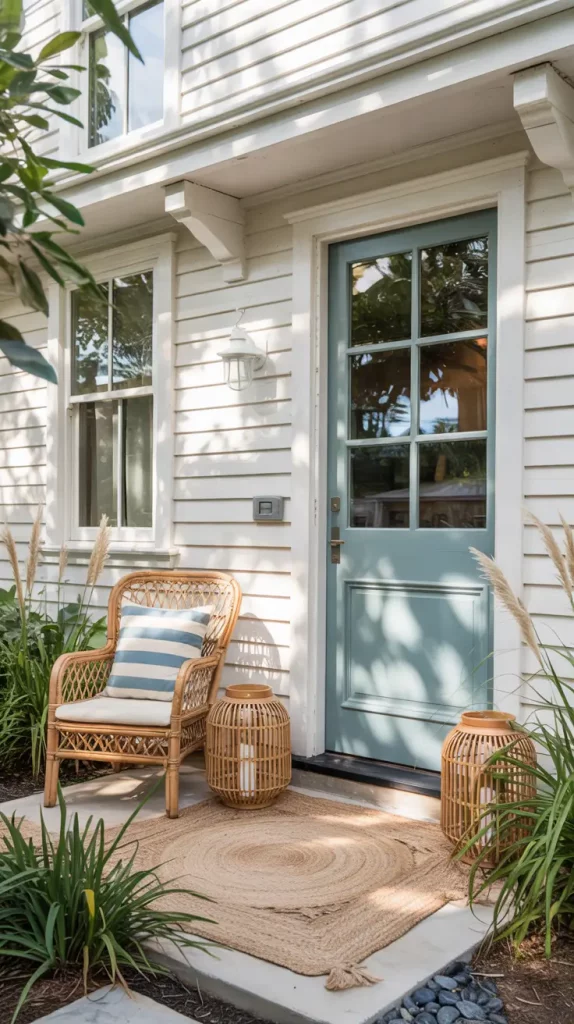
I use white or sandy-toned siding, soft blue or sage front doors, woven outdoor lanterns, and natural fiber rugs. Weather-resistant rattan chairs or a slim bench can add functionality. I also integrate glass panels in doors to maximize daylight. Decorative elements like driftwood-inspired accents or subtle nautical hardware should remain understated.
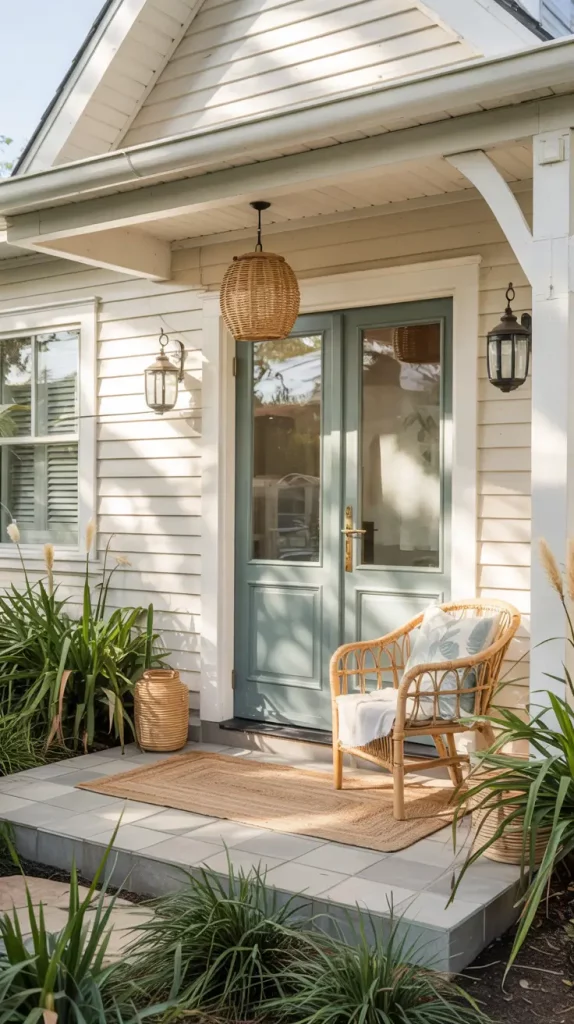
From my experience, coastal entries work best when materials feel authentic. Publications like Coastal Living often emphasize simplicity and texture over obvious maritime motifs—and I fully agree.
What could strengthen this design is incorporating wind-resistant landscaping, such as ornamental grasses, to maintain the breezy aesthetic year-round.
Outdoor Entryway Ideas Staircase Designs That Stand Out
With outdoor entryway ideas staircase, I focus on transforming vertical circulation into a design statement. A staircase should feel intentional and proportionate, not like an afterthought. In 2026, floating structures and sculptural railings are particularly popular.
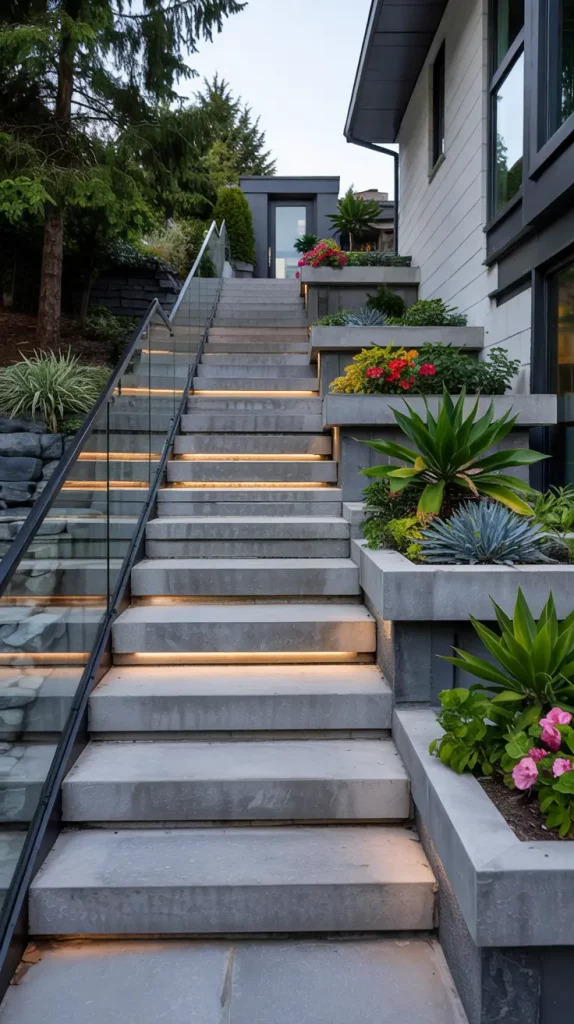
I recommend consistent riser heights, wide treads, and materials that align with the home’s facade—whether stone, concrete, or porcelain tile. Glass or slim metal railings preserve openness, while integrated step lighting enhances safety and elegance. For homes on sloped lots, tiered landings with planters soften transitions.
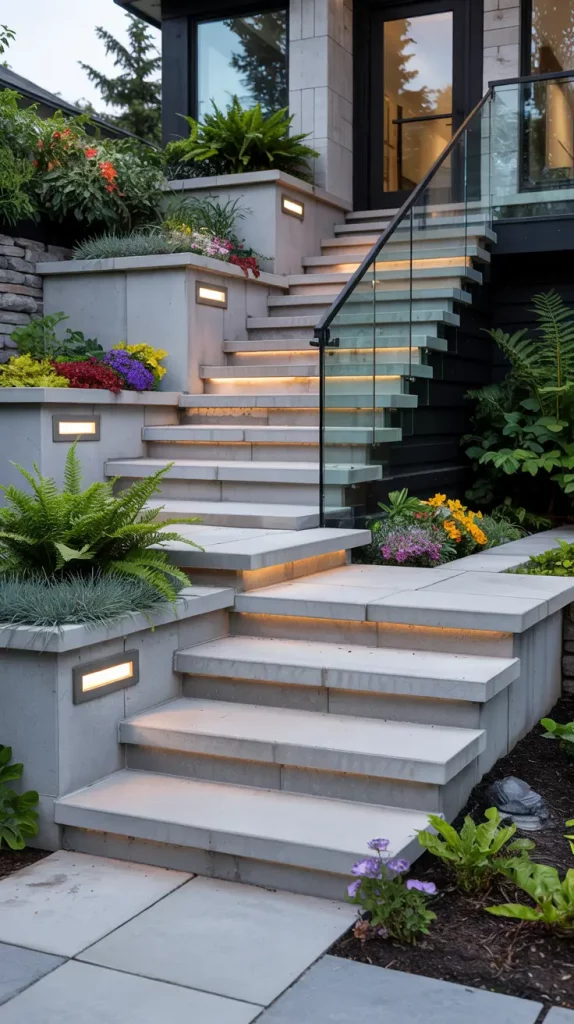
In my projects, I’ve found that bold staircase designs increase perceived property value. However, structural precision is critical; I always prioritize engineering standards and proper drainage beneath steps.
What’s often missing is landscaping integration. Adding side planters or recessed greenery prevents the staircase from feeling isolated within the yard.
Outdoor Entryway Ideas Modern Concepts With Clean Lines
When implementing outdoor entryway ideas modern, I concentrate on simplicity, geometry, and intentional negative space. Modern design in 2026 emphasizes contrast—dark doors against light facades, sharp lines softened by greenery.
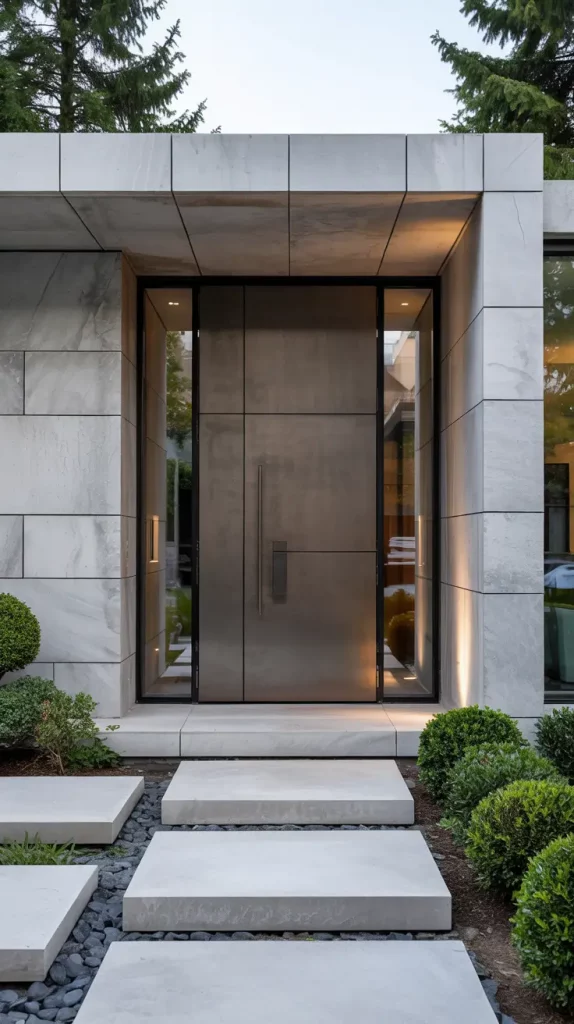
I favor oversized doors (sometimes pivot-style), flush-mounted lighting, frameless glass panels, and minimal hardware. Large-format tiles or smooth concrete slabs create uninterrupted surfaces. I also integrate hidden drainage systems and recessed lighting to maintain visual purity.
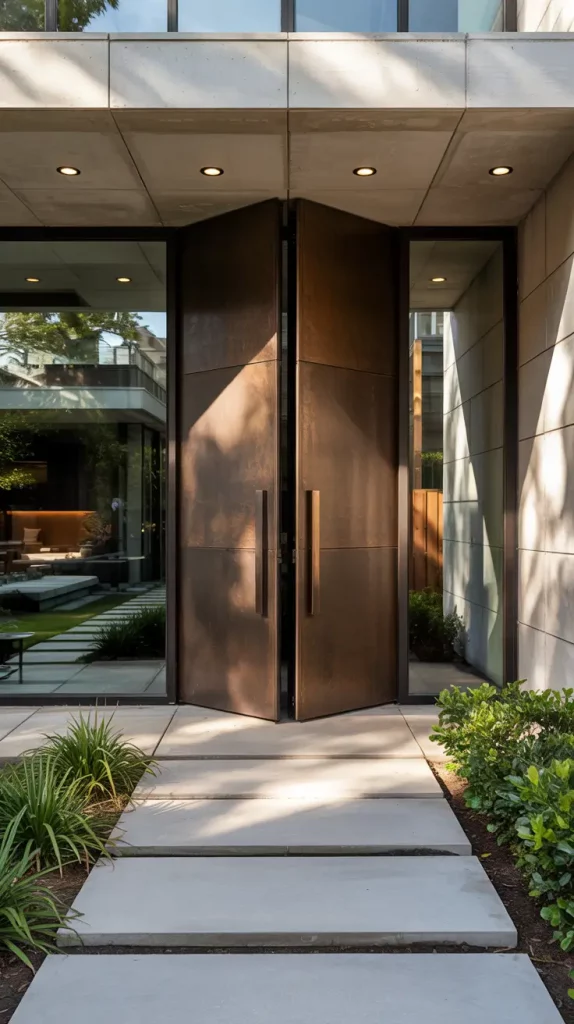
Personally, I believe modern entryways succeed when clutter is eliminated. Architectural Digest frequently highlights the importance of restraint in contemporary design, and I share that philosophy. Every element must serve a purpose.
What could enhance this space further is smart technology—such as integrated video doorbells or app-controlled lighting—discreetly embedded into the structure.
Outdoor Entryway Ideas Double Door Statements For Grand Entrances
Creating impactful outdoor entryway ideas double door designs allows for symmetry and drama. Double doors instantly elevate scale, making them ideal for larger homes or properties with expansive facades.
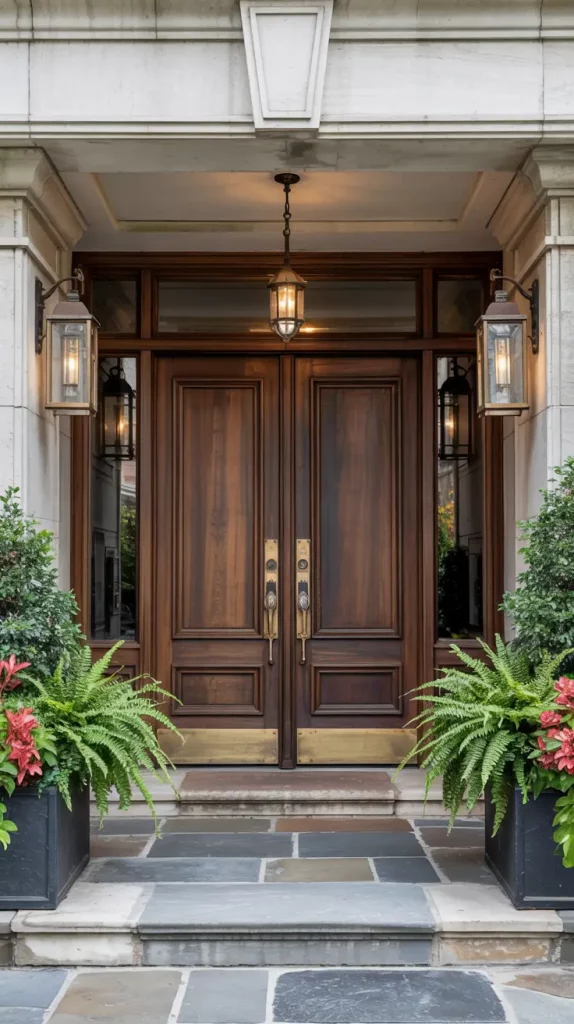
I often select solid wood, steel-framed glass, or paneled fiberglass double doors depending on climate and maintenance needs. Flanking sidelights and tall vertical handles amplify height. Coordinated lanterns and oversized planters reinforce balance. The flooring beneath—whether stone or patterned tile—should anchor the width visually.
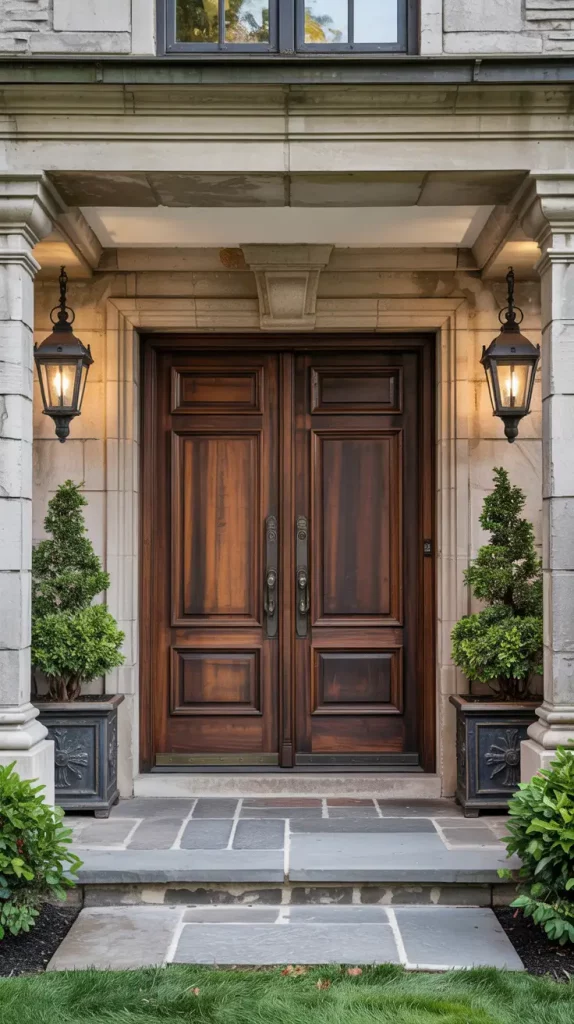
From my experience, proportion is crucial. Double doors should not overpower the structure; instead, they should harmonize with window placement and roofline geometry.
What is sometimes missing is sheltered coverage. Adding a deep overhang or portico protects the doors and enhances architectural presence.
Lighting-Focused Outdoor Entryway Ideas For Day-To-Night Appeal
Lighting defines the mood of an entryway after sunset. I treat lighting as both functional and sculptural. Properly layered light enhances safety while emphasizing architectural features.
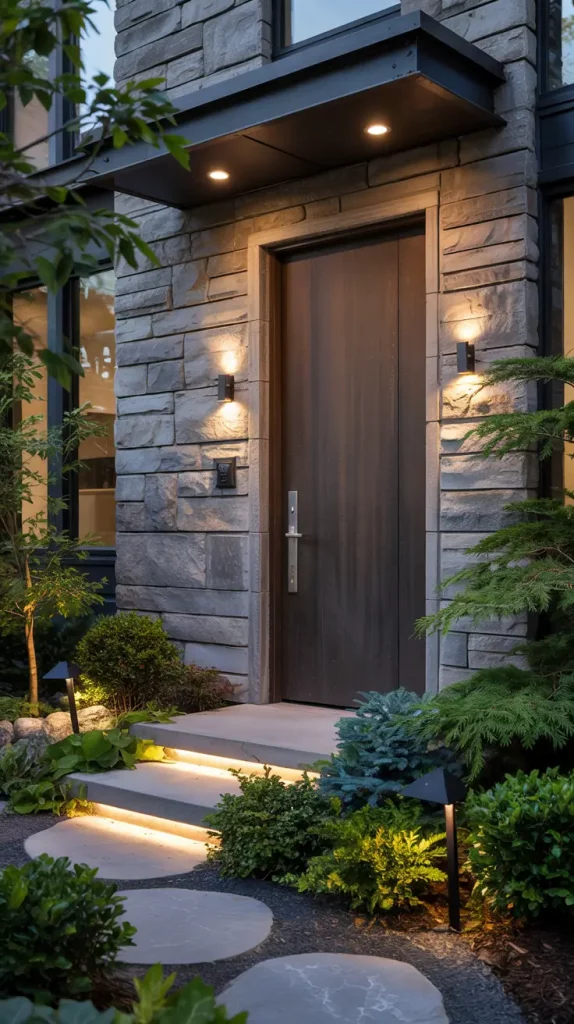
I combine wall sconces, recessed ceiling lights, pathway illumination, and step LEDs. Warm color temperatures (2700K–3000K) create an inviting glow. Motion sensors and dimmers add efficiency. Highlighting textures—such as stone or wood—adds depth after dark.
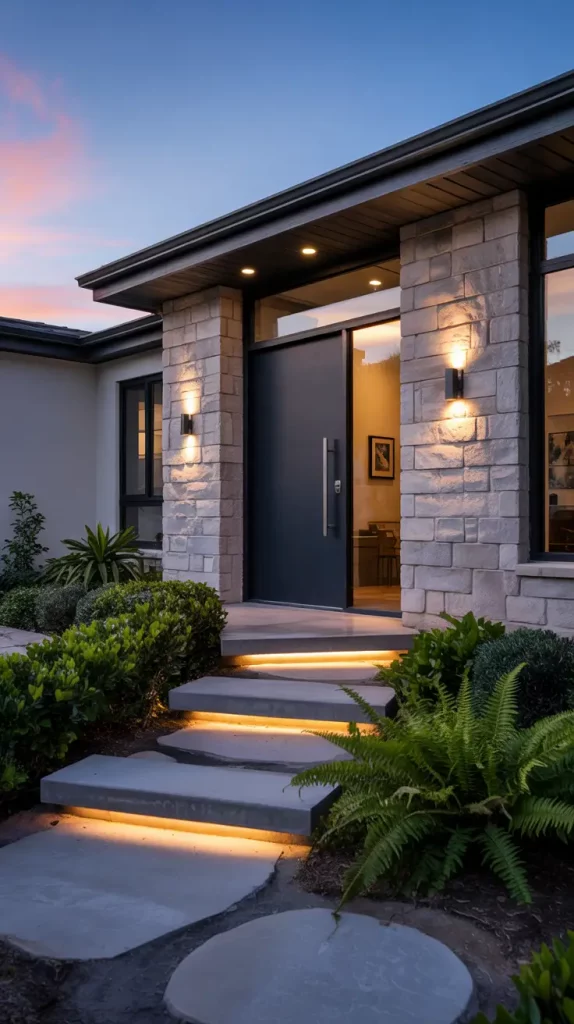
In my professional opinion, poor lighting can diminish even the most thoughtfully designed entry. The American Lighting Association consistently recommends layered outdoor lighting for safety and aesthetics, and I follow that approach closely.
What could be added here is landscape uplighting to frame trees or architectural columns, extending the visual boundary of the entry zone.
Landscaping Outdoor Entryway Ideas That Blend Architecture And Nature
Thoughtful landscaping completes outdoor entryway ideas exterior compositions. I view landscaping as the connective tissue between architecture and environment. In 2026, structured greenery paired with natural textures dominates design preferences.
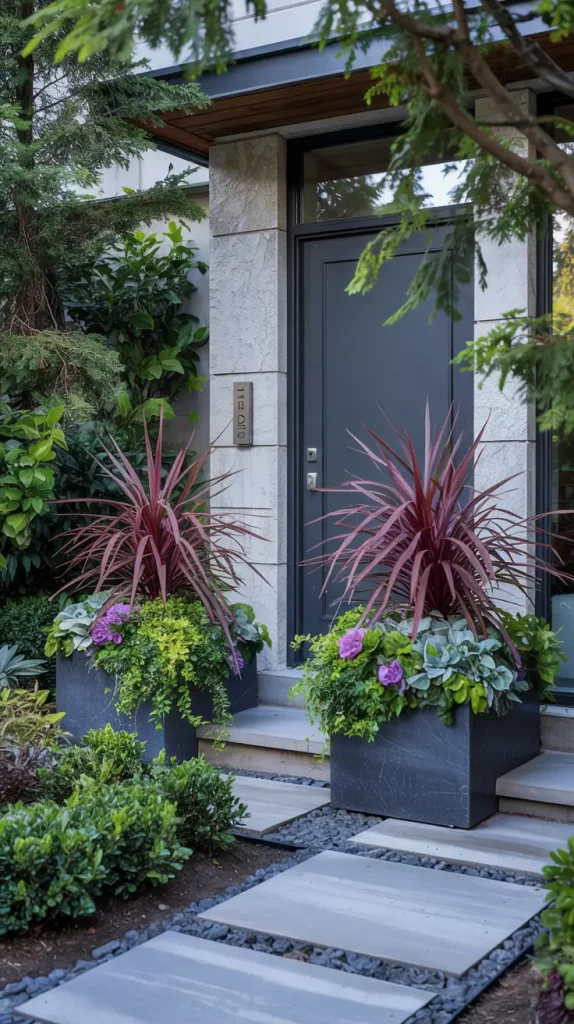
I use symmetrical planters, low-maintenance shrubs, ornamental grasses, and layered planting beds. Stone borders or steel edging define structure, while gravel or mulch adds texture. Incorporating native plants reduces maintenance and improves sustainability.
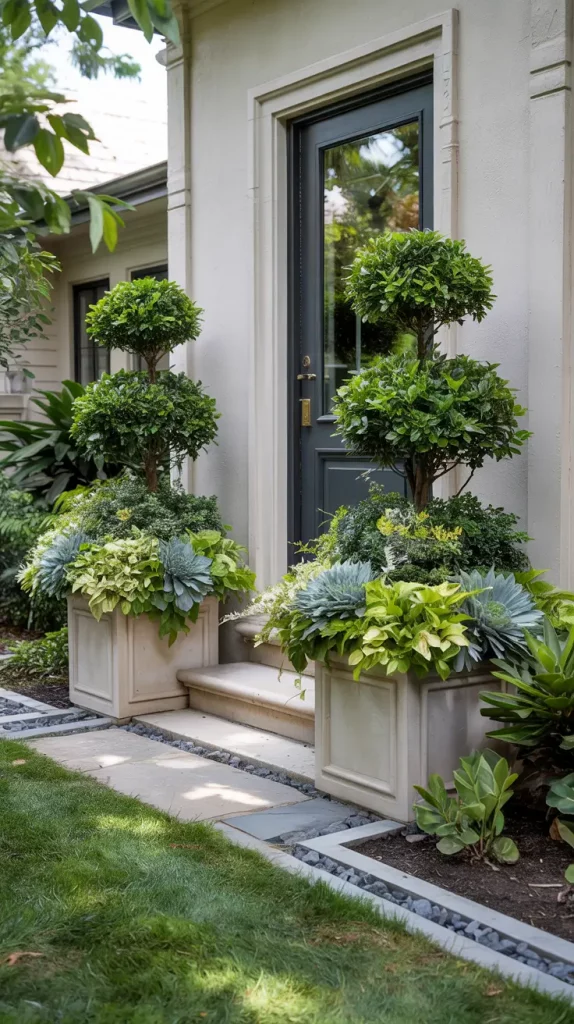
In my experience, a well-landscaped entry increases curb appeal more than almost any other exterior upgrade. Landscape architects frequently emphasize proportion and repetition, and I apply those principles consistently.
What may be missing is irrigation planning. I always recommend a discreet drip system to maintain plant health without visible hoses or clutter.
Minimalist Outdoor Entryway Ideas For Contemporary Homes
When developing minimalist entry concepts, I eliminate excess and focus on proportion, light, and material quality. Clean geometry, restrained color palettes, and uninterrupted surfaces define this approach. I rely on subtle contrasts—matte black against warm white, smooth concrete against soft greenery—to create visual interest without clutter. The entry becomes calm and architectural rather than decorative.
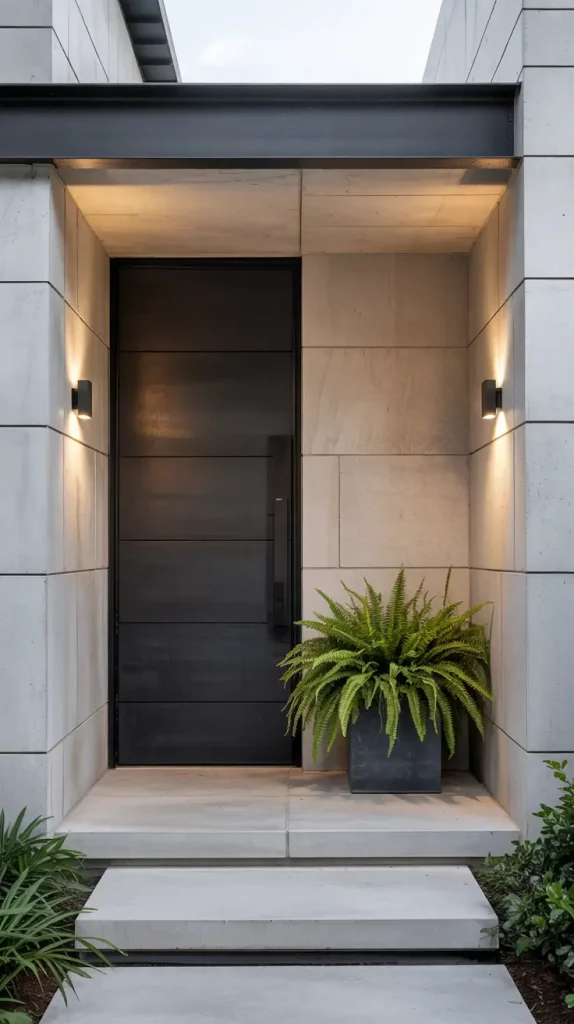
I typically include a flush front door, concealed hinges, slim linear sconces, and a single oversized planter as a focal point. Large-format porcelain slabs reduce grout lines, reinforcing visual simplicity. Hardware remains understated—brushed steel or matte black—so that form and structure lead the composition.
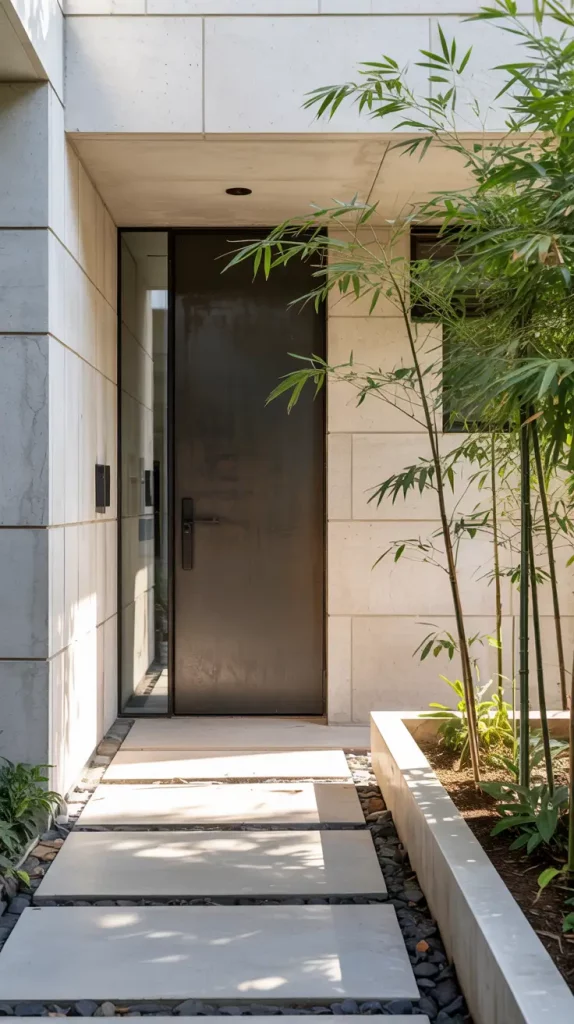
From my experience, minimalism works best when every element is intentional. If something does not serve function or aesthetic clarity, I remove it. What’s often missing is texture variation—adding a subtle ribbed wall panel or microcement finish can prevent the space from feeling flat.
Rustic Outdoor Entryway Ideas With Organic Textures
Rustic entries emphasize warmth and authenticity. I design them using layered natural materials that age gracefully—stone, reclaimed wood, wrought iron. The atmosphere should feel grounded and welcoming rather than overly themed.
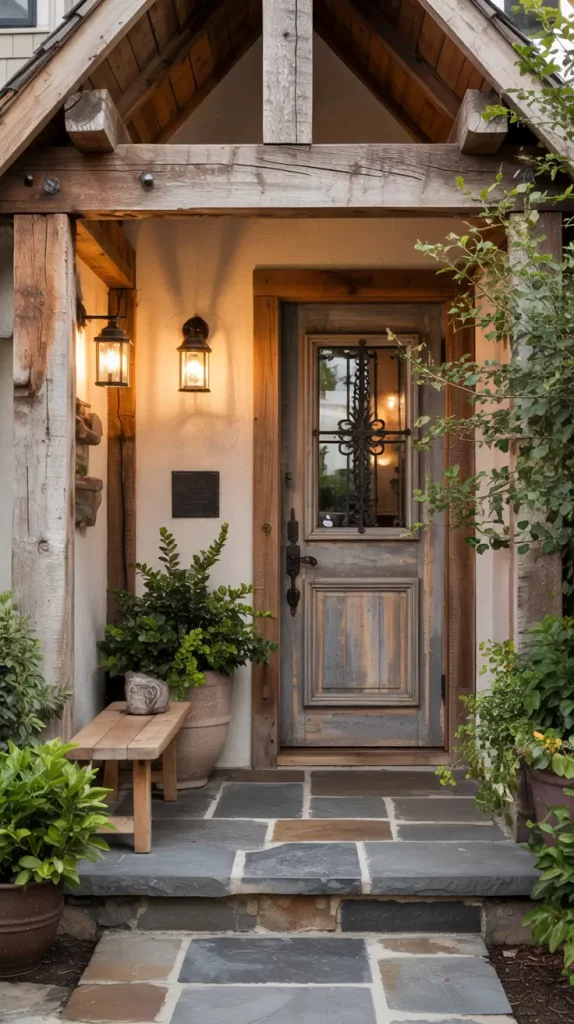
I incorporate timber beams, a solid plank door, lantern-style lighting, and textured stone flooring. A wooden bench or vintage-style console adds functionality. Earth-toned planters with seasonal greenery soften the harder materials and create depth.
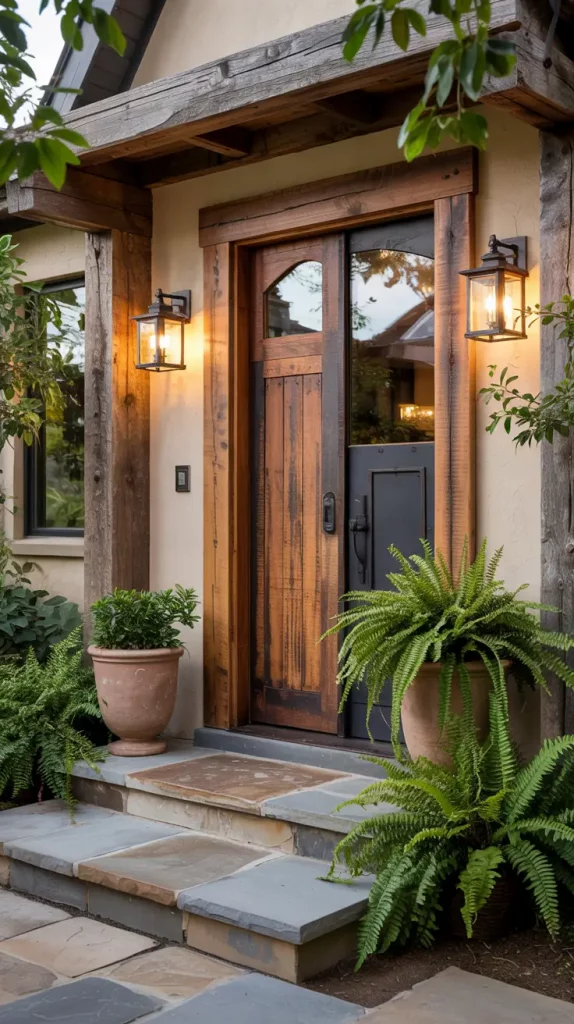
In my projects, I balance rustic texture with structural refinement. Too much ornamentation can feel heavy. What’s often missing is adequate lighting; I always integrate warm LED illumination to highlight stone and wood surfaces without overwhelming them.
Farmhouse Outdoor Entryway Ideas With Charming Details
Farmhouse-inspired entryways combine comfort with timeless simplicity. I focus on symmetry, approachable details, and neutral palettes accented by black hardware. This style remains popular because it feels both nostalgic and practical.
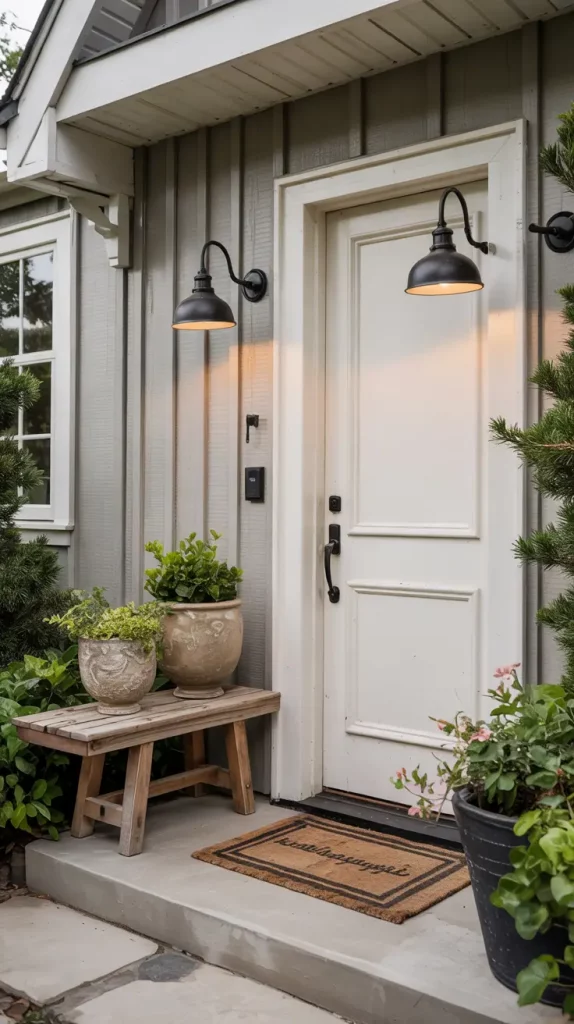
I often include a paneled front door, gooseneck wall sconces, a wooden bench, and large ceramic planters. Shiplap siding or board-and-batten walls enhance architectural texture. Layered doormats and subtle wreaths personalize the entrance without clutter.
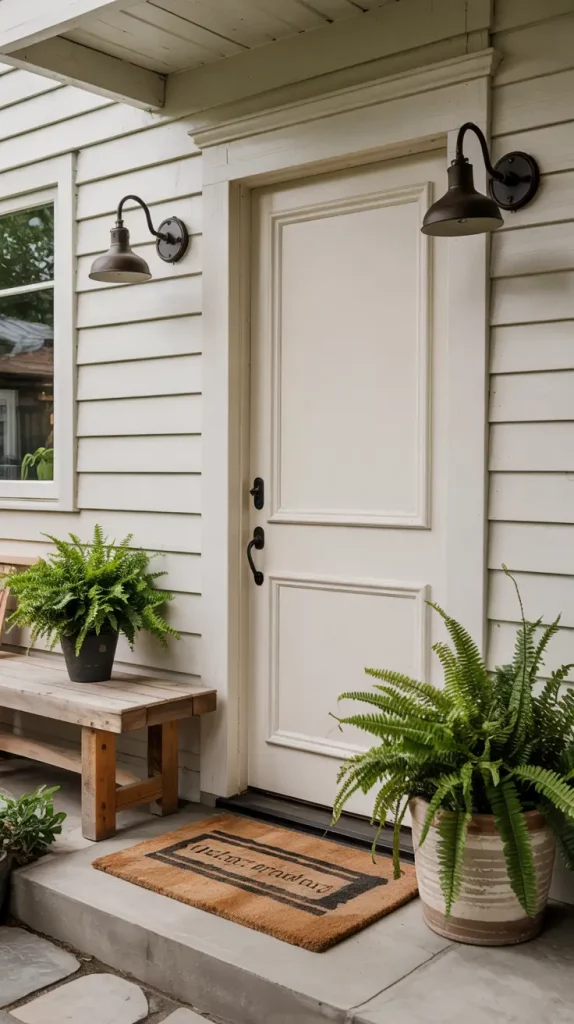
Personally, I find farmhouse entries most successful when modernized slightly—cleaner lines, fewer decorative elements. What could strengthen this section is integrated storage under seating to maintain visual neatness.
Luxury Outdoor Entryway Ideas With High-End Finishes
Luxury entries prioritize scale, material richness, and precision detailing. I approach them architecturally—thinking about proportion, ceiling height, and visual drama. Large covered porticos, tall doors, and layered lighting define the aesthetic.
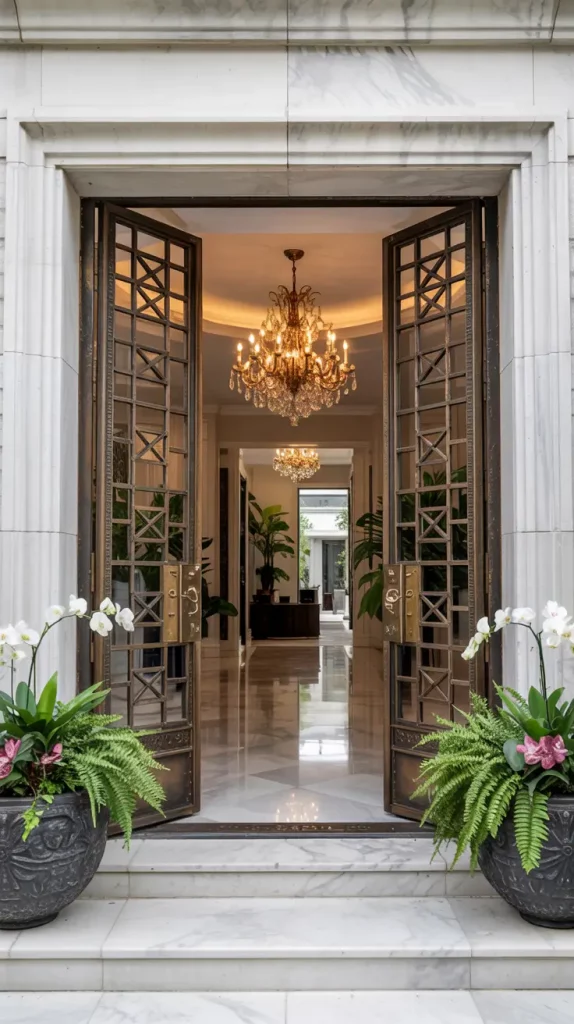
I select premium materials such as natural marble or travertine flooring, custom metal doors, statement chandeliers rated for outdoor use, and oversized sculptural planters. Smart access systems blend seamlessly into the design. The finishes must align perfectly—luxury depends on craftsmanship.
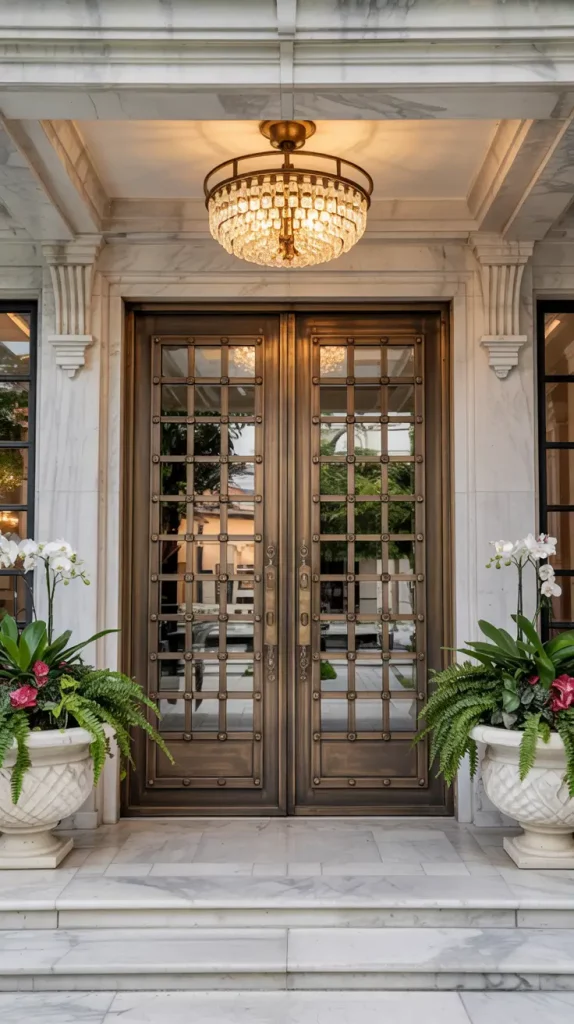
In my experience, restraint elevates luxury. Rather than adding more décor, I focus on quality and scale. What is sometimes missing is acoustic consideration; adding subtle landscaping can reduce street noise and enhance exclusivity.
Budget-Friendly Outdoor Entryway Ideas That Look Expensive
Creating high impact on a budget requires strategic updates. I focus on visible elements that transform perception without major structural work. Paint, lighting, and hardware upgrades deliver the most value.
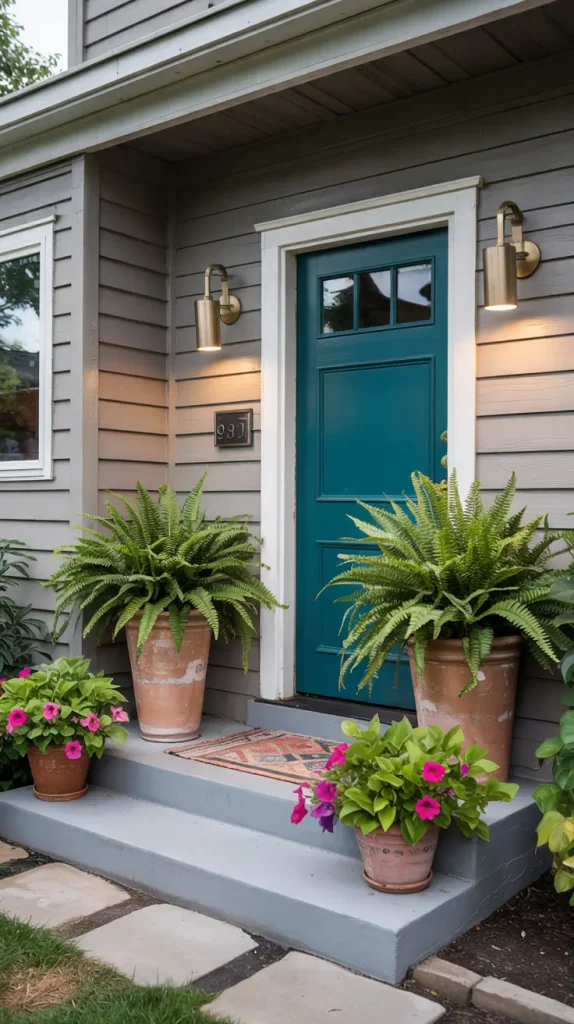
I recommend repainting the front door in a bold but timeless color, updating house numbers, installing modern wall sconces, and adding large potted plants. A new outdoor rug and updated doormat can redefine the entire entrance.
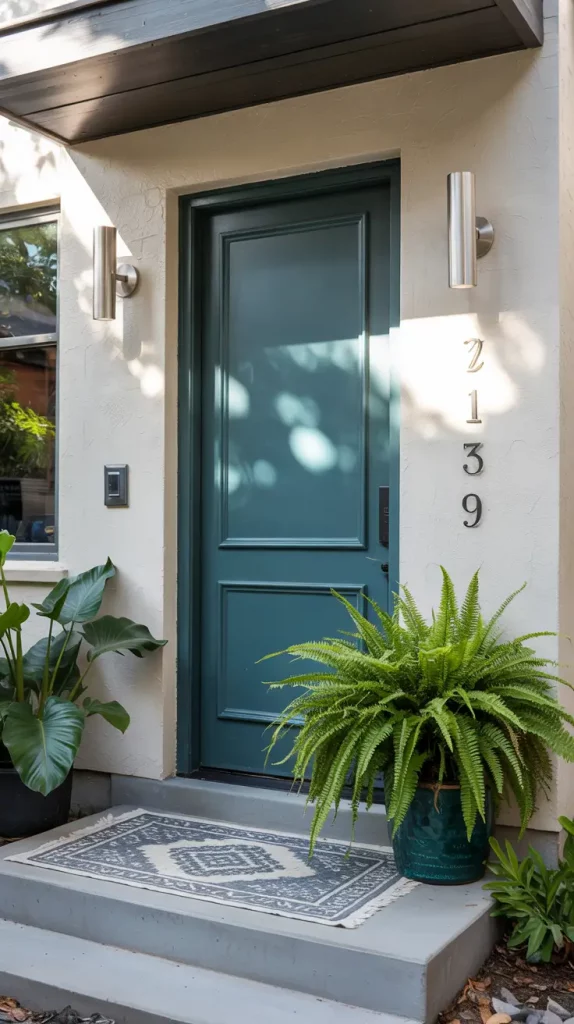
From my experience, consistency matters more than cost. Coordinated finishes create cohesion. What’s often missing is pressure washing and surface cleaning—sometimes maintenance alone dramatically improves curb appeal.
Seasonal Outdoor Entryway Ideas For Year-Round Style
Seasonal flexibility keeps entryways fresh throughout the year. I design with a neutral base and rotate decorative elements depending on the season.
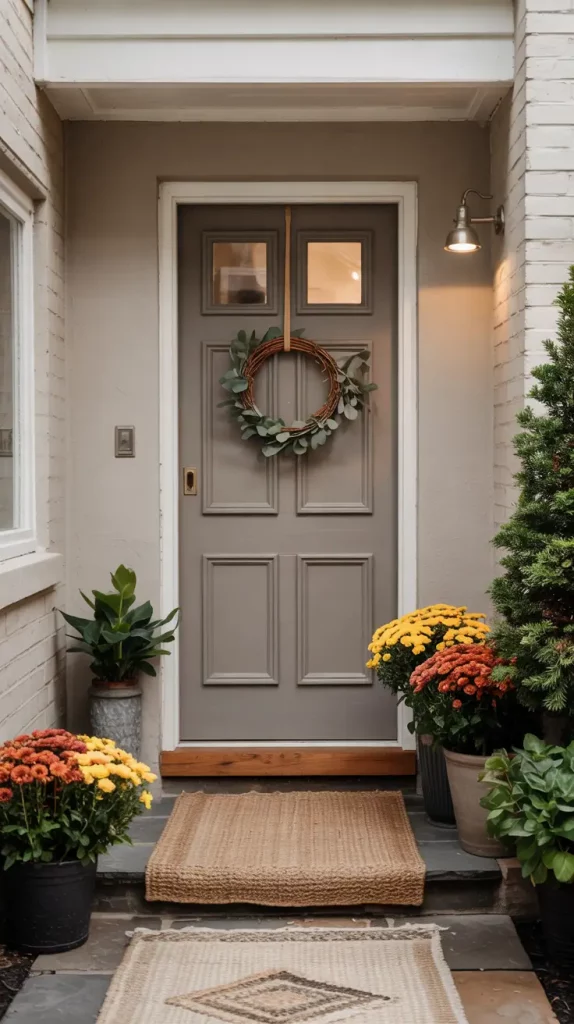
I incorporate interchangeable wreaths, layered rugs, seasonal planters, and subtle decorative accents. In winter, I add warm lighting and evergreen arrangements; in summer, lighter textiles and vibrant greenery dominate.
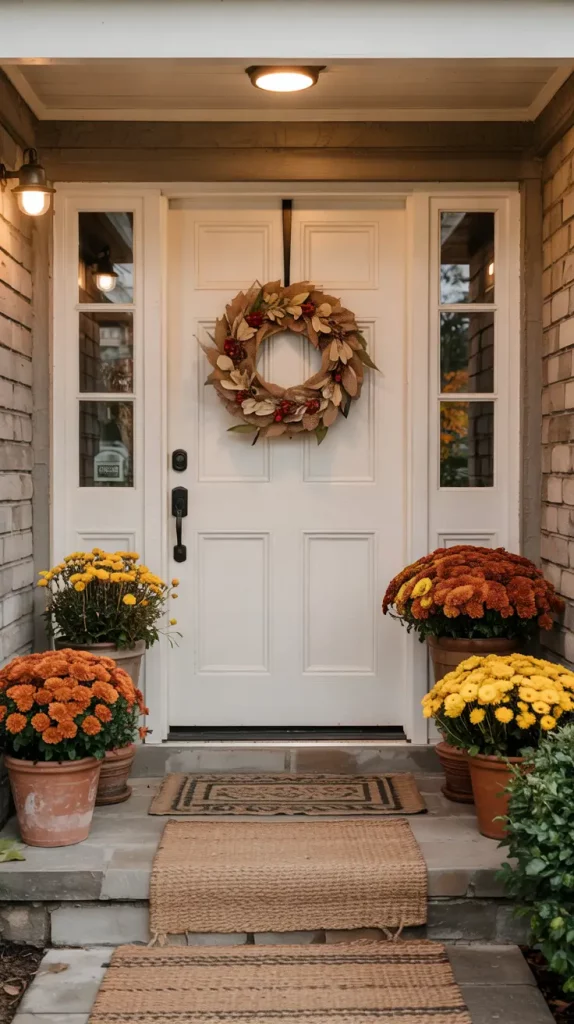
I believe seasonal updates maintain engagement with your home’s exterior. What could enhance this concept is storage planning—having a designated indoor space for off-season décor ensures organization and longevity.
Covered Outdoor Entryway Ideas For Weather Protection
Protection from weather extends both comfort and durability. I design covered entries with architectural overhangs, pergolas, or full porticos that integrate seamlessly into the facade.
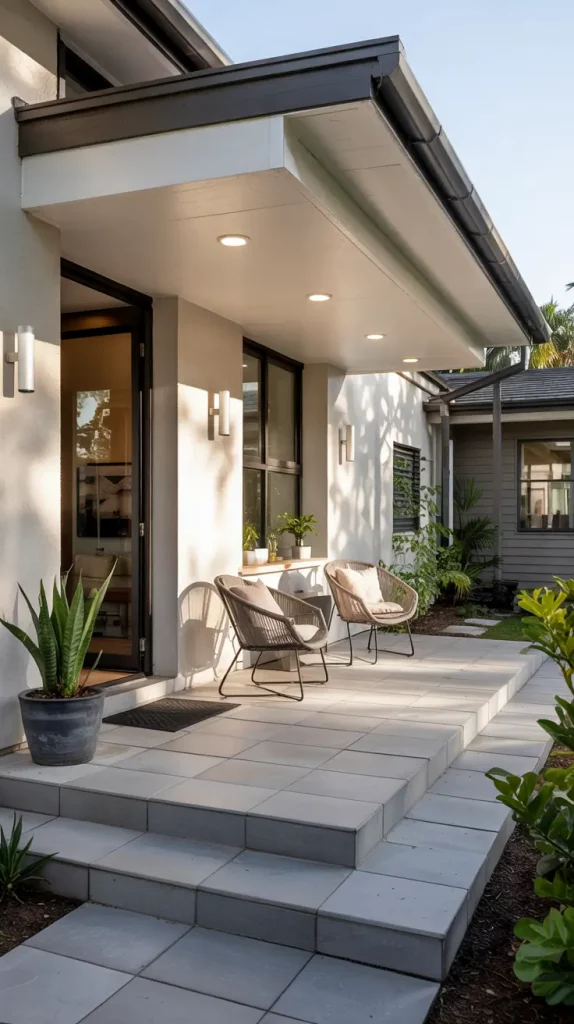
I include sloped roofing for drainage, recessed lighting, ceiling fans in warm climates, and durable flooring materials resistant to moisture. A covered area allows for seating, decorative accents, and package delivery protection.
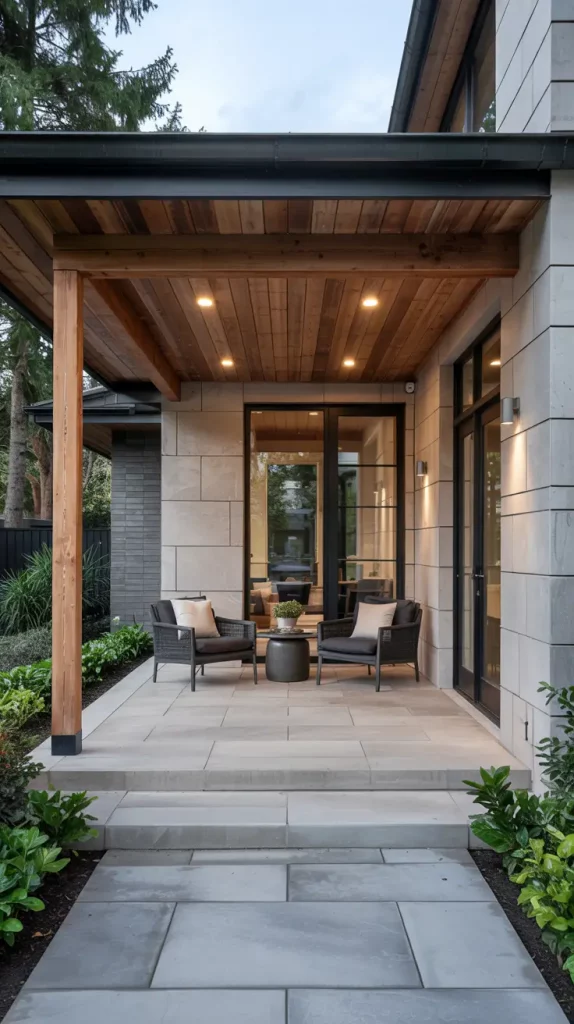
In my experience, covered entryways significantly improve functionality. What may be missing is proper gutter integration to prevent water pooling near the threshold.
Outdoor Entryway Ideas With Glass Elements For Bright Spaces
When I design entryways with glass, my primary objective is to maximize natural light while maintaining privacy and energy efficiency. Glass elements visually expand the entry zone and create a seamless connection between interior and exterior. In 2026, I’m seeing increased demand for oversized glass panels, frosted sidelights, and steel-framed glass doors that make the entry feel architectural and sophisticated rather than purely functional.
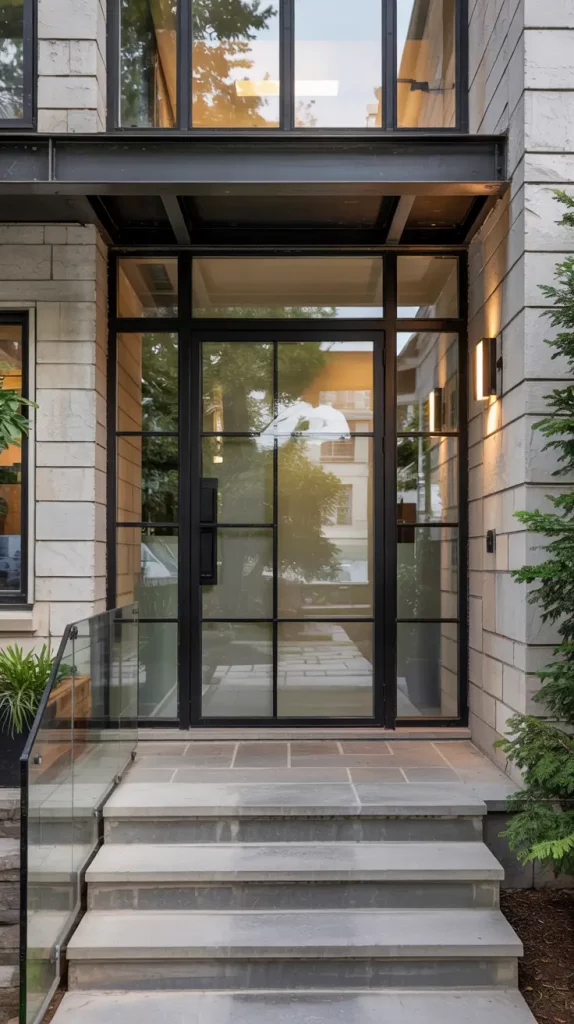
I typically incorporate tempered or laminated safety glass, often paired with black or bronze metal frames for structure and contrast. Frosted or fluted glass panels provide privacy without blocking daylight. Transom windows above the door enhance vertical scale, while glass railings on adjacent stairs maintain openness. I also recommend UV-protective coatings to reduce glare and protect interior flooring from fading. Proper sealing and high-quality weatherstripping are critical to prevent drafts and condensation.
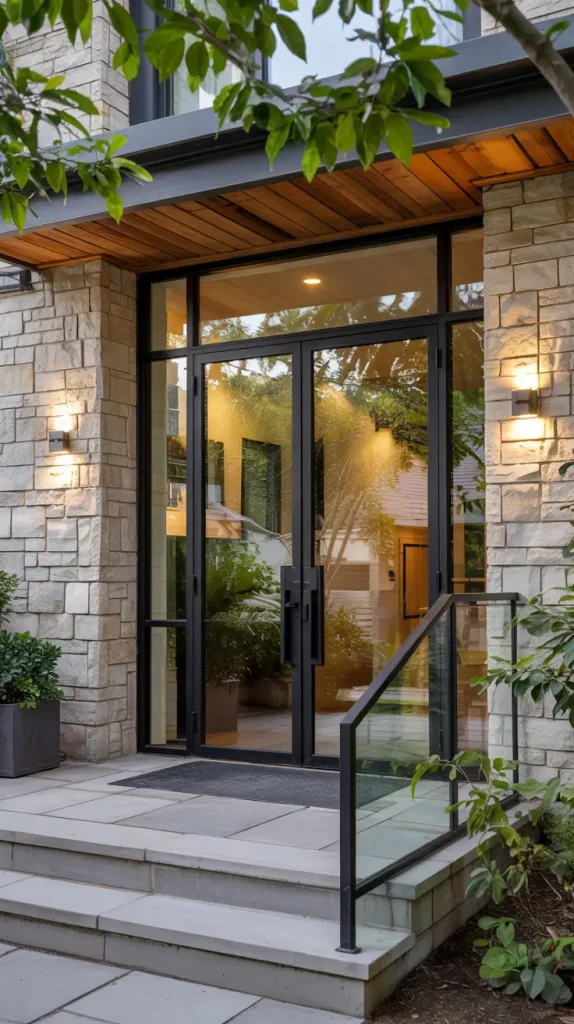
From my professional perspective, glass works best when balanced with solid materials—stone, wood, or concrete—to avoid a sterile feel. What is often missing in glass-focused entries is thoughtful night lighting; I advise adding interior backlighting or warm sconces to prevent the glass from appearing dark after sunset.
Outdoor Entryway Ideas With Planters And Greenery Accents
Greenery transforms a standard entrance into a dynamic, living composition. I approach planters as architectural tools that frame and soften the structure. In 2026, oversized statement planters with structured plants are particularly popular for enhancing vertical presence.
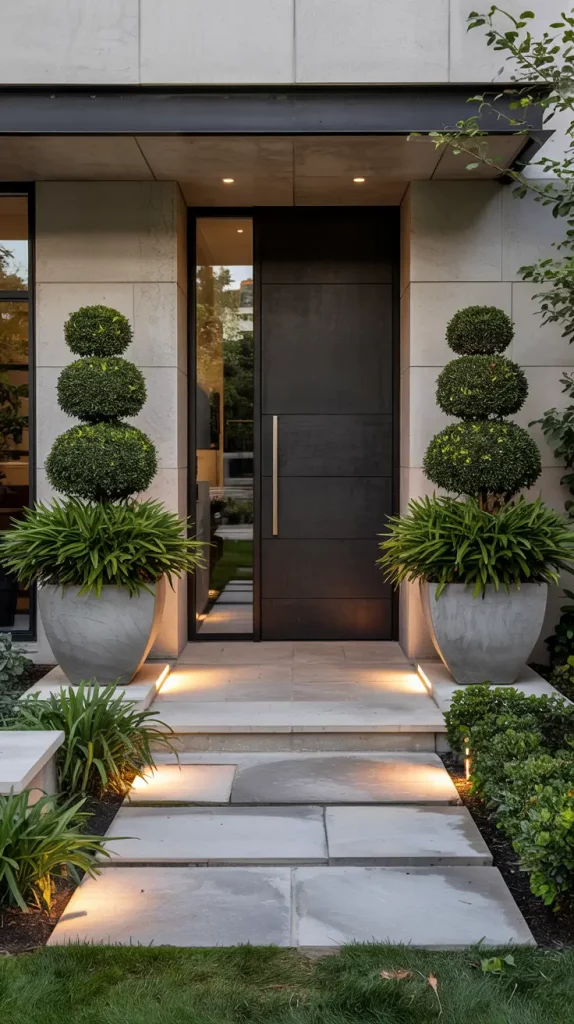
I recommend symmetrical placement for formal homes and asymmetrical layering for modern designs. Tall planters with sculptural shrubs, ornamental grasses, or small trees add height, while lower planters filled with seasonal blooms introduce color. Materials such as fiberstone, concrete, and matte ceramic ensure durability. I also consider drainage holes and proper soil depth to maintain plant health. Integrated irrigation systems simplify maintenance and preserve visual cleanliness.
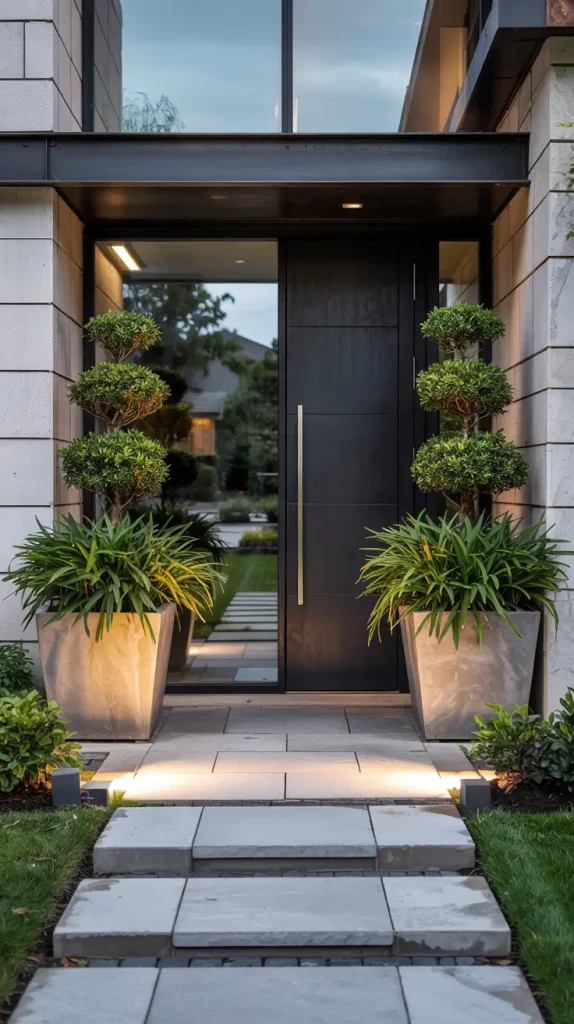
In my experience, greenery instantly elevates perceived value and warmth. Landscape professionals often stress repetition and rhythm in plant placement, and I consistently apply that principle. What may be missing is seasonal rotation planning—selecting plants that maintain visual interest throughout the year prevents the entry from feeling neglected in colder months.
Outdoor Entryway Ideas With Statement Doors And Hardware
A statement door defines the character of an entryway more than any other element. I treat it as the focal point around which all other materials revolve. In 2026, bold colors, oversized handles, and mixed-material doors are trending strongly.
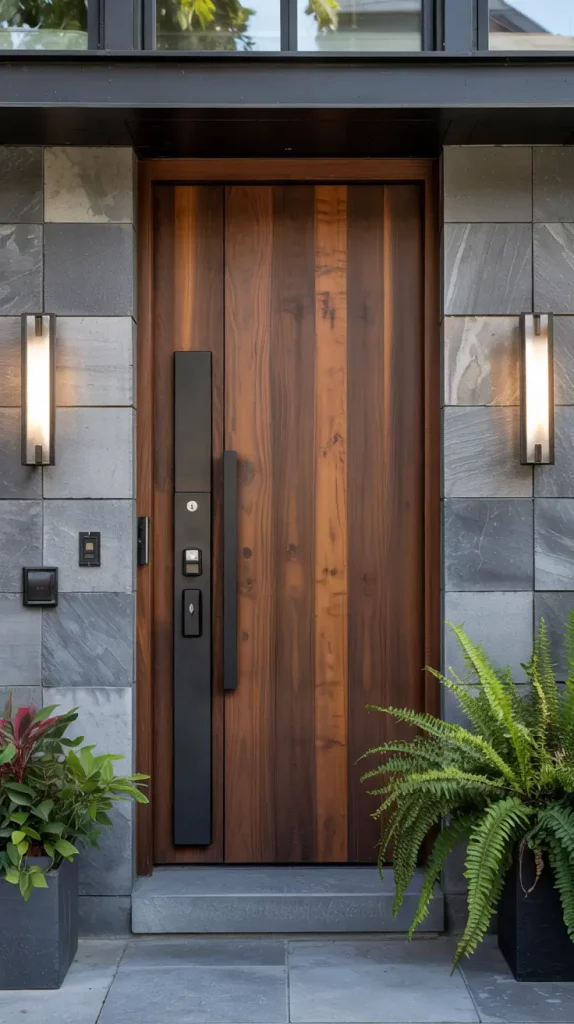
I often select pivot doors, steel-framed glass panels, or solid wood slabs with vertical grain. Hardware plays a crucial role—long vertical pulls, smart locks, and brushed brass or matte black finishes enhance modern sophistication. I also coordinate door color with exterior accents to create cohesion. Durable finishes are essential to withstand sun exposure and weather changes.
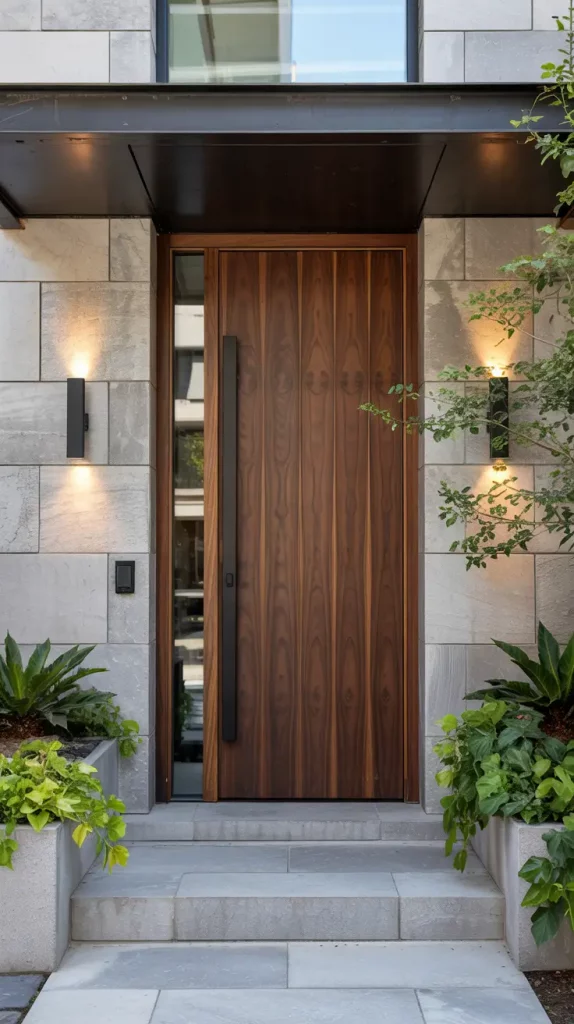
From my experience, investing in high-quality hardware significantly impacts tactile experience. Design experts frequently note that entry doors influence buyer perception immediately, and I agree wholeheartedly. What is sometimes overlooked is acoustic insulation—solid-core doors can dramatically reduce exterior noise and improve comfort.
Outdoor Entryway Ideas With Mixed Materials For Visual Contrast
Combining materials adds depth and sophistication to an entryway. I intentionally layer textures—stone against wood, concrete against metal—to create visual balance. In 2026, this approach defines many contemporary homes.
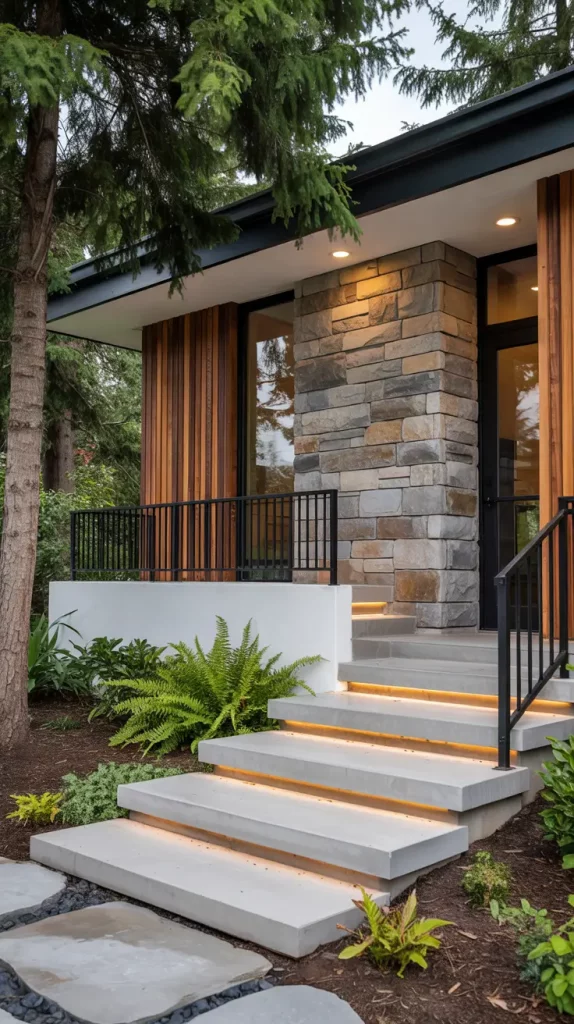
I frequently pair natural stone cladding with smooth stucco, wood ceiling panels with concrete steps, and black steel accents with warm timber. The contrast must feel curated rather than chaotic. Limiting the palette to three or four primary materials prevents visual overload. Integrated lighting highlights these textures and enhances depth during evening hours.
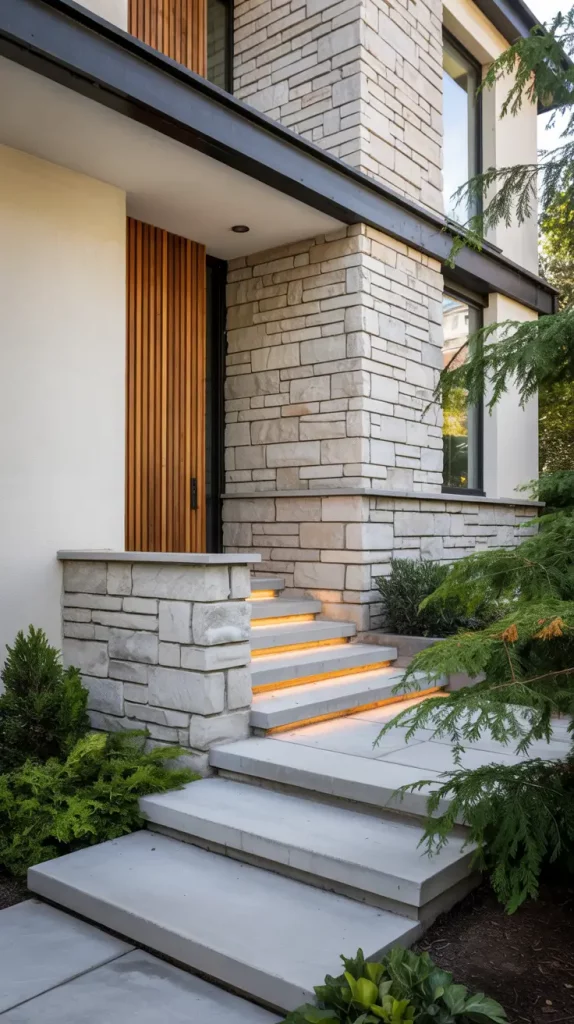
In my professional practice, mixed materials increase architectural interest without relying on excessive décor. What could strengthen this approach is precise detailing at transitions—clean joints and concealed fasteners maintain refinement.
Outdoor Entryway Ideas With Symmetrical Design Balance
Symmetry creates calm and elegance. When designing symmetrical entryways, I focus on proportion and repetition to establish harmony. This approach works particularly well for traditional and transitional homes.
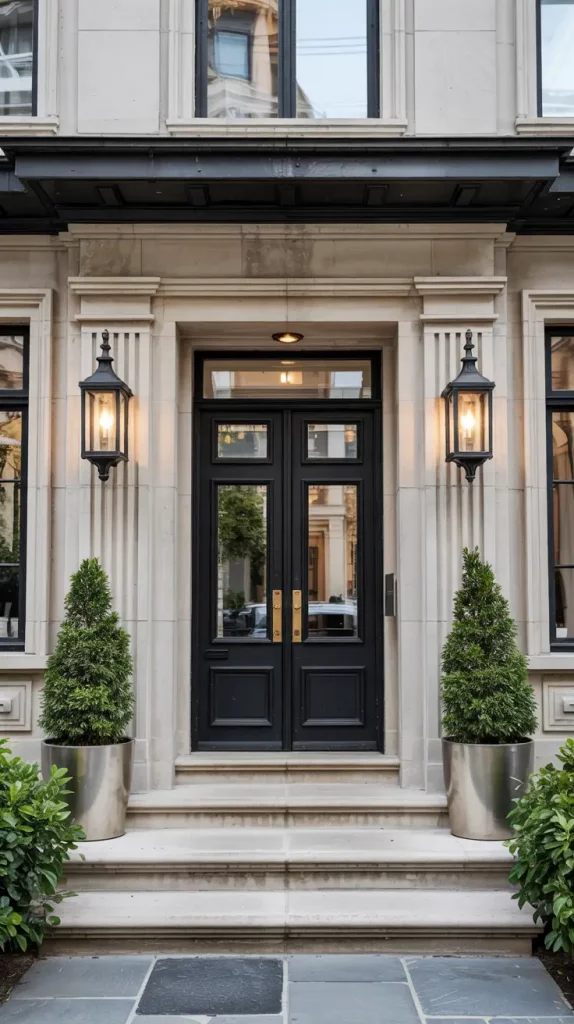
I place identical lanterns on either side of the door, matching planters flanking the entrance, and evenly spaced architectural details such as columns or trim. Centered rugs and aligned steps reinforce balance. Symmetry visually widens the entrance and enhances formality.
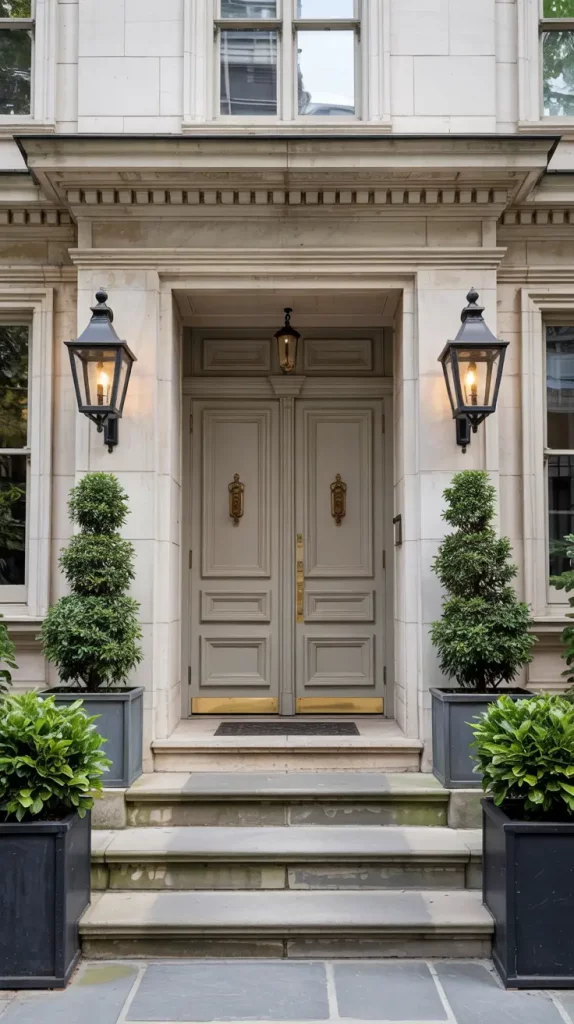
In my experience, symmetrical entries are universally appealing because they feel orderly and intentional. However, what is often missing is subtle contrast—adding slight texture variation prevents the design from feeling overly rigid.
Outdoor Entryway Ideas With Decorative Screens And Privacy Panels
Privacy panels and decorative screens offer both functional separation and visual interest. I use them to define boundaries without fully enclosing the space. In 2026, laser-cut metal screens and vertical slatted wood panels are especially востребованы.
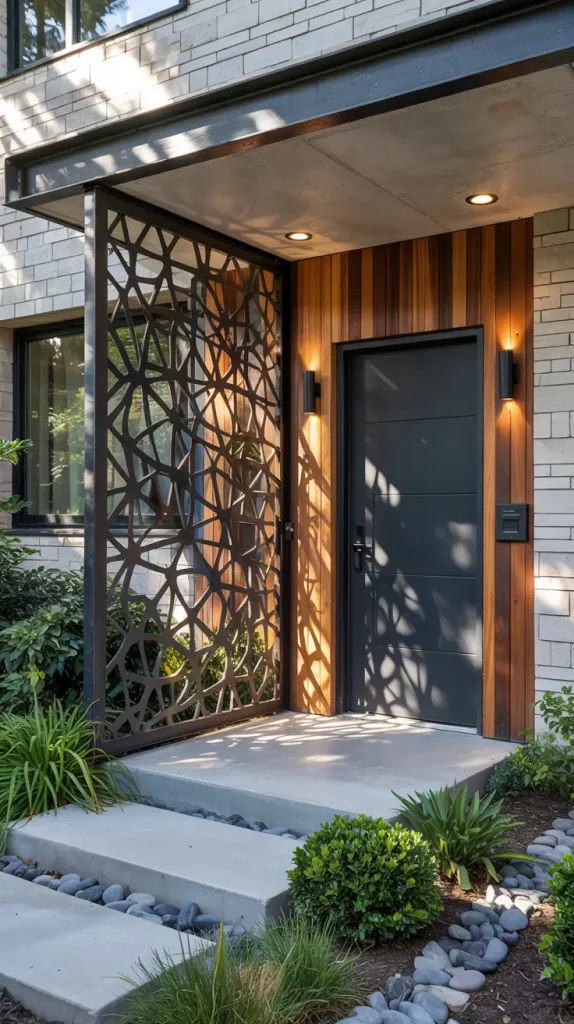
I typically integrate powder-coated aluminum screens with geometric patterns or wooden slats spaced for airflow. These elements can conceal side views, shield from wind, or create filtered light effects. When combined with integrated lighting, screens cast dynamic shadows that enhance evening ambiance.
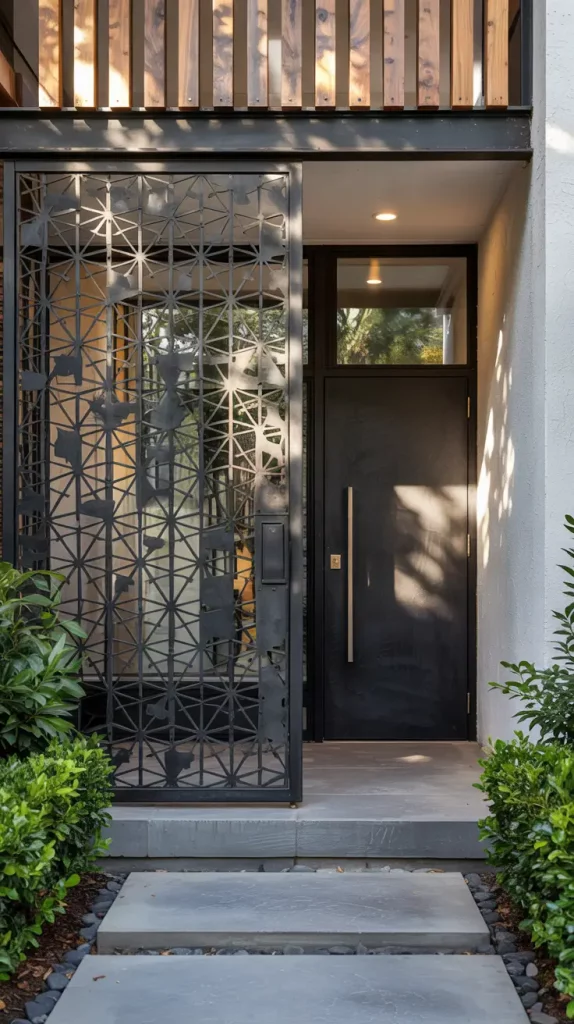
From my experience, privacy solutions work best when aligned with the home’s architectural language. What may be missing is structural anchoring—secure installation ensures longevity and resistance to strong winds.
Outdoor Entryway Ideas 2026: Future-Forward Materials And Smart Features
Looking ahead, I see technology and sustainability shaping outdoor entryway ideas 2026 more than ever. Entryways are becoming smarter, safer, and more energy-efficient without compromising aesthetics.
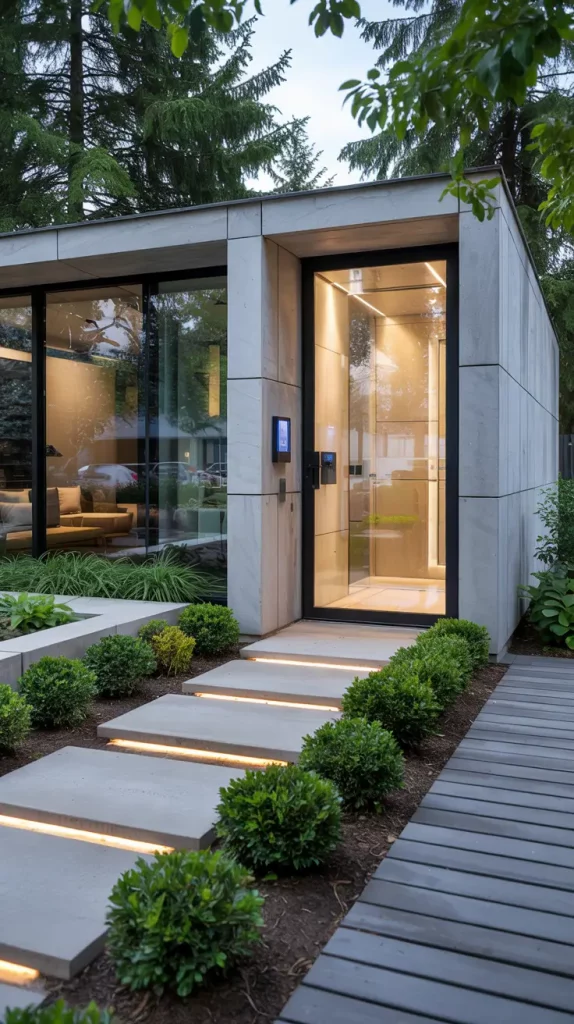
I incorporate smart locks, biometric access systems, motion-activated lighting, and integrated security cameras discreetly embedded into the architecture. Sustainable materials such as recycled composite decking, thermally modified wood, and permeable pavers improve environmental performance. Solar-powered pathway lights reduce energy consumption. Heated steps in colder climates increase safety during winter months.
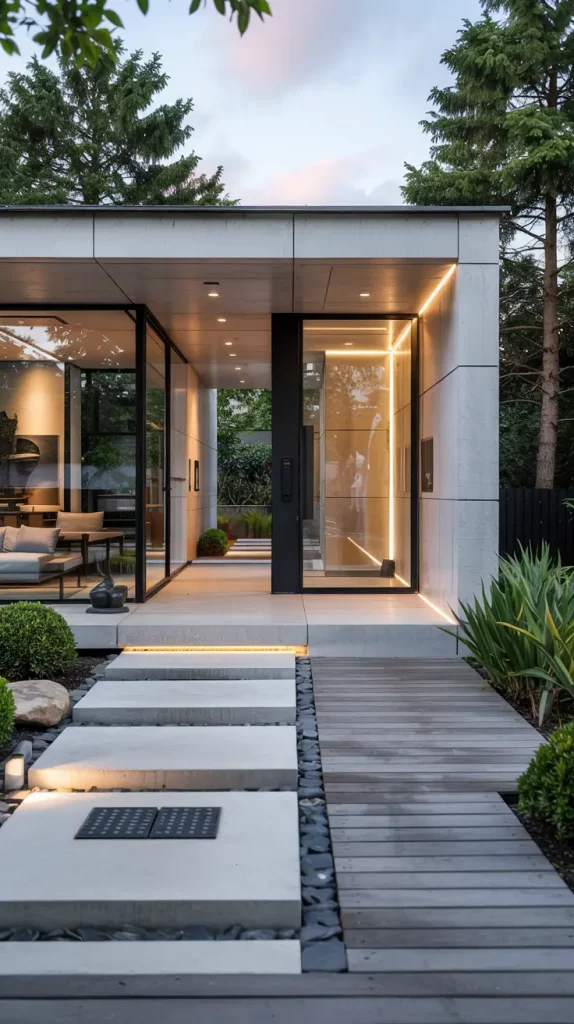
In my professional opinion, the future of entry design lies in invisible innovation—technology should enhance experience without dominating the visual field. What is often missing is future-proof wiring infrastructure; planning concealed conduits during construction ensures adaptability for upcoming technological advancements.
Conclusion
Outdoor entryways in 2026 are no longer secondary spaces—they define the personality, functionality, and technological sophistication of a home. Whether you prefer minimalist geometry, rustic warmth, coastal freshness, or high-end luxury, the right combination of materials, lighting, landscaping, and smart features can completely transform first impressions.
I’d love to hear which idea resonates most with you. Are you planning a full redesign or a simple upgrade? Share your thoughts and experiences in the comments—your perspective might inspire someone else’s next transformation.