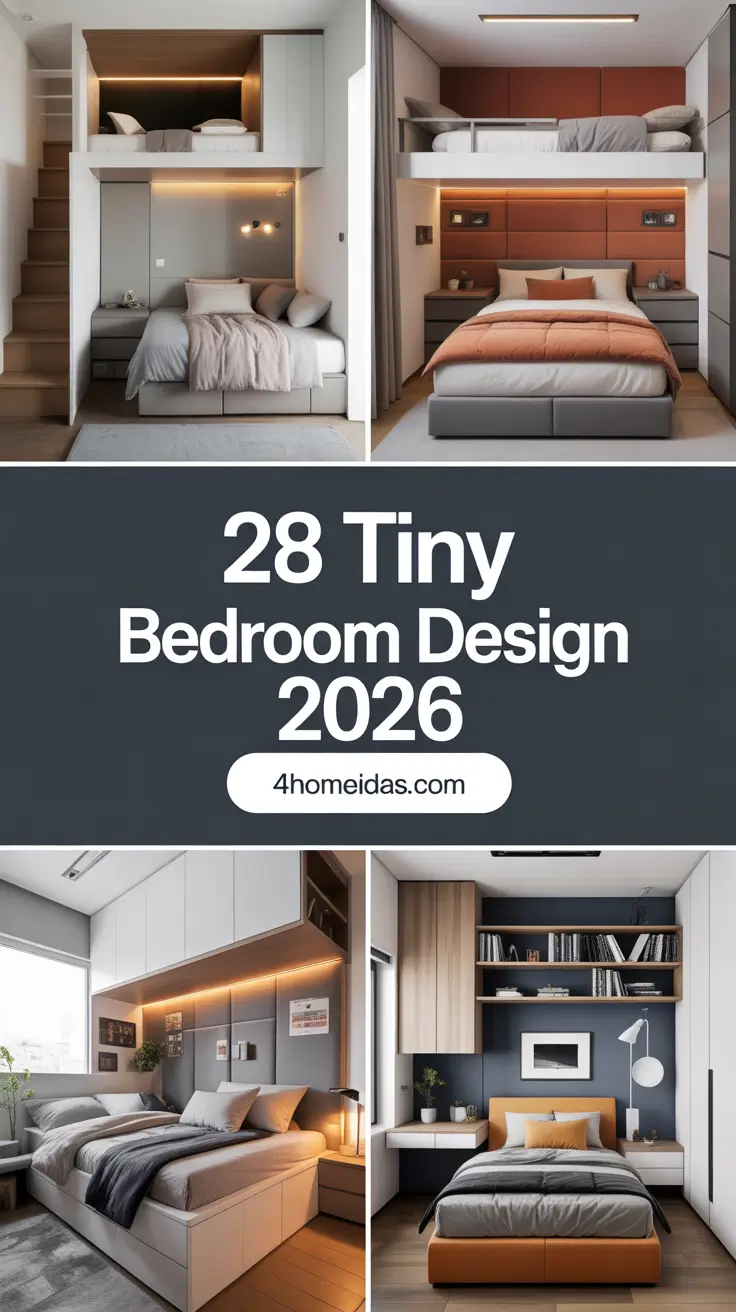
Can a small bedroom feel stylish, functional, and comfortable in 2026? Absolutely—and today’s tiny bedroom design ideas small spaces prove that limited square footage no longer limits creativity. In this article, I explore how tiny bedroom design space saving solutions, thoughtful layouts, and modern aesthetics redefine compact living.
I’ll break down practical approaches, furniture choices, and design strategies shaping tiny bedroom designs in 2026. Whether you’re planning a minimalist apartment, a shared space, or a cozy personal retreat, these ideas are meant to be realistic, livable, and visually inspiring.
Tiny Bedroom Design Trends Defining Small Spaces In 2026
I see 2026 as a year where tiny bedroom design ideas focus on flexibility, comfort, and visual calm. Interiors are moving away from overly decorative solutions and toward smart functionality, where every element serves a purpose. The emphasis is on openness, soft zoning, and furniture that adapts to daily routines without overwhelming the room.
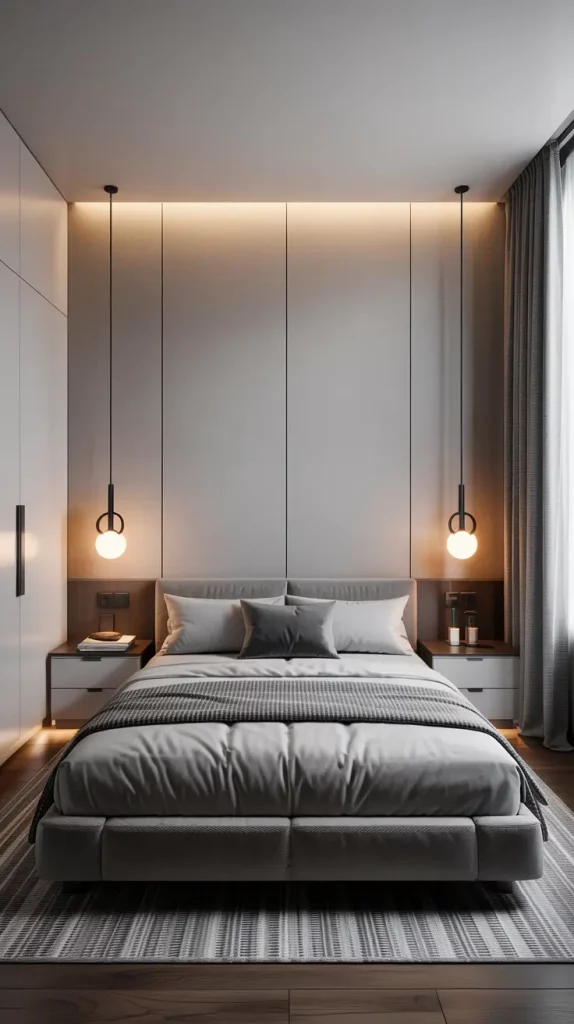
In practice, this includes low-profile beds, concealed storage systems, integrated lighting, and neutral palettes layered with texture. I often recommend modular wardrobes, floating nightstands, and wall-mounted shelves to keep floor space clear. These features define modern tiny bedroom designs while maintaining practicality.
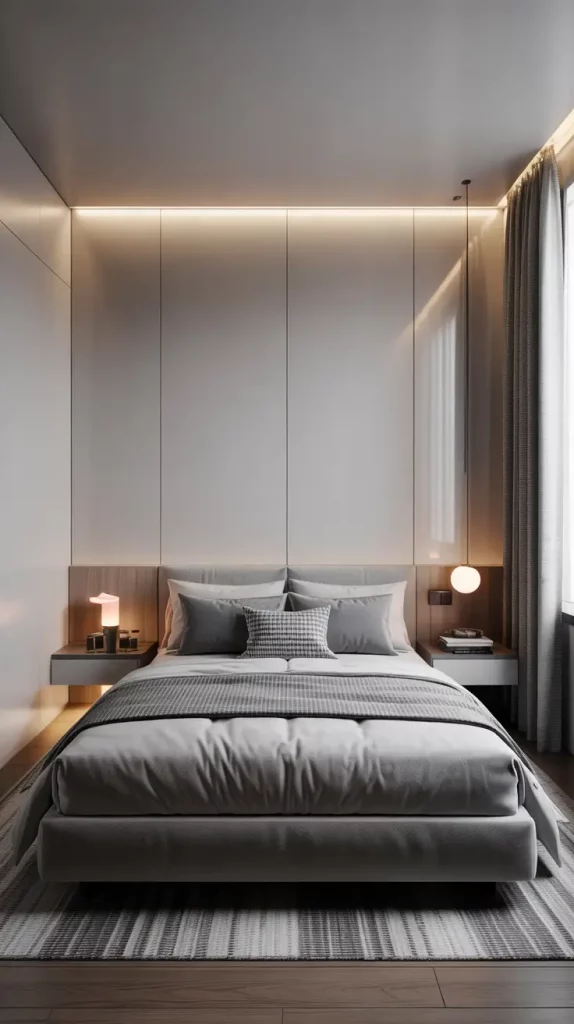
From my experience, designers featured in Architectural Digest and Dezeen consistently highlight adaptability as the key trend. What’s still missing in many homes is a balance between technology integration and warmth—something I believe smart lighting paired with natural materials can solve effectively.
How Tiny Bedroom Design Ideas Maximize Limited Square Footage
When I work with compact rooms, my priority is making the layout feel intentional rather than restrictive. Tiny bedroom design ideas small spaces in 2026 rely heavily on spatial planning, where circulation paths and furniture placement are carefully calculated to avoid visual clutter.
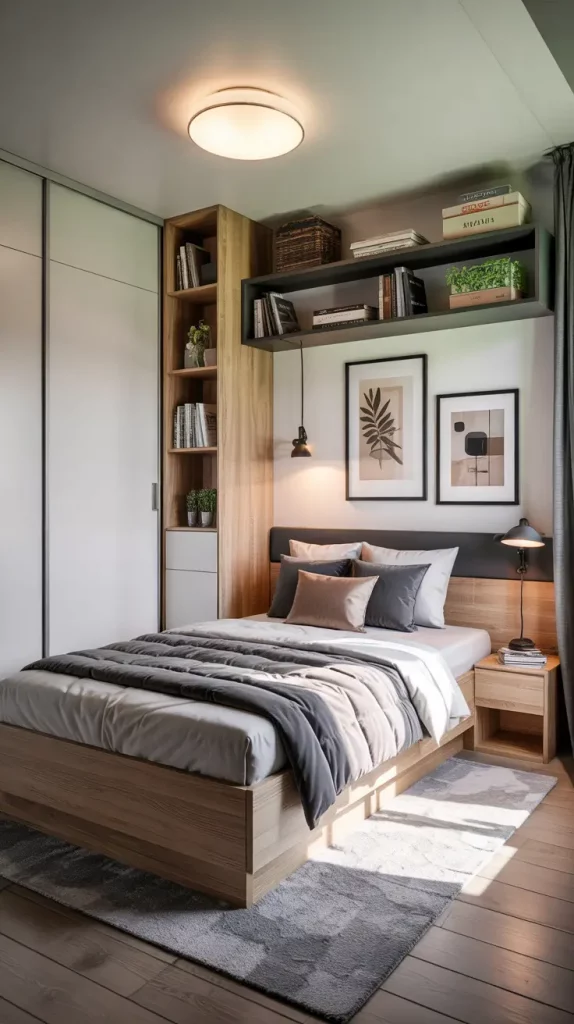
I usually start with multifunctional furniture: beds with drawers, desks integrated into wardrobes, and seating that doubles as storage. Wall-mounted lighting and sliding doors also play a critical role in maximizing usable square footage without sacrificing comfort.
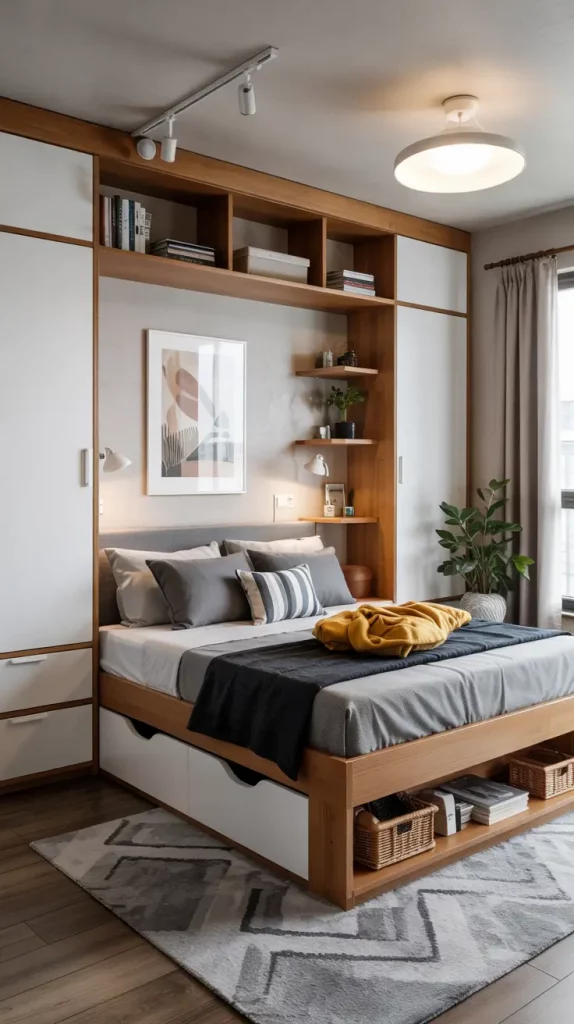
Personally, I’ve found that removing unnecessary furniture often adds more value than adding storage. Many professionals at HGTV echo this idea—less furniture, better proportions, and thoughtful spacing are essential. What’s often missing is custom sizing; standard furniture rarely fits truly tiny rooms well.
Space-Saving Tiny Bedroom Design Solutions That Actually Work
Effective tiny bedroom design space saving solutions are those that feel invisible. I focus on built-ins, recessed shelving, and furniture that blends seamlessly with the architecture. In 2026, these solutions prioritize clean lines and integrated storage over bulky standalone units.
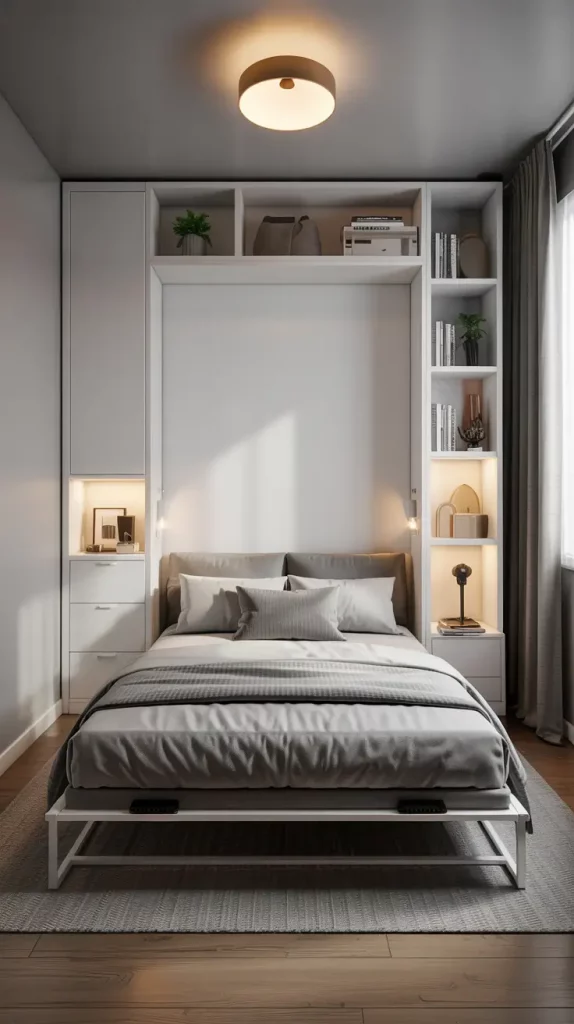
Murphy beds, fold-down desks, and wardrobe-wall systems are among the most reliable options I recommend. Each item should reduce visual noise while increasing function. Even headboards now serve as storage zones with hidden compartments or open shelving.
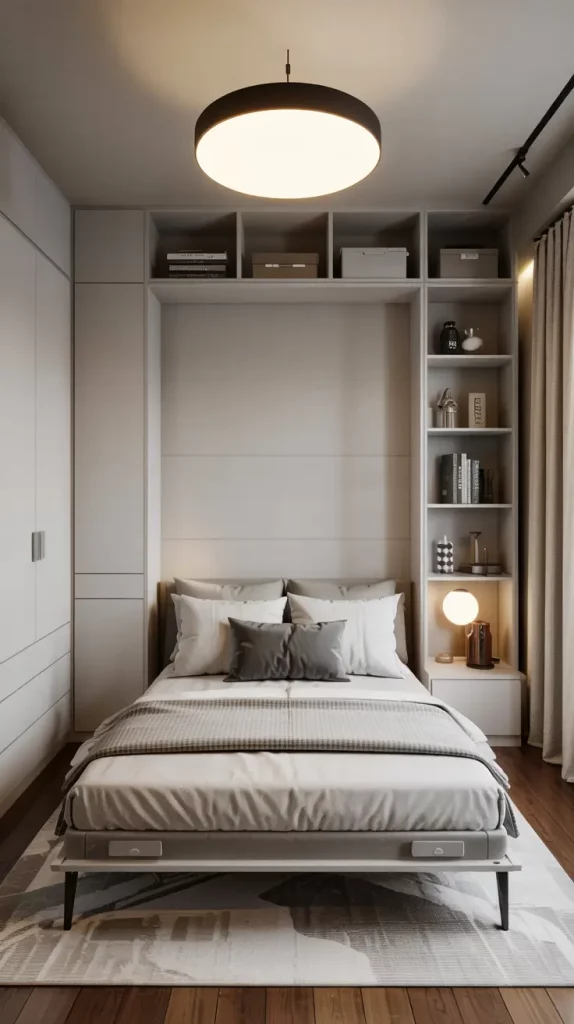
In my own projects, the most successful spaces are those where storage doesn’t announce itself. Designers from Dwell Magazine often stress this approach. One element frequently missing is vertical lighting—adding it enhances both usability and spatial perception.
Cozy Tiny Bedroom Design Concepts For Everyday Comfort
Creating a tiny bedroom design cozy enough for daily relaxation requires more than soft textiles. I focus on proportion, lighting temperature, and tactile materials that make the space feel personal without cluttered decor.
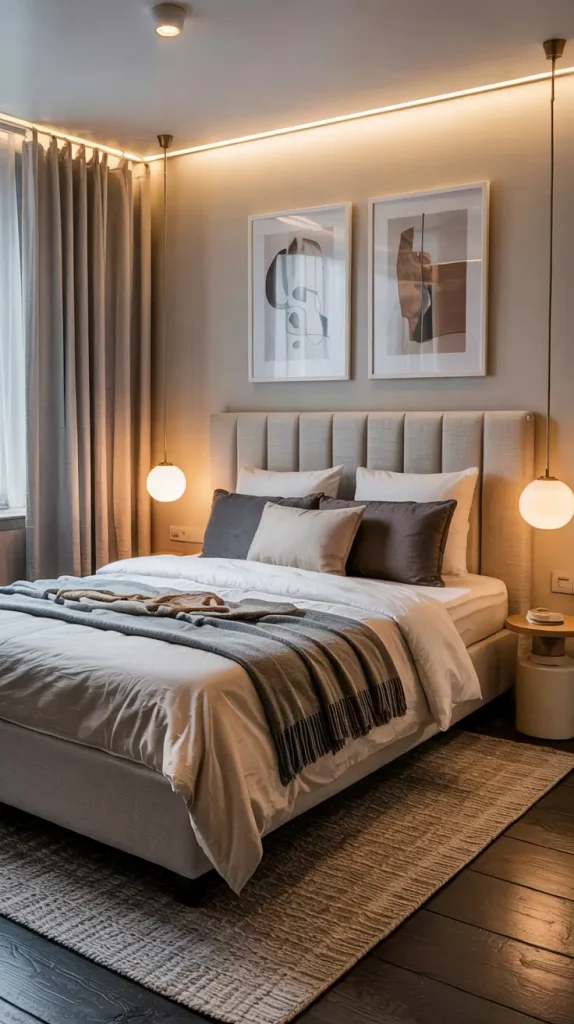
Upholstered headboards, layered bedding, warm-toned wood, and dimmable lighting are essentials I consistently include. Compact rooms benefit from curtains with texture, area rugs sized correctly, and bedside lighting that feels intimate rather than harsh.
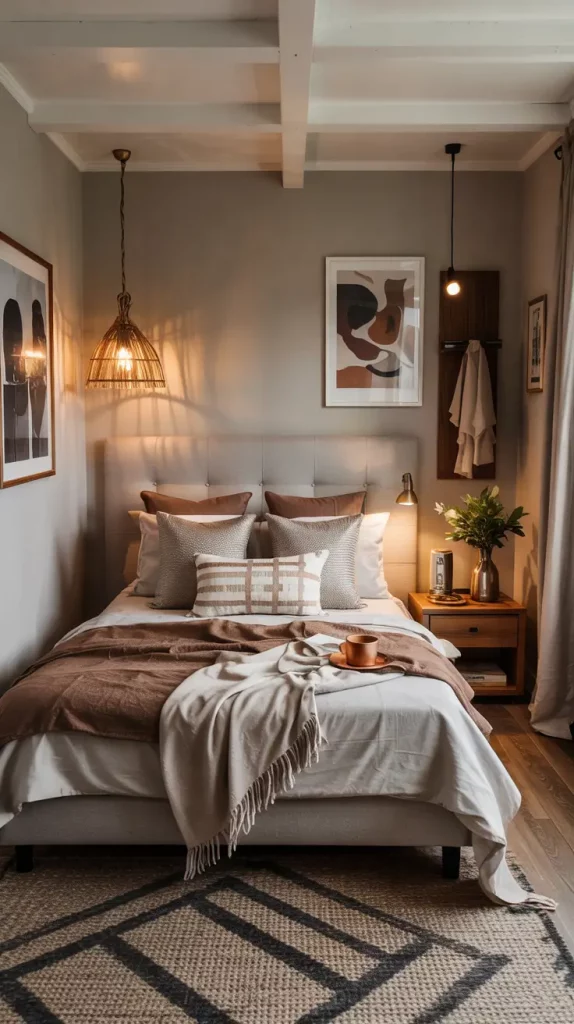
From my perspective, comfort comes from consistency. Elle Decor frequently highlights how cohesive material palettes improve small interiors. What’s often missing is acoustic softness—adding fabric wall panels or heavier curtains can significantly enhance the sense of calm.
Smart Layout Planning For Tiny Bedroom Designs
Layout planning is where most tiny bedroom designs succeed or fail. I approach layouts by first identifying movement zones, then anchoring the bed in a position that doesn’t block light or storage access.
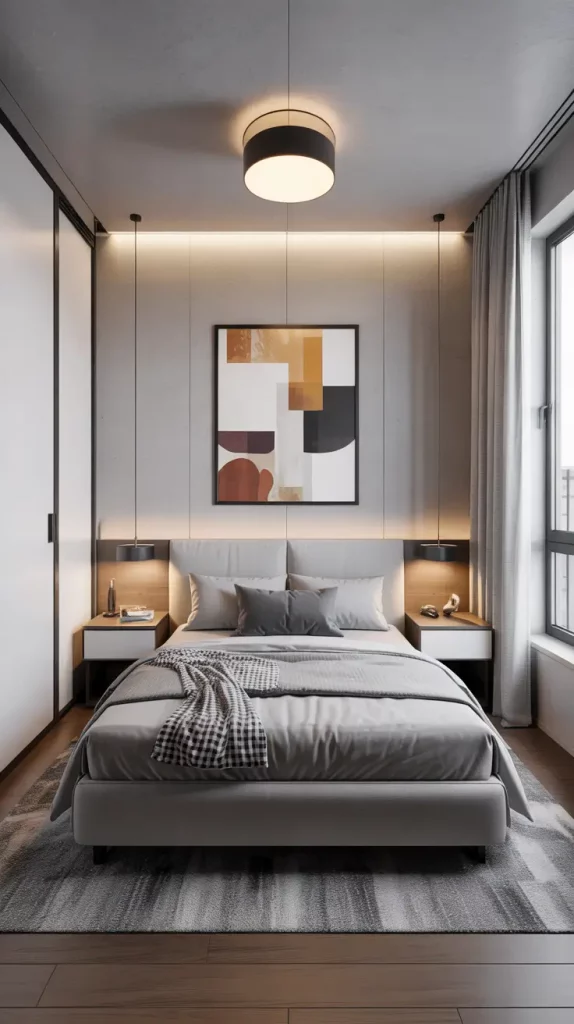
I prioritize symmetrical arrangements when possible—balanced nightstands, centered beds, and aligned wardrobes help small rooms feel orderly. Sliding doors and open shelving are layout-friendly alternatives to traditional hinged furniture.
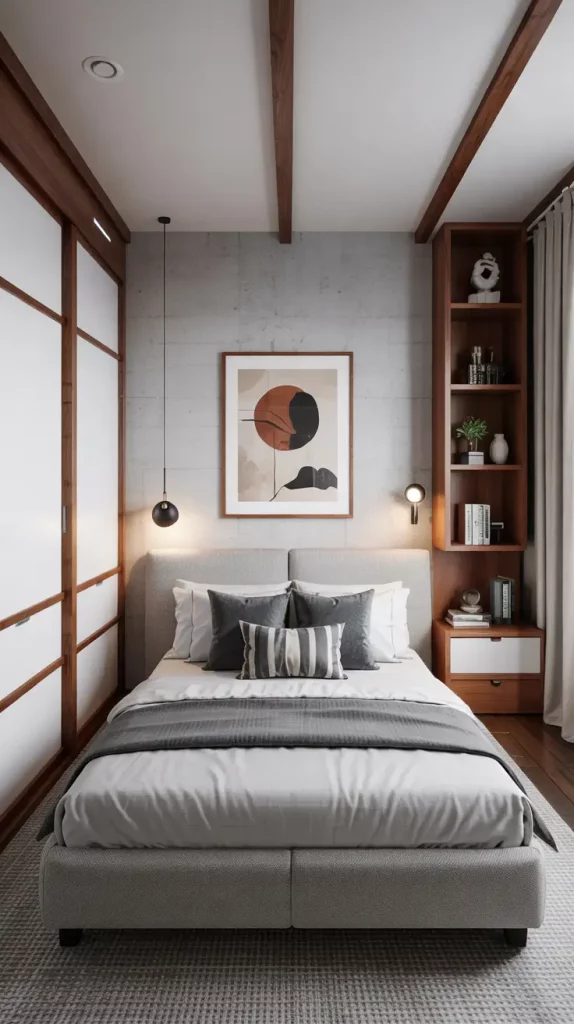
In my experience, professionals at Apartment Therapy stress starting with function before aesthetics. I agree fully. What’s often missing is flexibility—leaving room for future changes ensures the layout remains useful over time.
Tiny Bedroom Design Ideas For Small Spaces With Big Impact
Some tiny bedroom design ideas deliver impact without requiring major renovations. I often recommend focusing on one statement element—lighting, wall treatment, or custom furniture—to anchor the room visually.
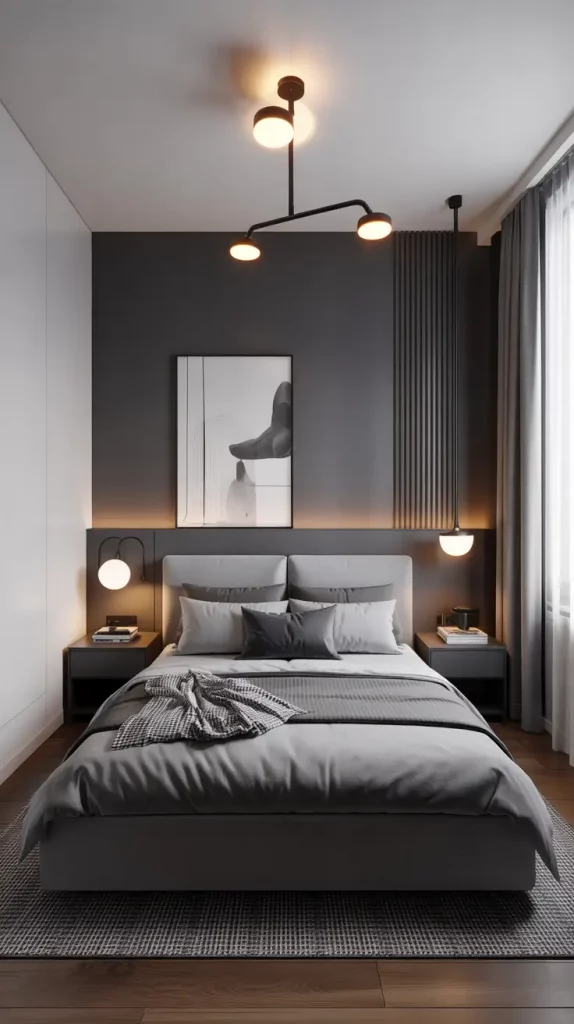
Feature walls with textured panels, integrated LED strips, or minimalist artwork can transform the space instantly. Furniture with contrasting finishes also adds depth without overcrowding.
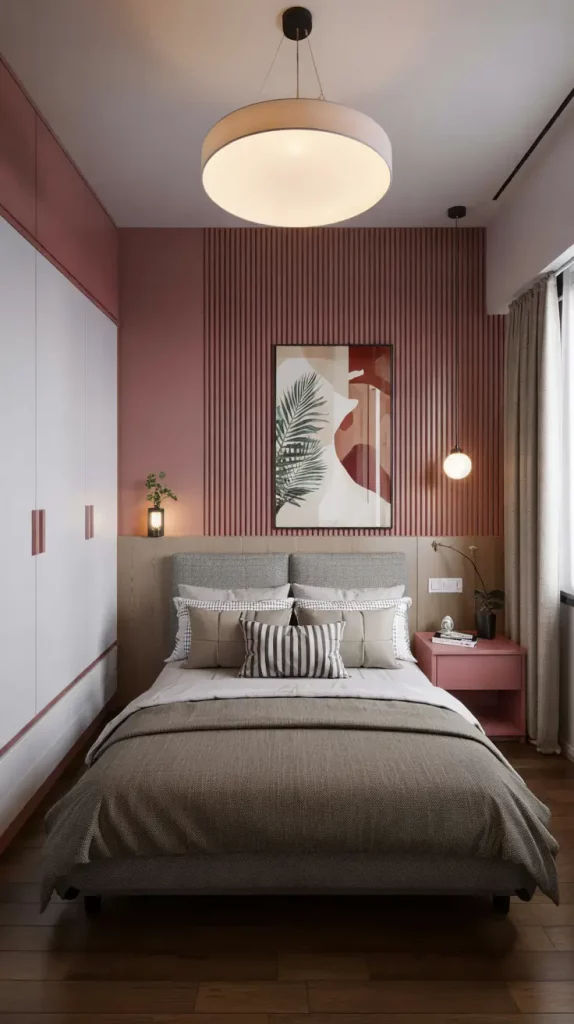
Personally, I’ve seen how one strong design choice can elevate an entire room. Designers from Domino Magazine often suggest this approach. What’s missing in many interiors is restraint—choosing one focal point instead of many makes the space feel intentional.
Minimalist Tiny Bedroom Design For Clutter-Free Living
A tiny bedroom design minimalist approach works especially well in 2026, where simplicity supports mental clarity. I focus on reducing visual distractions while keeping essentials easily accessible.
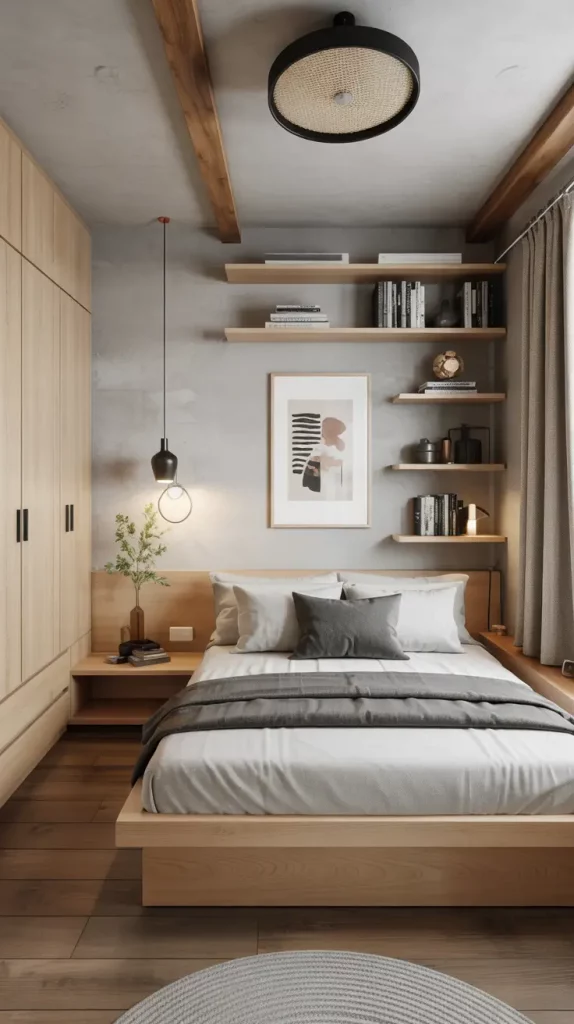
Platform beds, handle-less wardrobes, floating shelves, and neutral tones define this style. I always recommend concealed storage to maintain clean surfaces and uninterrupted lines.
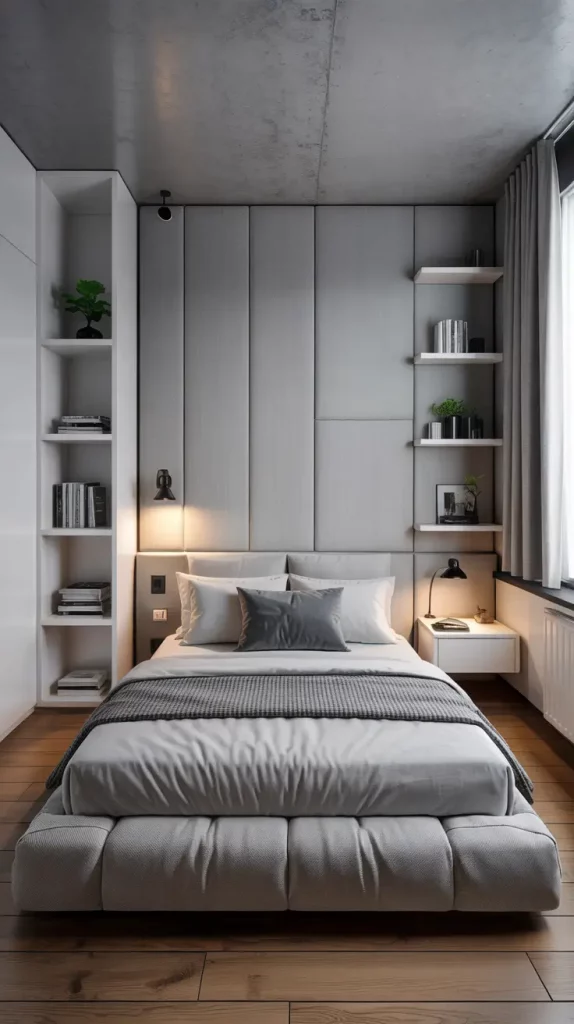
From my experience, minimalism isn’t about emptiness—it’s about purpose. Publications like Dezeen emphasize this distinction. What’s often missing is warmth; adding natural textures like linen, oak, or wool prevents the space from feeling sterile.
Tiny Bedroom Design Minimalist Apartment Inspirations
When I design a tiny bedroom design minimalist apartment, I focus on clarity, serenity, and smart storage that blends seamlessly into the environment. Minimalist apartments in 2026 prioritize clean surfaces, streamlined furniture, and soft color palettes that visually expand small rooms. This approach transforms even the smallest bedroom into a refreshing and airy retreat. The goal is to create a sense of peaceful emptiness without making the room feel cold.
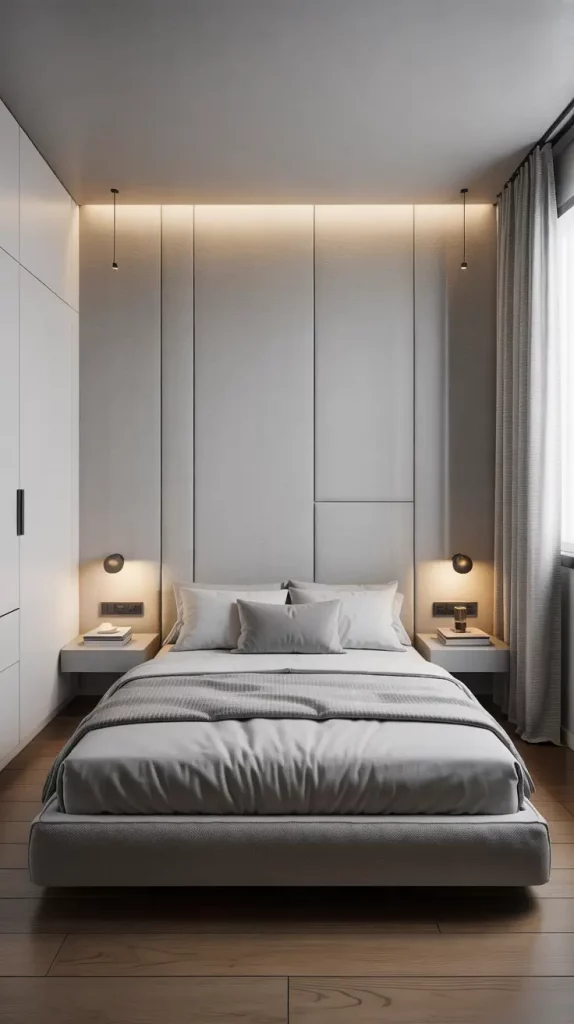
To achieve this effect, I typically incorporate platform beds, wall-mounted nightstands, and smooth built-in cabinetry. These pieces reduce visual weight and improve circulation inside the room. Thin-framed lighting fixtures, sheer curtains, and integrated shelving complete the minimalist look while enhancing function. This setup works beautifully in compact apartments where simplicity is a necessity.
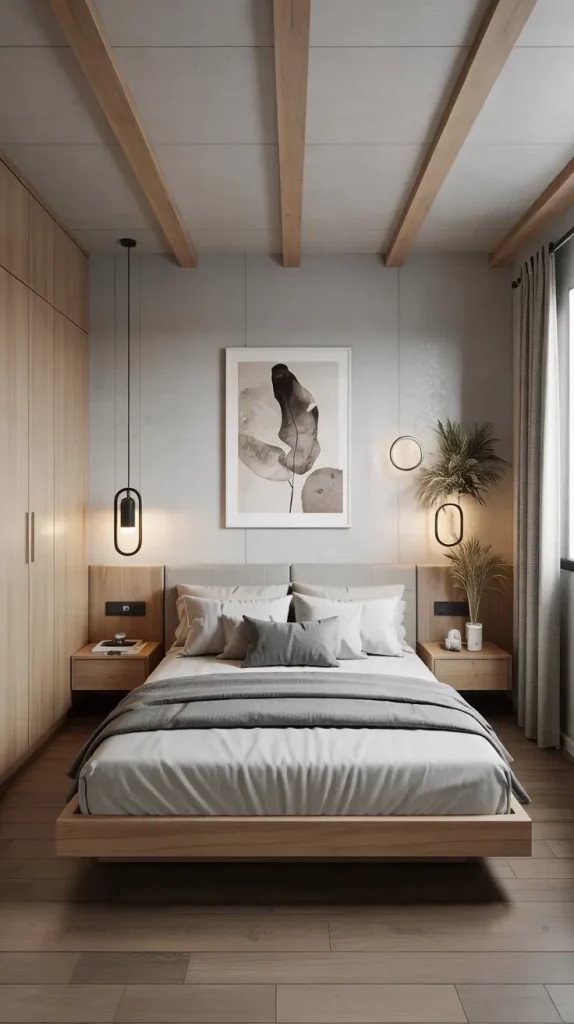
I’ve found inspiration from the minimalist trends covered by Dezeen and Architectural Digest, where designers consistently highlight the power of restraint. Their work supports my belief that removing excess instead of adding more leads to the biggest transformations. What I would still add to this approach is more natural texture, as pairing minimalism with organic materials prevents the room from feeling overly stark.
Choosing The Right Color Palette For Tiny Bedroom Design
When selecting colors for tiny bedroom designs, I always consider how hues influence perception of space. Lighter shades—soft whites, muted grays, warm beiges, and pale greens—help walls recede visually, making small bedrooms appear larger and brighter. In 2026, color palettes lean toward earthy neutrals mixed with soft accents that add character without overwhelming the room.
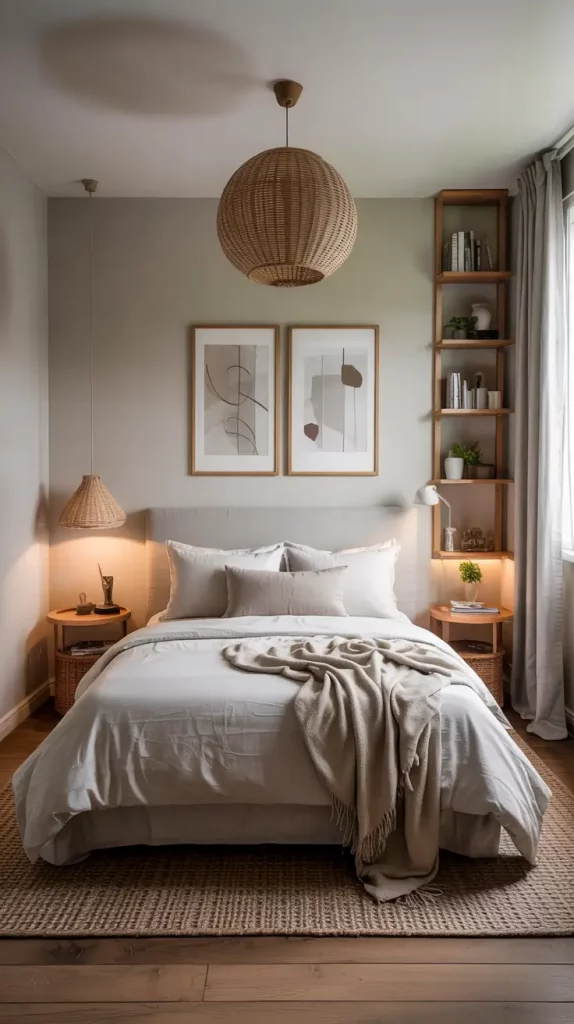
I often combine a neutral base with subtle accent colors on bedding, art, or textiles. Furniture in natural wood tones pairs beautifully with these palettes and adds warmth. Even the wardrobe and storage solutions can be color-matched to the walls to create a seamless, airy feel.
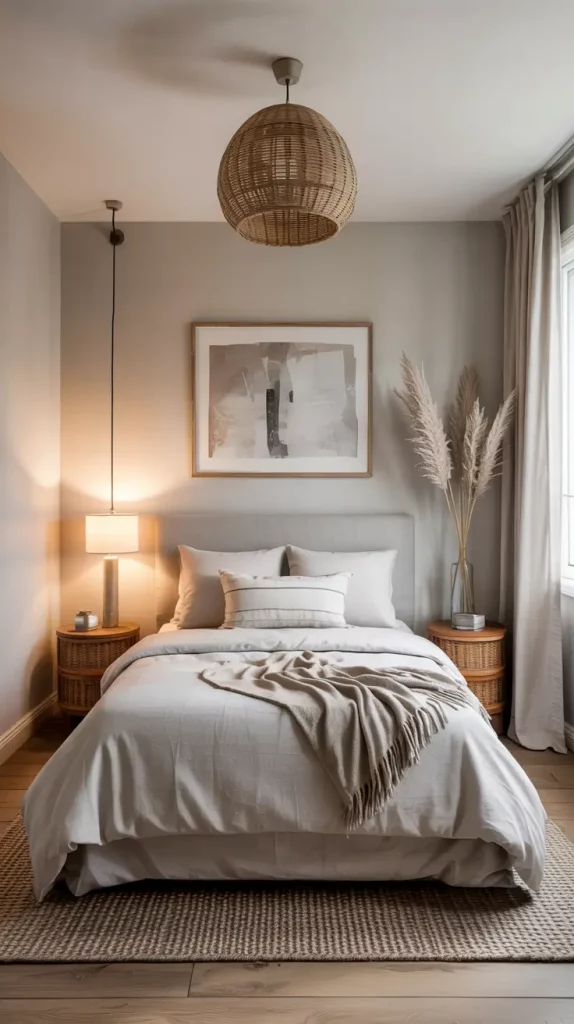
One principle I follow, echoed by designers in HGTV’s color trend reports, is choosing colors that support emotional comfort. In small rooms, soothing tones reduce visual clutter and enhance relaxation. What could be added more often is contrast—many tiny bedrooms avoid darker tones entirely, but a strategic deep accent can add depth without shrinking the space.
Lighting Techniques That Transform Tiny Bedroom Designs
Lighting plays one of the most powerful roles in tiny bedroom design ideas. I approach lighting by layering ambient, task, and accent sources to give the room flexibility throughout the day. Modern 2026 lighting trends emphasize concealed LED strips, soft diffused lighting, and minimal fixtures that do not take up valuable space.
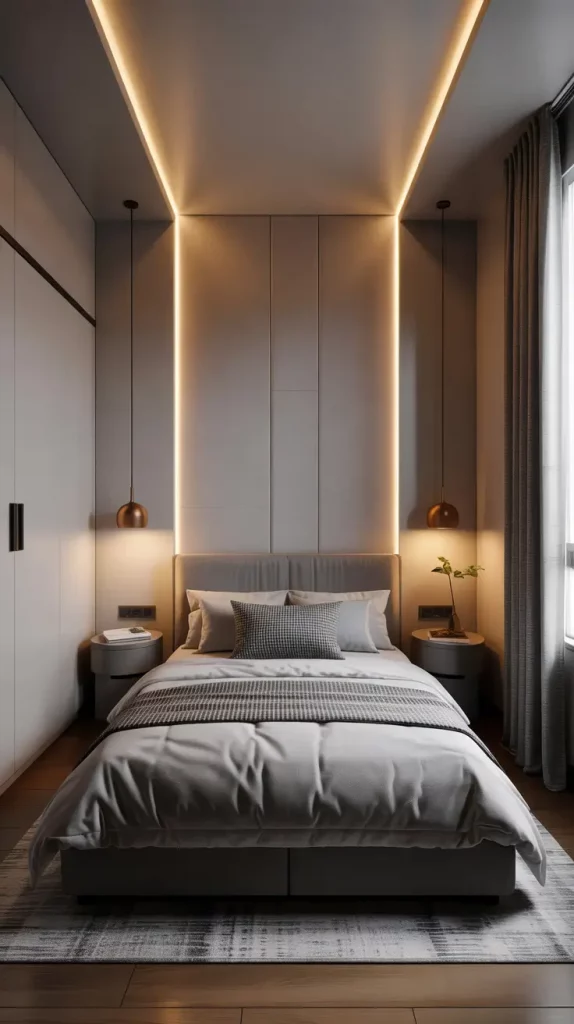
My go-to choices include wall-mounted sconces instead of table lamps, slim pendant lights, and under-shelf LED strips. These provide ample illumination while keeping surfaces uncluttered. I also incorporate warm temperature lighting to support comfort and relaxation, especially in compact rooms that can easily feel harsh if overly bright.
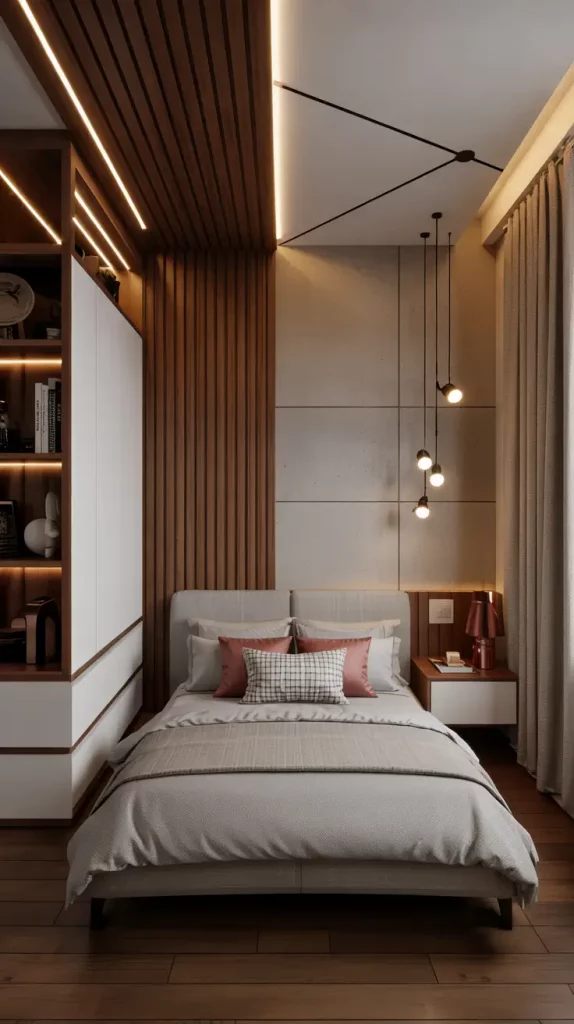
In my professional experience, lighting advice from Architectural Digest is consistently clear: integrate lighting rather than adding it. I agree entirely. What I often find missing is dimmability—adding it enhances mood and allows the room to shift from energizing to cozy with one touch.
Multifunctional Furniture For Tiny Bedroom Design Space Saving
When I’m designing with tiny bedroom design space saving strategies in mind, multifunctional furniture becomes essential. In 2026, the most effective solutions combine sleek aesthetics with high performance: beds that lift for storage, wardrobes with built-in desks, and benches that double as organizing units. These pieces transform small rooms into highly flexible living spaces.
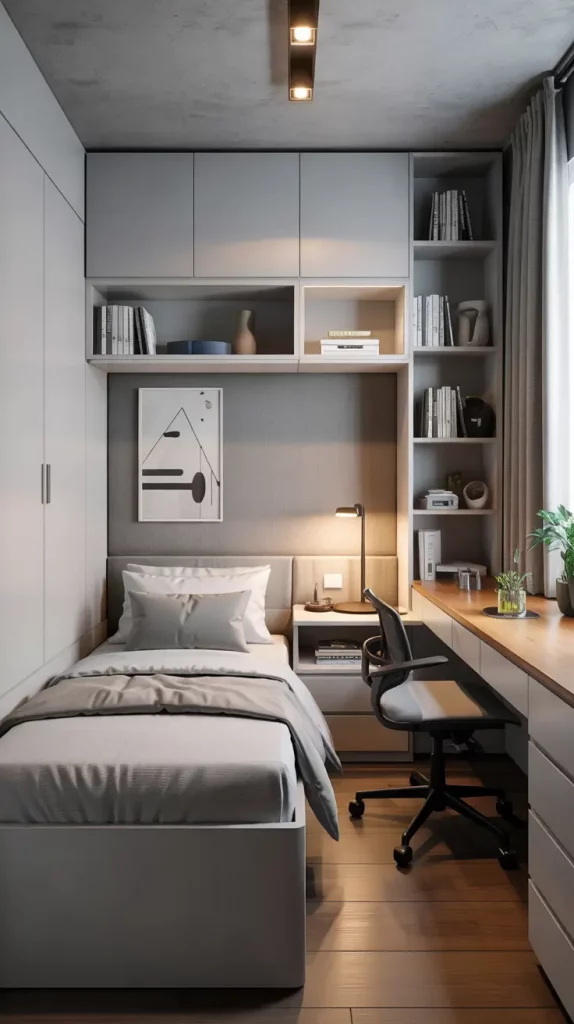
I typically use ottomans with hidden compartments, headboards with integrated shelves, or expandable desks that tuck away when not needed. Each element contributes to a clutter-free environment, allowing the room to remain visually open. I also prefer furniture with slim profiles to ensure the space doesn’t feel cramped.
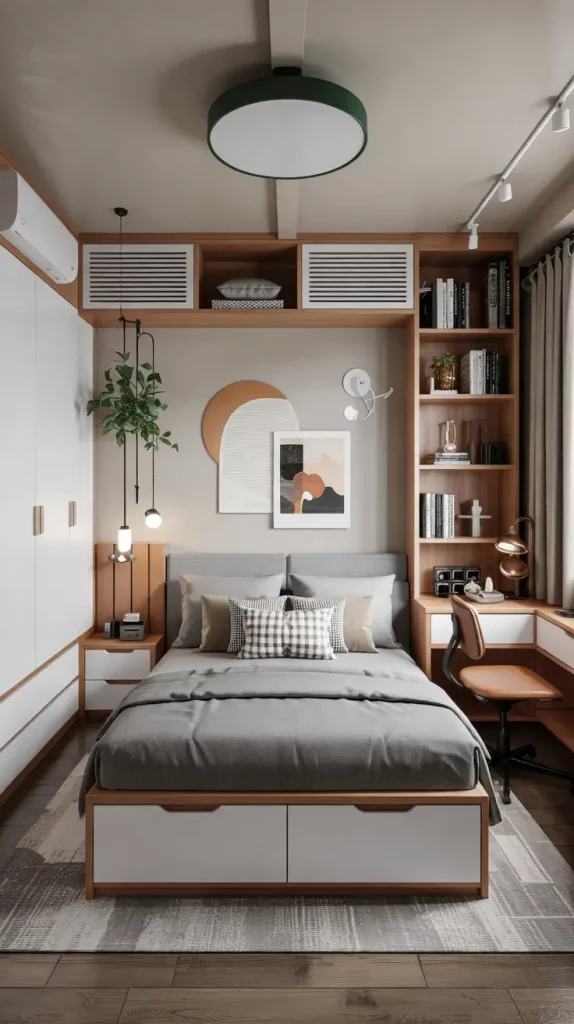
Interior designers featured in Dwell frequently stress the importance of furniture that “works harder” in small spaces. I see this reflected in nearly every successful project I work on. What I believe could be added more frequently is mobile furniture—pieces with wheels offer adaptability that many tiny bedrooms lack.
Built-In Storage Ideas For Tiny Bedroom Design With Wardrobe
A well-designed tiny bedroom design with wardrobe requires clever built-in solutions that maximize vertical and horizontal space. I favor wall-to-wall and floor-to-ceiling wardrobes that provide abundant storage without sacrificing floor area. These built-ins feel integrated into the architecture, which keeps the room visually calm and organized.
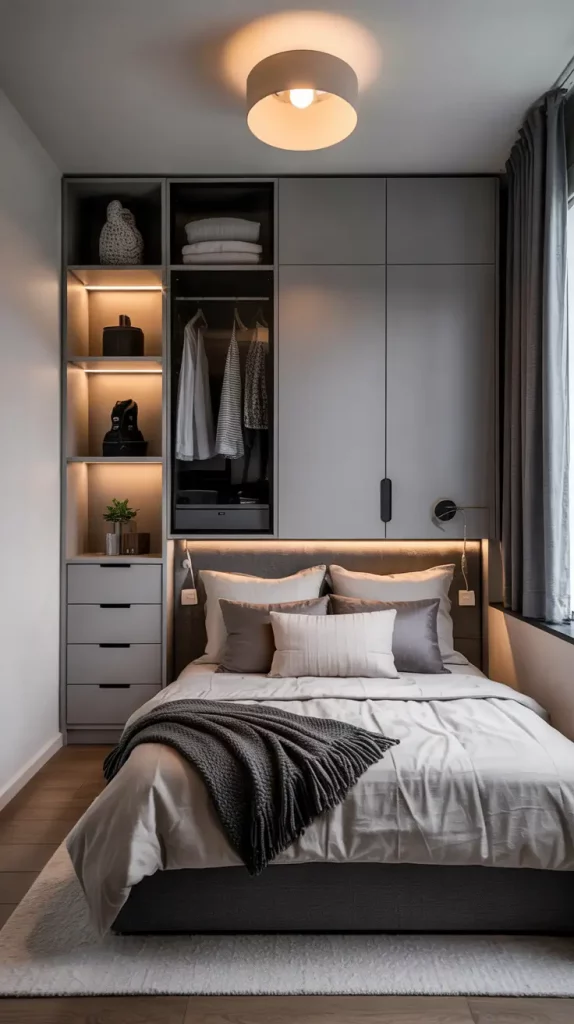
Inside the wardrobe, I usually include pull-out drawers, vertical separators, lighting strips, and adjustable shelving. Mirrored doors are another smart feature—they open up the room visually while serving a dual purpose. Combining the wardrobe with additional built-ins around the bed creates a cohesive look and increases functionality.
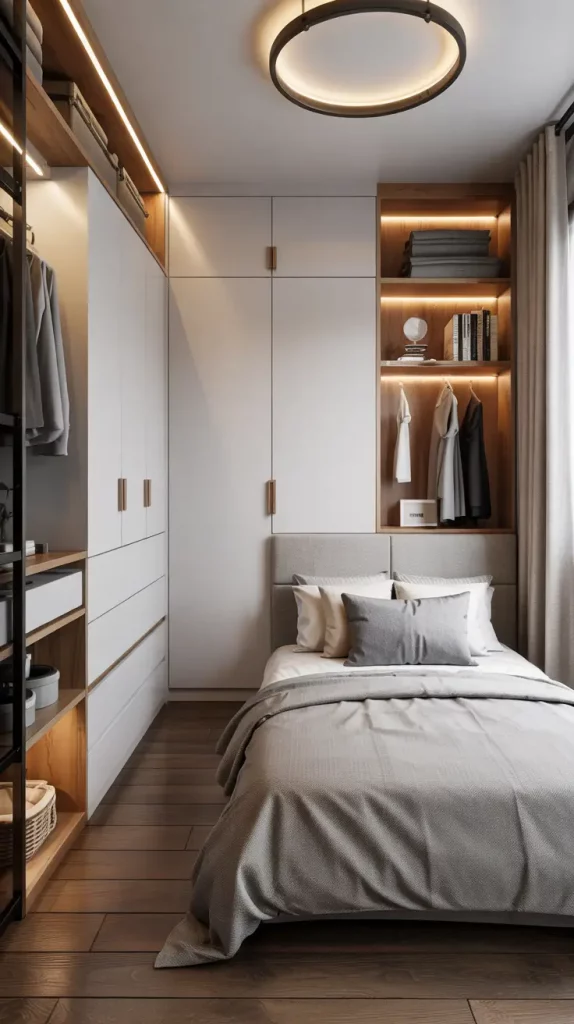
From an industry standpoint, experts cited in House Beautiful emphasize customization as the key to making small rooms work efficiently. I agree completely. The only thing often missing is ventilation—closed built-ins benefit from small airflow gaps to prevent humidity buildup, which I always incorporate.
Vertical Storage Solutions In Tiny Bedroom Designs
When floor space is limited, vertical space becomes a designer’s best resource in tiny bedroom designs. I focus on utilizing walls from top to bottom with shelving, tall wardrobes, peg rails, and overhead cabinets. These solutions keep daily essentials accessible without encroaching on the room’s footprint.
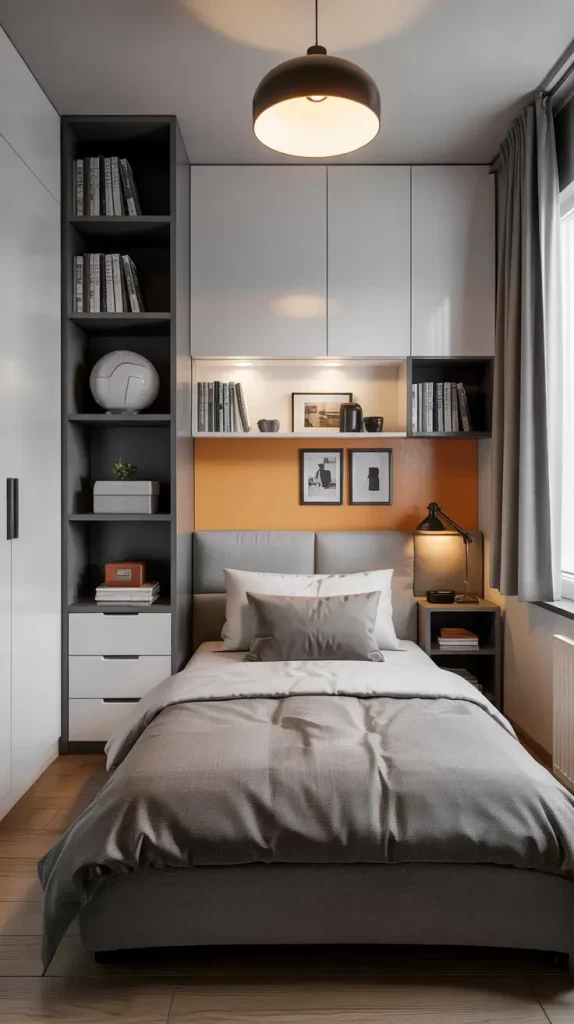
I frequently install floating shelves, wall-mounted organizers, and tall cabinetry to stretch the visual height of the room. Even items like lighting fixtures and bedside tables can be mounted vertically to free up floor area. This method strengthens both function and the overall aesthetic.
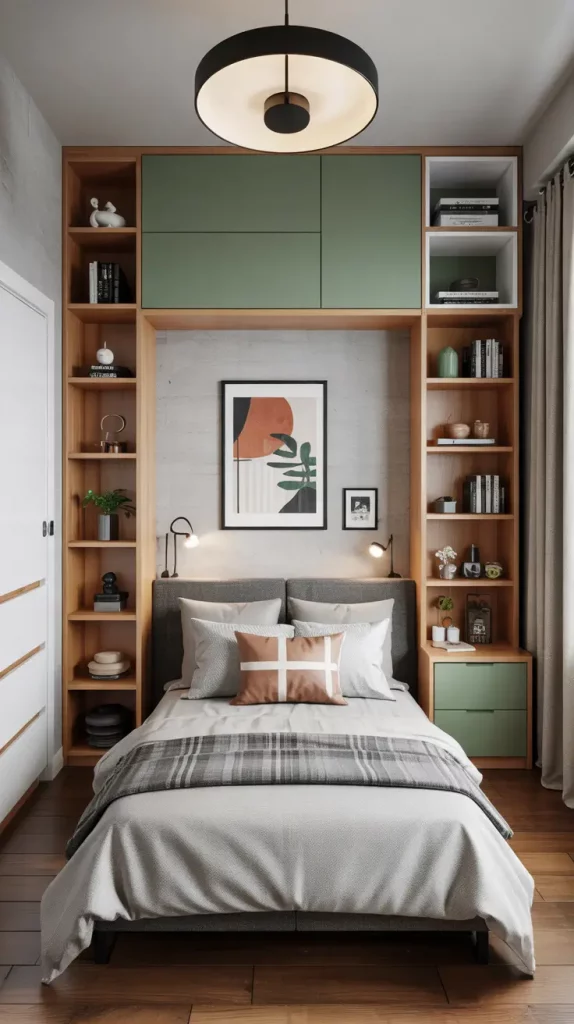
Professionals at Apartment Therapy often highlight the power of vertical storage in small homes, and I see the proof in every project. What I tend to add is balance—too much vertical storage can make the room feel top-heavy, so mixing heights is crucial.
Tiny Bedroom Design With Wardrobe Without Overcrowding
Achieving a tiny bedroom design with wardrobe that doesn’t feel overcrowded requires strategic placement and a visually lightweight design. I typically position wardrobes along the least obstructive wall and ensure the doors—sliding or mirrored—don’t intrude into the circulation area. The goal is to integrate storage without shrinking the sense of space.
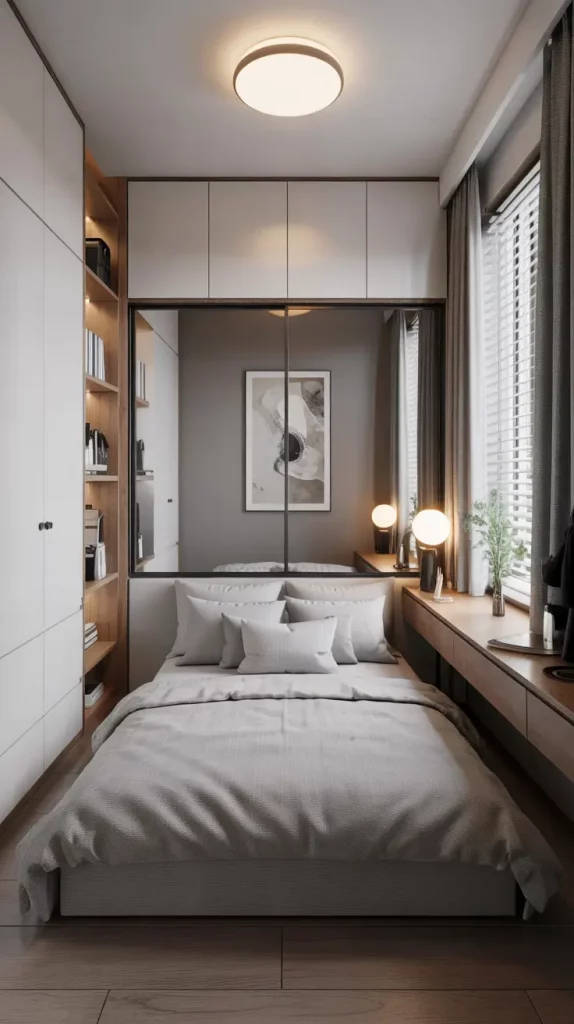
Slim-profile wardrobes, built-in LED lighting, and neutral finishes help reduce the visual impact. I also look for designs with recessed handles and clean lines to maintain a minimalist appearance. Combining the wardrobe with adjacent shelving or a small vanity maximizes use while keeping the room balanced.
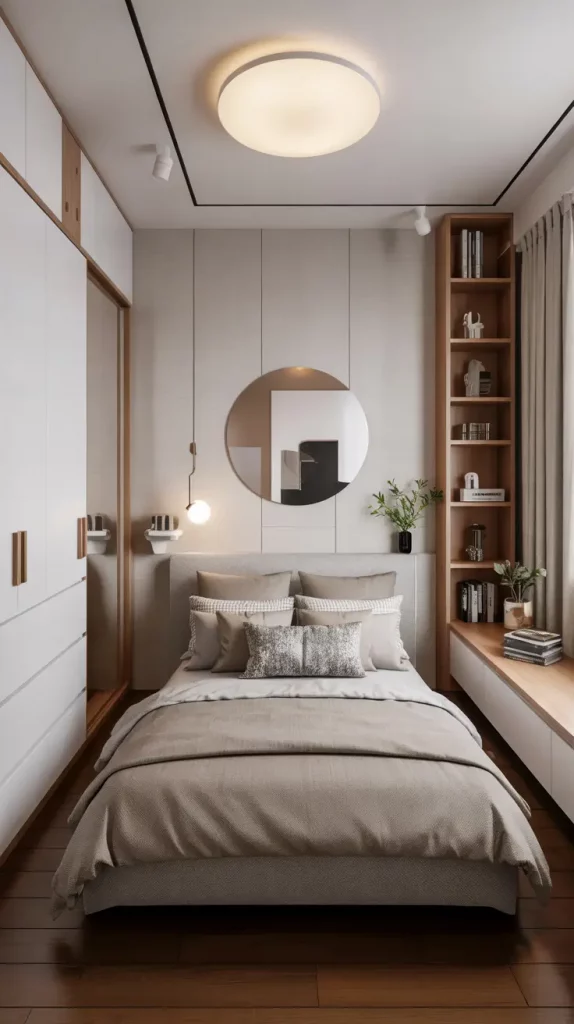
I agree with experts in Better Homes & Gardens who recommend treating wardrobes as architectural elements rather than furniture. This perspective always leads to cleaner, more cohesive results. What I would add is lighting control—soft wardrobe lighting helps prevent harsh contrasts that make small rooms feel tighter.
Cozy Textures And Fabrics In Tiny Bedroom Design
When creating a tiny bedroom design cozy enough for everyday comfort, I focus heavily on textures. Softness and warmth are essential in small rooms, where minimalism can sometimes feel stark. By layering fabrics—plush rugs, quilted blankets, linen bedding, and textured curtains—I create tactile dimension that makes the room feel welcoming. In a tiny space, these gentle layers compensate for the lack of physical space by adding emotional warmth.
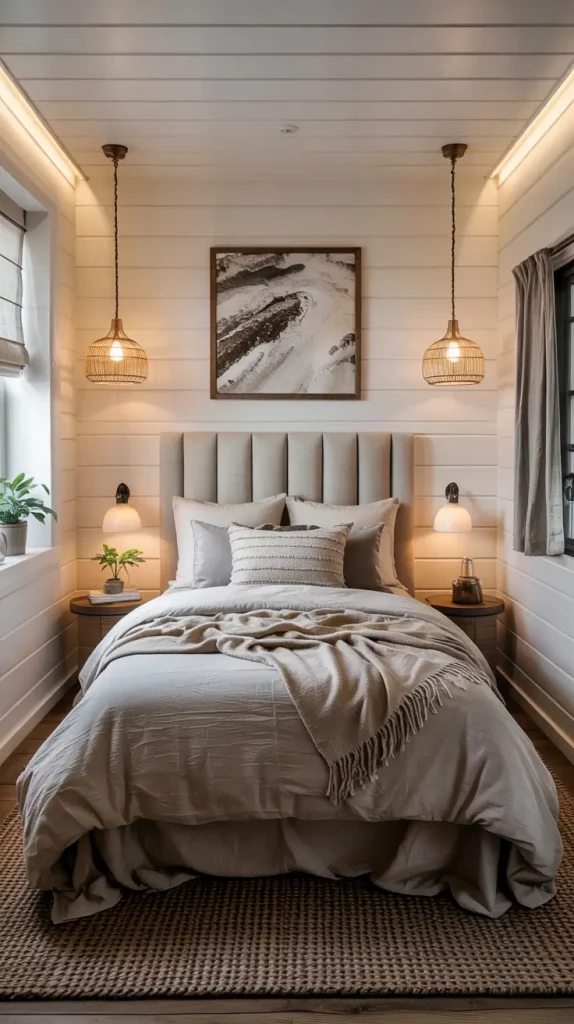
For furniture, I prefer upholstered headboards, woven baskets, and fabric-covered storage ottomans. These items soften the room visually while remaining functional. I also incorporate knitted throws, velvet cushions, or boucle accents because they add strategic contrast against clean-lined furniture typical of small rooms.
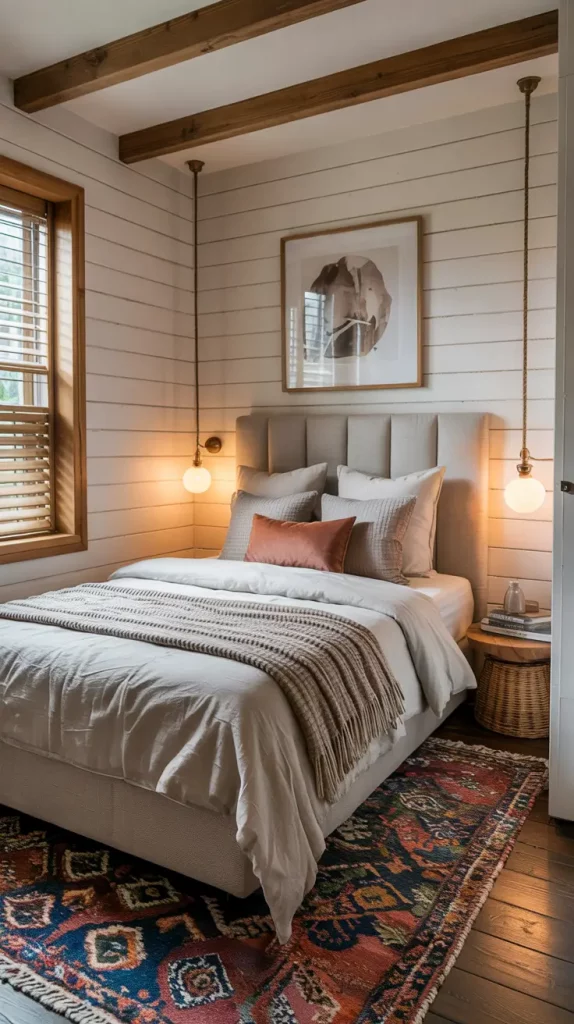
Professionals at Elle Decor frequently emphasize the role of fabric layering to prevent tiny bedrooms from feeling sterile. I agree completely. What I think could be added more often is a combination of warm and cool textures—pairing cotton with wool or linen with velvet creates balance that elevates any compact room.
Tiny Bedroom Design For Couples Sharing Small Spaces
Designing a tiny bedroom design for couples requires harmony, compromise, and thoughtful spatial zoning. I always start by choosing a bed size that supports comfort without overwhelming the room. In 2026, couples often embrace minimalist styles, where clean lines and neutral palettes provide a peaceful shared environment. A well-planned layout ensures that both partners have equal access to storage and comfortable circulation.
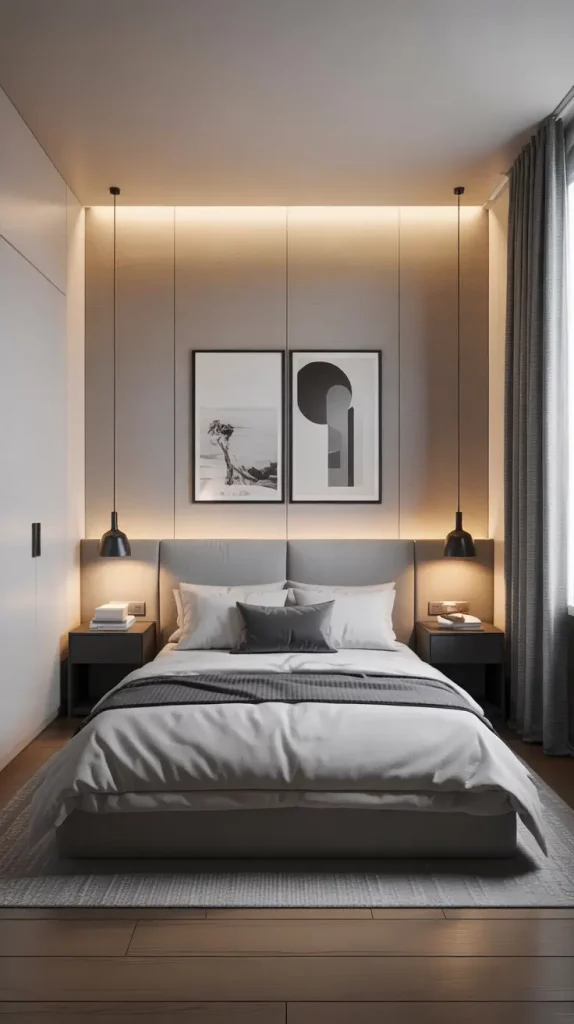
I lean toward dual-purpose furniture—two slim nightstands, a shared floating desk, or wardrobes with personalized sections. Soft lighting on both sides of the bed helps create symmetry and comfort. Incorporating a warm color palette and textured fabrics ensures the room feels inviting rather than utilitarian.
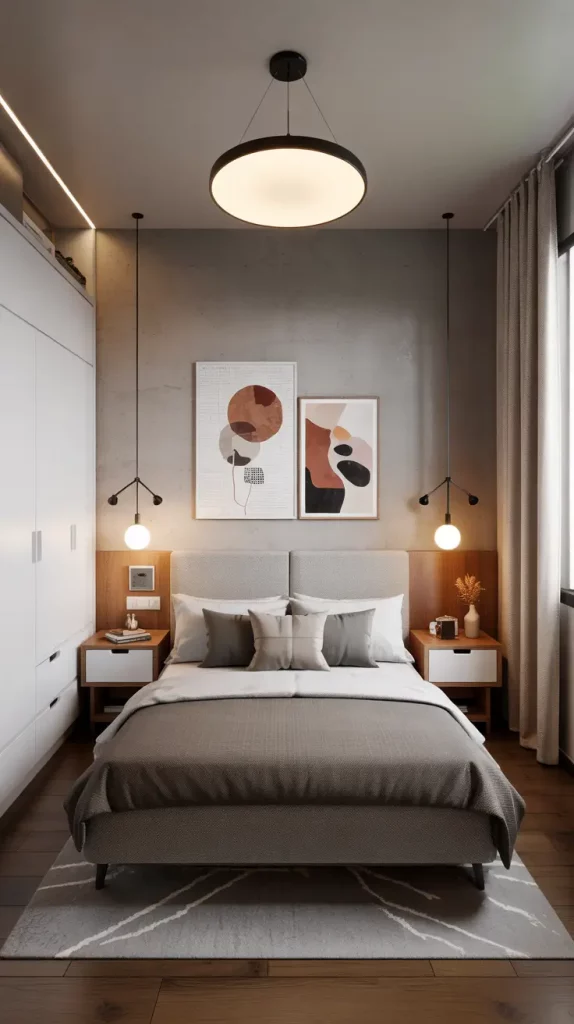
In my experience, couples appreciate when design supports routine rather than complicating it. Architectural Digest often notes that shared bedrooms benefit from “paired functionality,” meaning equal storage and balanced lighting. One thing I like to add is subtle personalization—matching frames but different prints, or individual bedside accessories, giving each partner a sense of ownership without clutter.
Romantic Yet Functional Tiny Bedroom Design For Couples
When I design a more romantic yet practical tiny bedroom design for couples, I emphasize ambiance. Gentle curves, soft textiles, warm lighting, and intimate seating create a soothing environment that still functions for daily routines. In small bedrooms, romance emerges from simplicity—too many decorative elements can feel suffocating.
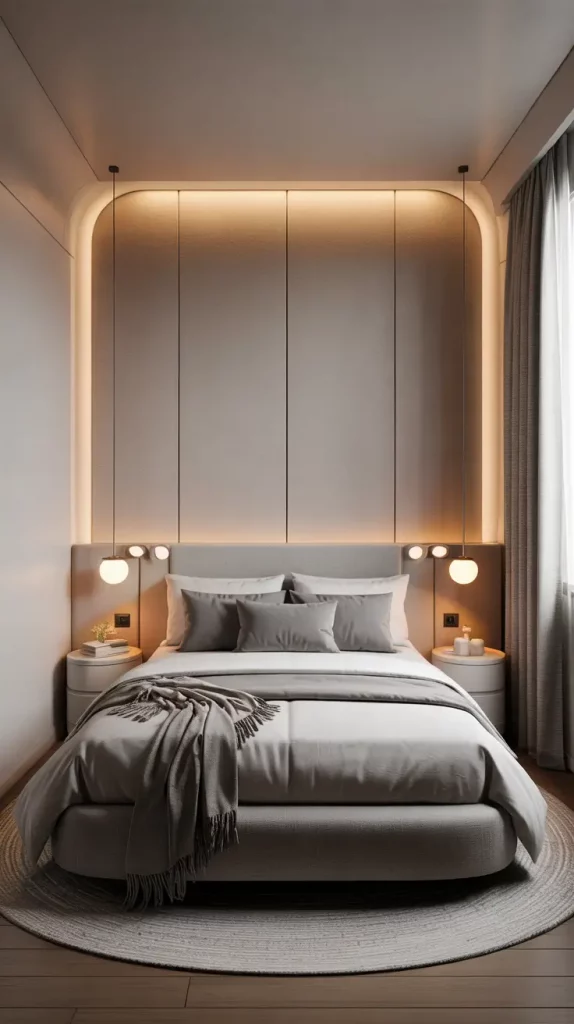
I choose furniture that feels soft and elegant: rounded nightstands, upholstered benches, warm-toned woods, and dimmable lighting. Adding sheer curtains, neutral bedding with luxurious textures, and small decorative details like candles or framed art also helps build a warm, intimate feel without affecting space.
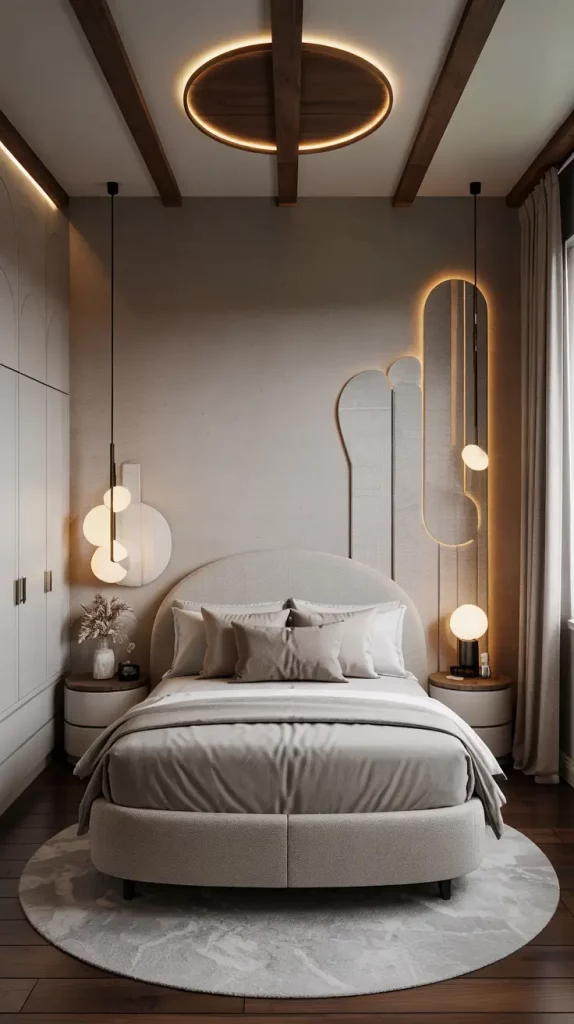
Designers featured in House Beautiful frequently recommend blending romance with practicality by using soft palette layers and lighting. I fully agree. What I tend to add is scent—subtle diffusers or essential oils enhance the atmosphere and turn the tiny room into a more personal sanctuary.
Tiny Bedroom Design For Boys With Style And Practicality
A functional and stylish tiny bedroom design for boys should reflect energy, personality, and adaptability. I focus on creating a space that supports both rest and development—sleeping, studying, and play. In 2026, boys’ rooms lean toward clean-lined furniture, bold color accents, and smart storage solutions that maintain order.
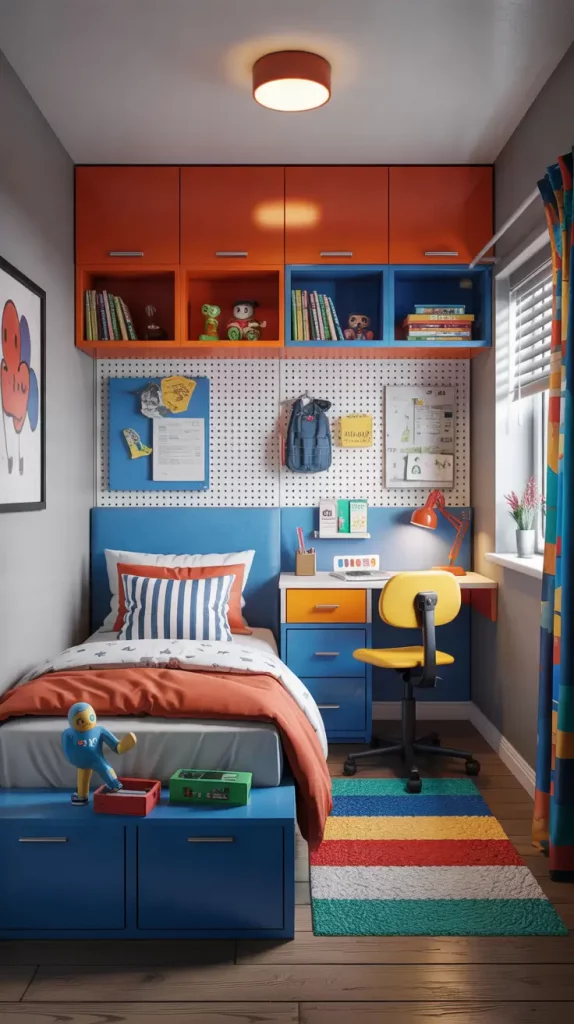
I commonly use raised beds with storage underneath, modular desks, and pegboard walls for organizing toys and accessories. Colors like navy, olive, charcoal, and muted orange feel lively but not overwhelming. Adding durable textiles, like canvas bins and washable rugs, helps maintain practicality while still looking modern.
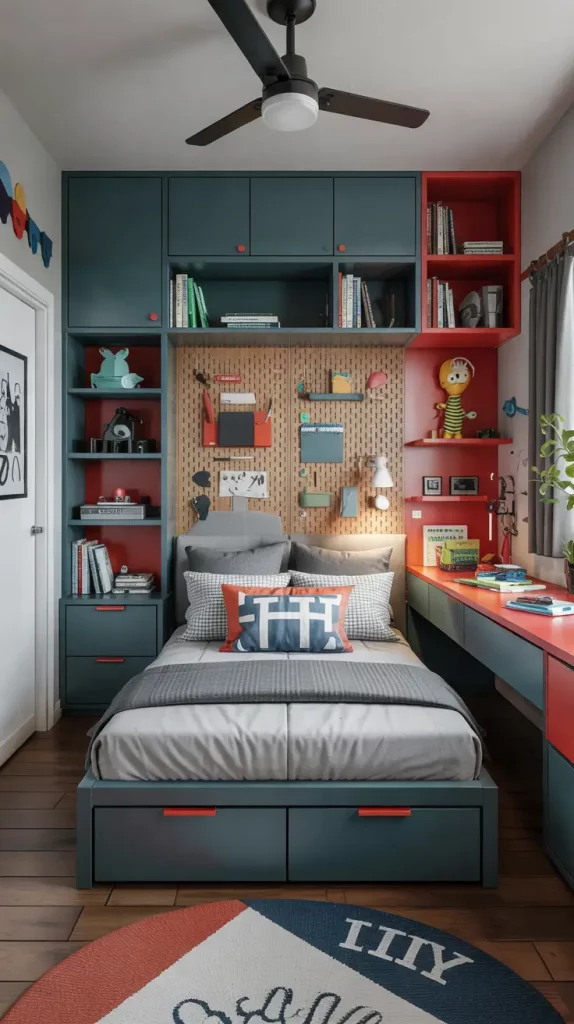
Many design experts at HGTV stress the importance of creating “zones” for kids in tiny bedrooms. I do the same because it encourages healthy habits and independence. What I like to add is flexibility—future-proofing the design so it adapts as the child grows, without major renovations.
Age-Appropriate Tiny Bedroom Design Ideas For Boys
Age-appropriate tiny bedroom design ideas for boys require balancing playfulness and maturity. When I design these rooms, I always consider how the space will transition as the child grows. Younger boys benefit from open floor areas and low storage, while teens need workspaces and more privacy. For both, durability and smart organization remain essential.
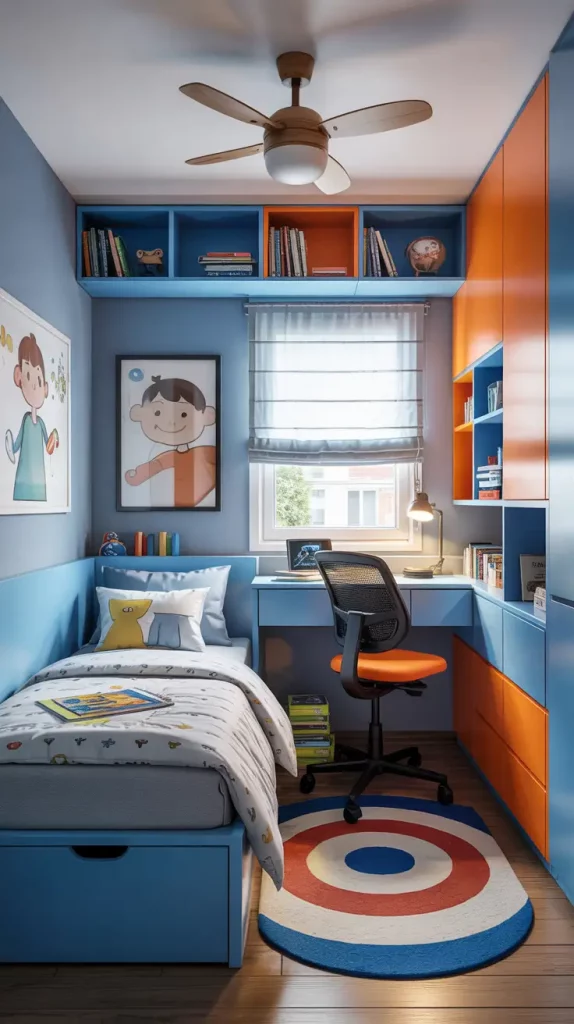
I incorporate furniture suitable for their stage of life: low beds for safety, open shelving for easy access, and later, desks or loft beds for teens. Colors and decor shift from playful motifs to more neutral, modern patterns as the child ages.
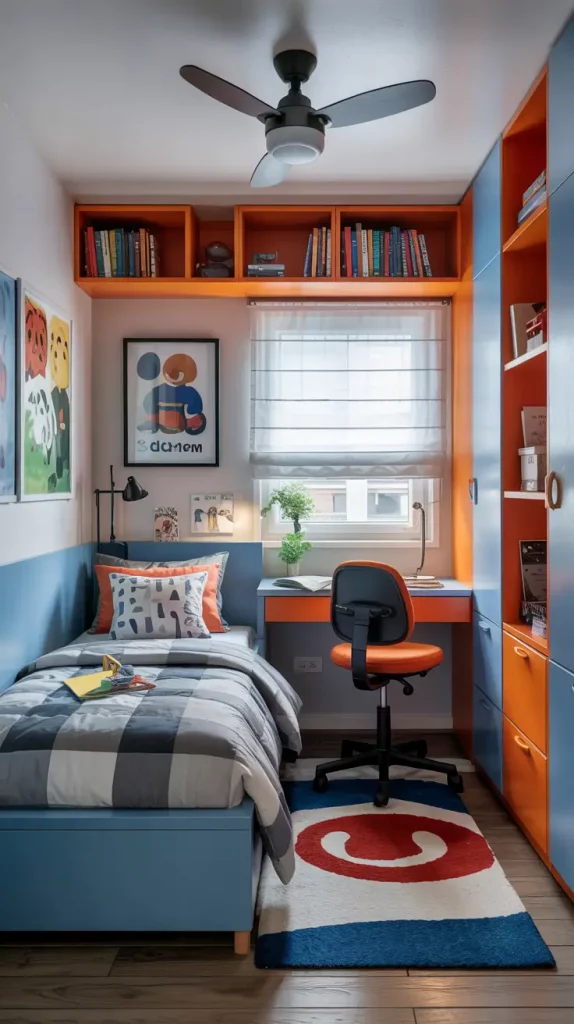
Designers from Parents Magazine often advise choosing long-lasting furniture rather than themed pieces. I agree—this avoids frequent redesigns. What I like to add is multi-stage storage that evolves with age, such as adjustable shelving and modular drawers.
Tiny Bedroom Design Ideas That Feel Open And Airy
To create tiny bedroom design ideas small spaces that feel open and airy, I rely on light colors, minimal furniture, and strong natural light. In 2026, transparency and openness are key trends—rooms feel larger when materials and shapes are visually lightweight. The goal is to eliminate heaviness and maintain spaciousness, even in the smallest bedrooms.
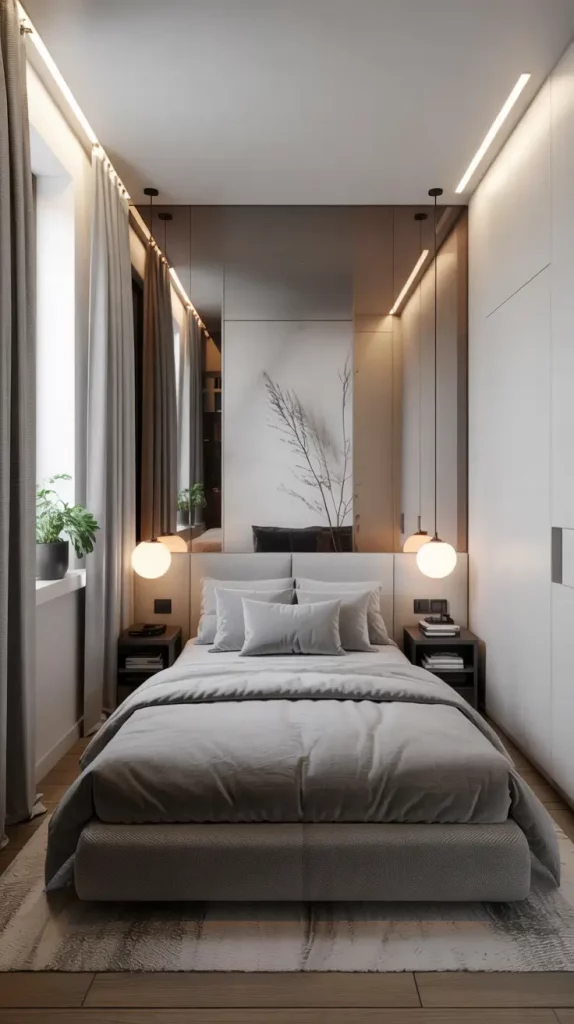
I use low-profile beds, glass or acrylic accents, slim nightstands, and sheer curtains. Mirrors, leggy furniture, and wall-mounted lighting enhance airiness. I also avoid bulky carpets and instead choose rugs with low pile and neutral tones.
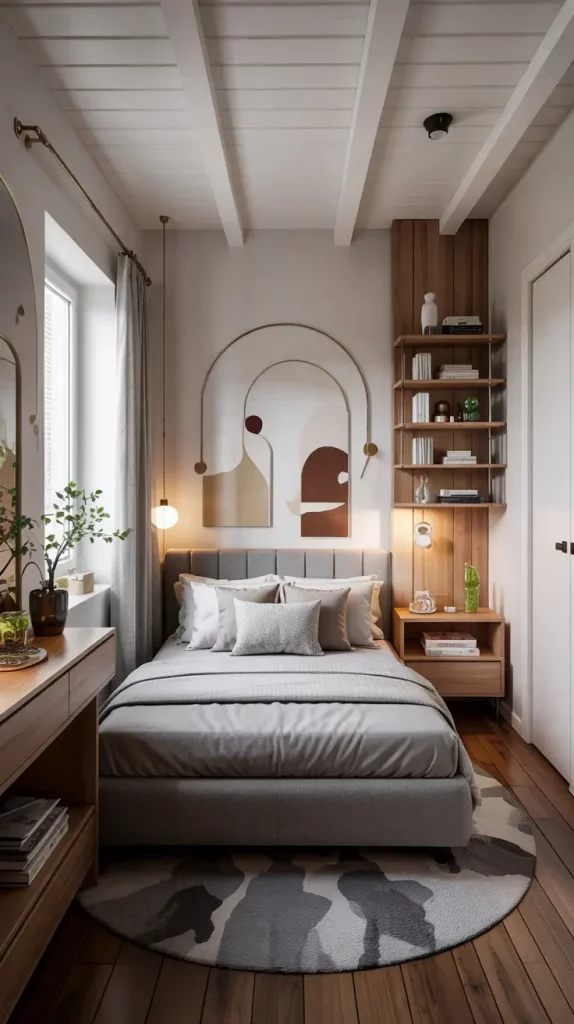
Experts at Apartment Therapy often recommend leaving at least one full wall free of major furniture to maintain visual breathing space. I agree and typically add reflective or glossy accents to amplify light and openness even more.
Storage Beds And Murphy Beds In Tiny Bedroom Design
Storage beds and Murphy beds have become staples in tiny bedroom designs thanks to their dual functionality and efficiency. I often use these features in rooms where floor space is extremely limited. A well-chosen storage bed adds hidden organization, while a Murphy bed completely transforms the room by freeing space during the day.
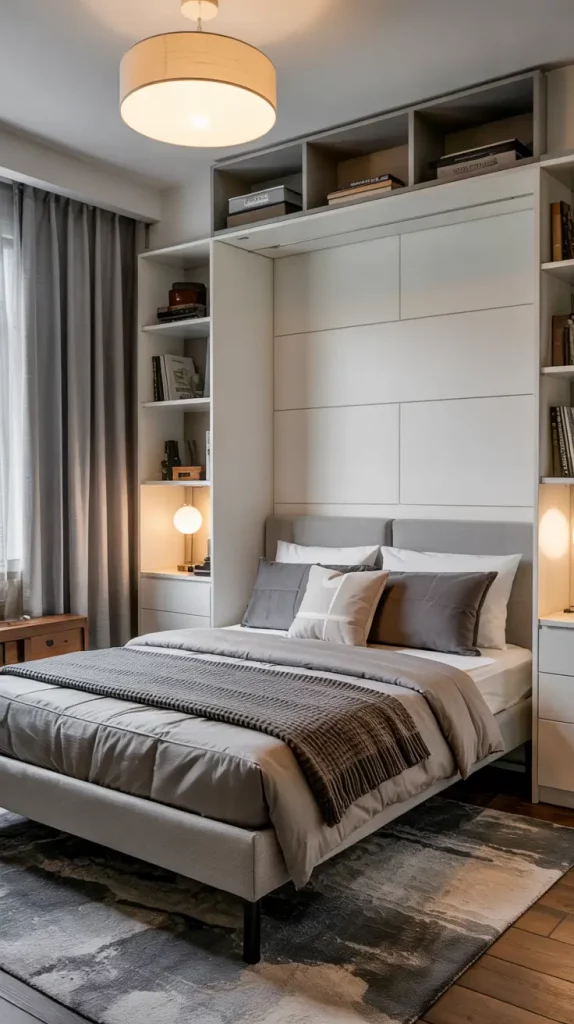
For storage beds, I choose models with deep drawers, hydraulic lifts, or compartmentalized systems. Murphy beds work best when integrated into a wall unit with shelving or a fold-down desk. Both options provide the flexibility small bedrooms desperately need while maintaining a clean and modern appearance.
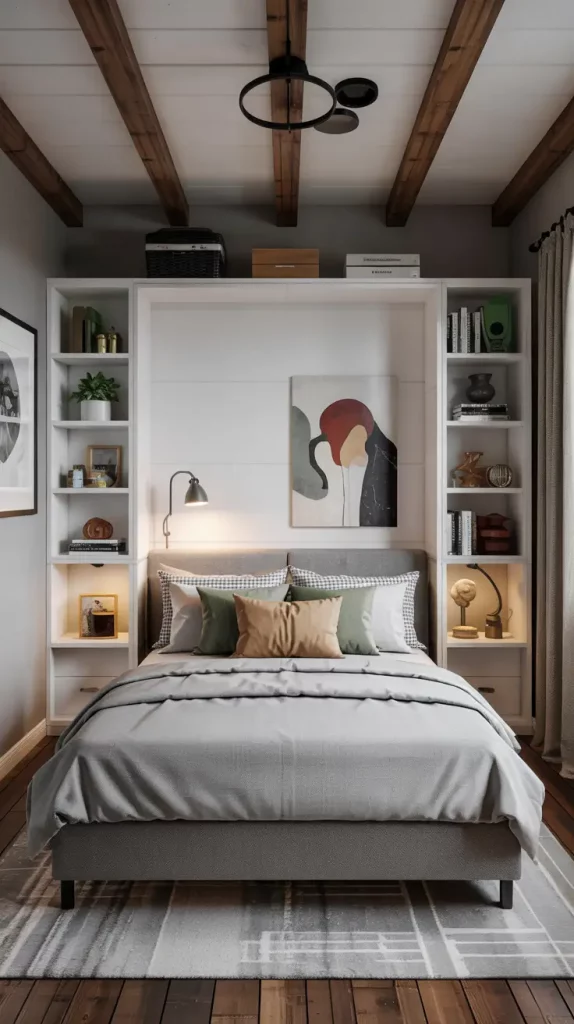
Designers at Dwell consistently highlight multifunctional beds as essential for small-space living. I agree with them wholeheartedly. What I recommend adding is soft-close mechanisms—these enhance convenience and reduce noise, which is especially important in small or shared apartments.
Tiny Bedroom Designs That Balance Function And Aesthetics
When designing tiny bedroom designs that balance beauty and usability, I begin by determining which functions matter most: sleeping, storage, work, or relaxation. Aesthetic choices must support these needs, not complicate them. In 2026, small bedrooms embrace fluid, multifunctional styles—nothing feels excessive, yet everything feels intentional. This balance keeps the room both visually appealing and highly livable.
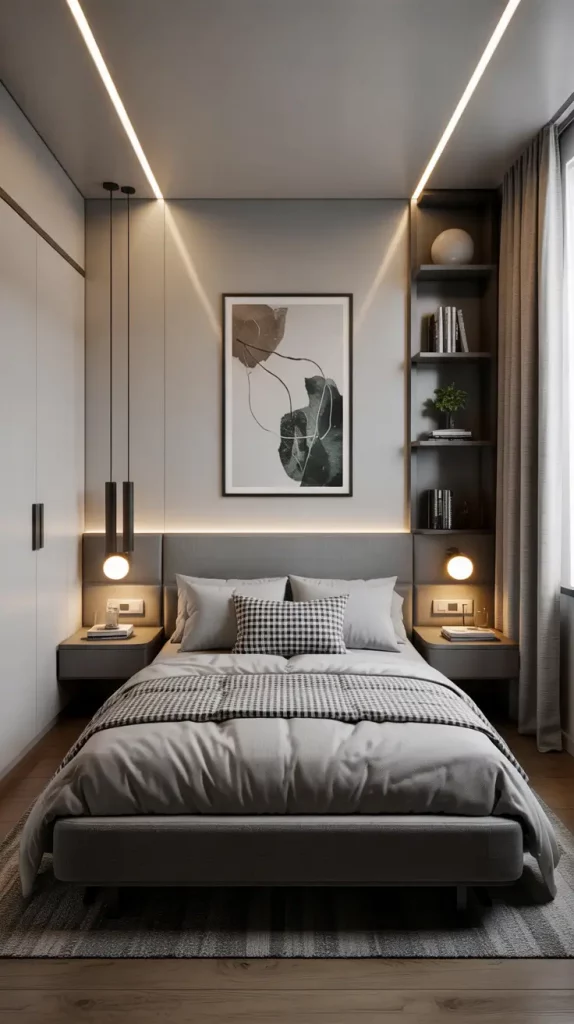
To achieve this, I combine sleek minimalist furniture with warm decorative accents. A simple wooden bed frame, neutral bedding, and floating shelves paired with one standout piece—maybe a sculptural lamp or framed art—create visual harmony. This approach keeps the room practical while still feeling curated.
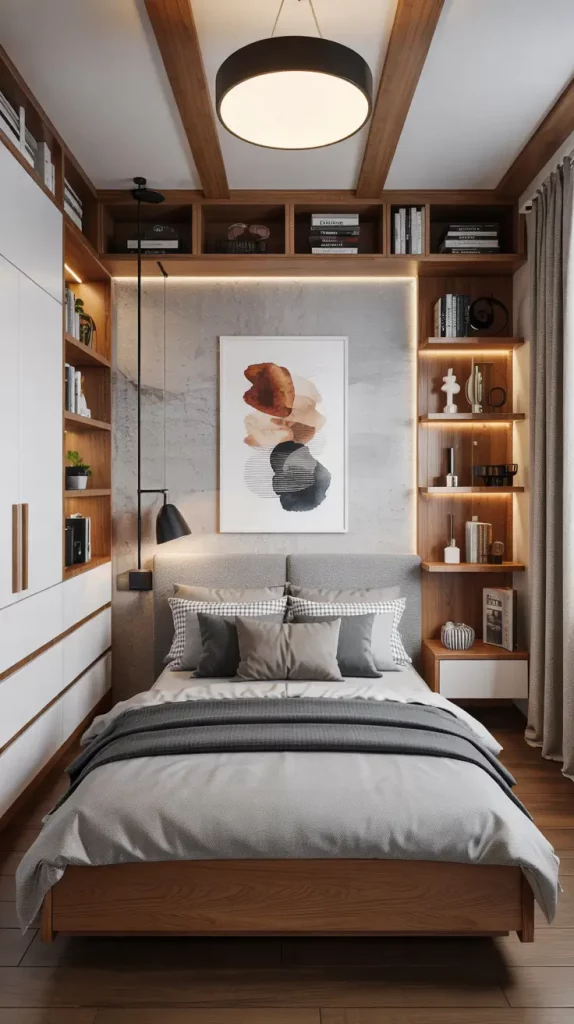
Experts in Architectural Digest frequently note that in small rooms, every choice must serve at least one functional purpose. I agree completely. What I would add more often is sensory balance—soft lighting, subtle textures, and quiet color palettes elevate the aesthetic while supporting daily comfort.
Minimal Decor Strategies For Tiny Bedroom Design Minimalist Style
Designing for a tiny bedroom design minimalist aesthetic requires discipline and intentional curation. I prioritize the essentials: a comfortable bed, accessible storage, and streamlined surfaces. Minimal decor helps tiny spaces feel structured and breathable rather than crowded. In 2026, this style continues to evolve toward warm minimalism, where clarity meets comfort.
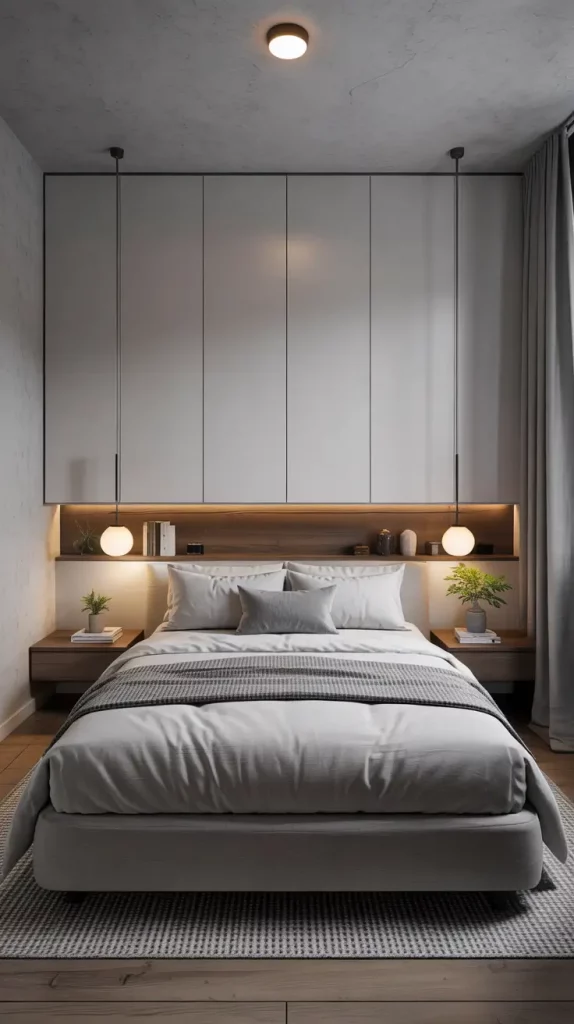
I use muted color palettes, smooth cabinetry, slim-profile nightstands, and subtle decor. A single vase, one framed artwork, or a textured throw is usually enough to personalize the space without overwhelming it. I also choose built-in elements to maintain visual continuity.
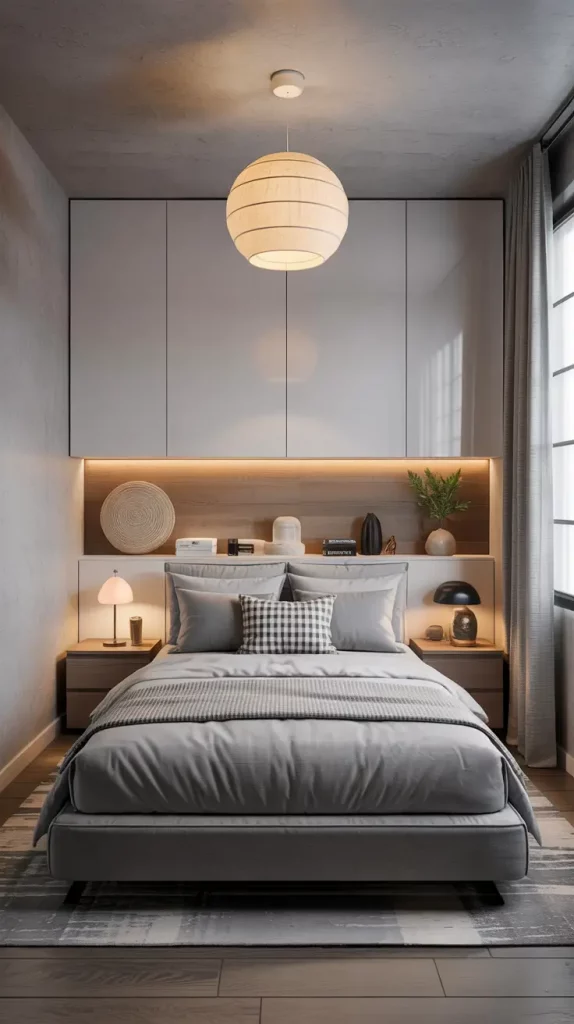
Minimalism is often misunderstood as emptiness, but as Dezeen reminds us, it’s actually about thoughtful restraint. I agree fully. What I think should be integrated more often is natural warmth—raw wood, linen, and soft lighting prevent a minimalist room from feeling sterile.
Mirrors And Visual Tricks In Tiny Bedroom Design For Small Spaces
Incorporating mirrors is one of the fastest ways to visually expand tiny bedroom design ideas small spaces. I rely on large mirrors to bounce light, elongate proportions, and create the illusion of depth. In compact bedrooms, this technique enhances brightness and makes the room feel significantly more open.
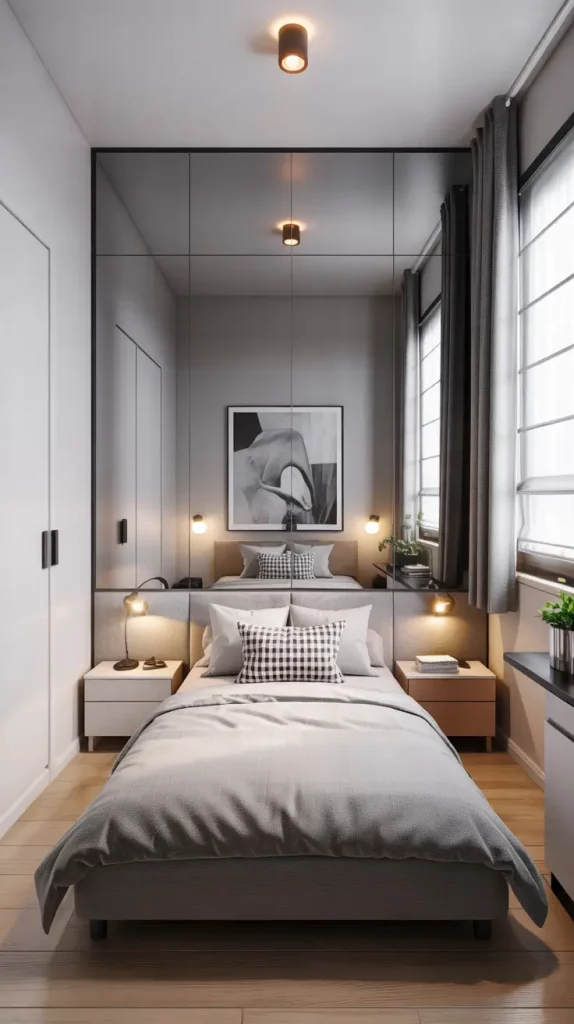
My typical mirror choices include full-wall mirrors, mirrored wardrobe fronts, and round mirrors above nightstands. These pieces contribute to both function and style. I also use reflective surfaces such as glass bedside tables or glossy wall panels to amplify the effect without adding clutter.
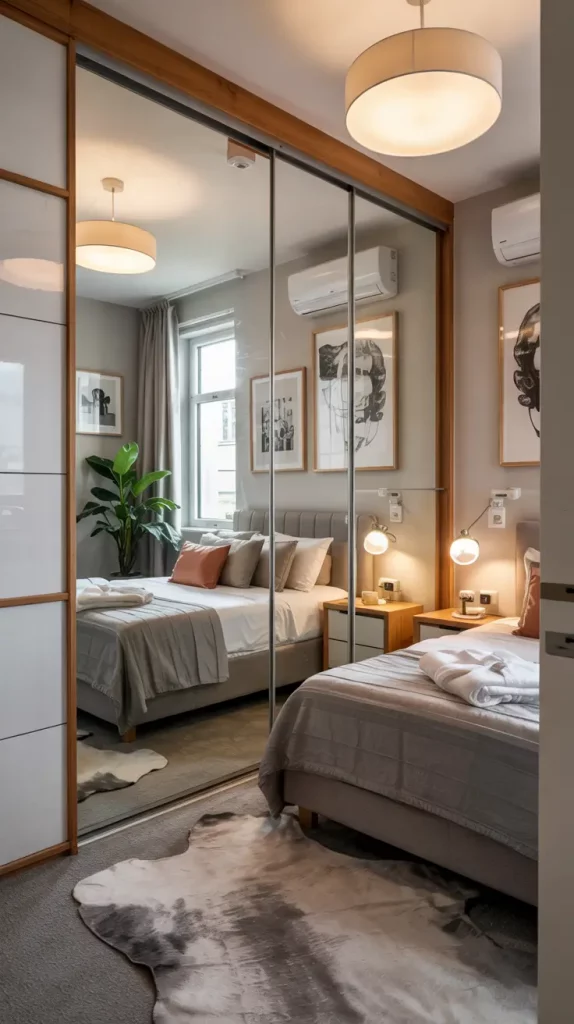
Publications like Apartment Therapy frequently showcase how mirrors dramatically improve spatial perception in tiny rooms. I’ve experienced the same in my own work. What I like to add—often underused—is strategic placement: mirrors work best opposite windows or near lighting sources.
Tiny Bedroom Design Ideas Inspired By Urban Apartments
Urban living influences many tiny bedroom design ideas because apartments in major cities often have limited square footage. I draw inspiration from compact urban spaces that emphasize efficiency, sleek design, and smart furniture choices. In 2026, urban-inspired tiny bedrooms embrace bold accents, multifunctional layouts, and minimalist aesthetics.
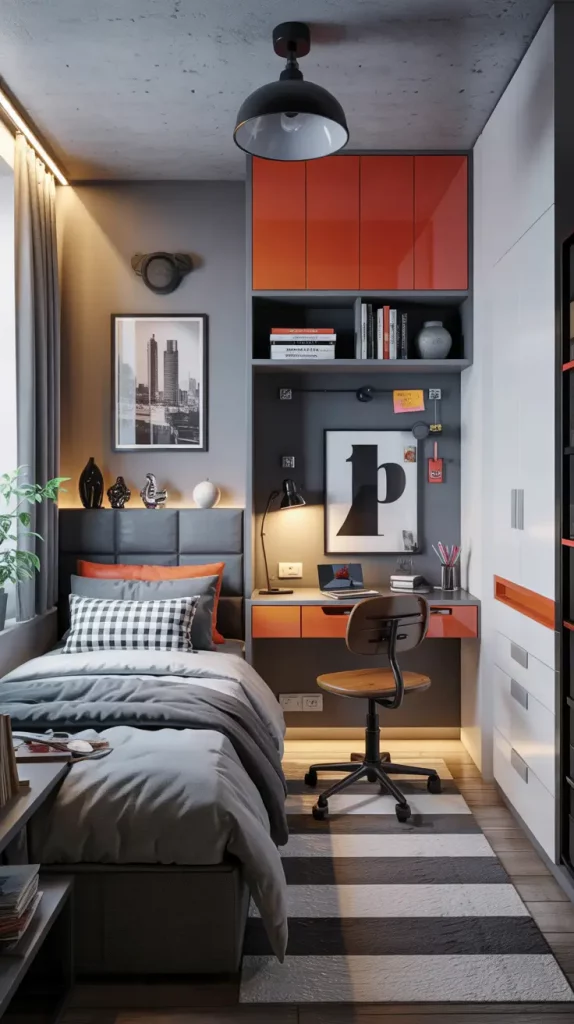
I often include wall-mounted desks, industrial-style lighting, concrete or wood textures, and compact custom furniture. These features align with the modern urban lifestyle where space must serve multiple purposes. Neutral palettes paired with a striking accent color—terracotta, charcoal, or mustard—add character while keeping the room refined.
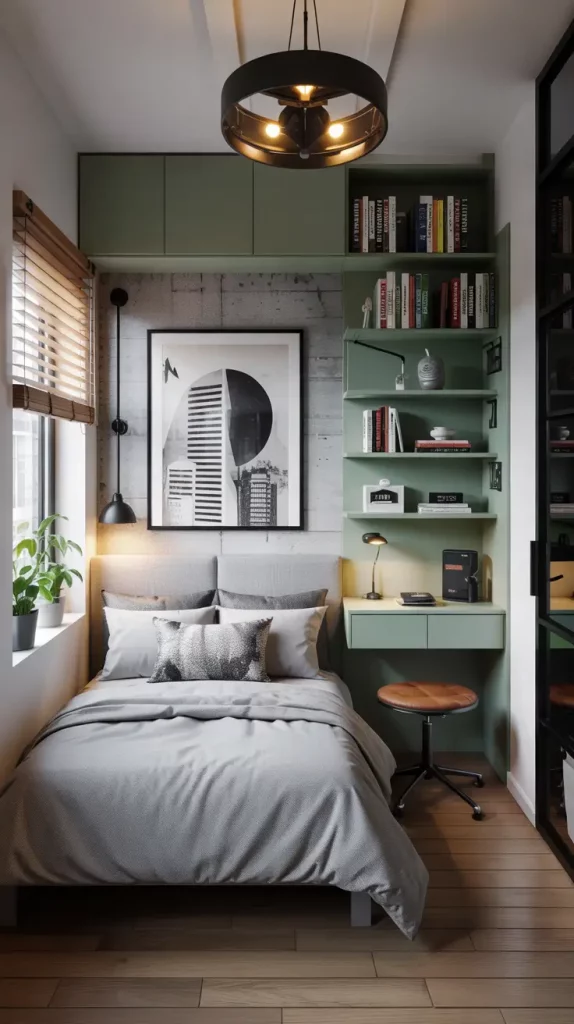
Professional designers featured in Dwell emphasize the value of modularity in urban homes. I completely agree. One enhancement I like to add is movable furniture—foldable chairs or rolling carts adapt to the fast-paced, flexible nature of city living.
Custom Furniture Solutions For Tiny Bedroom Designs
Custom pieces often unlock the full potential of tiny bedroom designs. When I design custom furniture, I tailor proportions, storage needs, and materials to the exact dimensions of the room. This prevents wasted space and creates a polished, built-in appearance that off-the-shelf items rarely achieve.
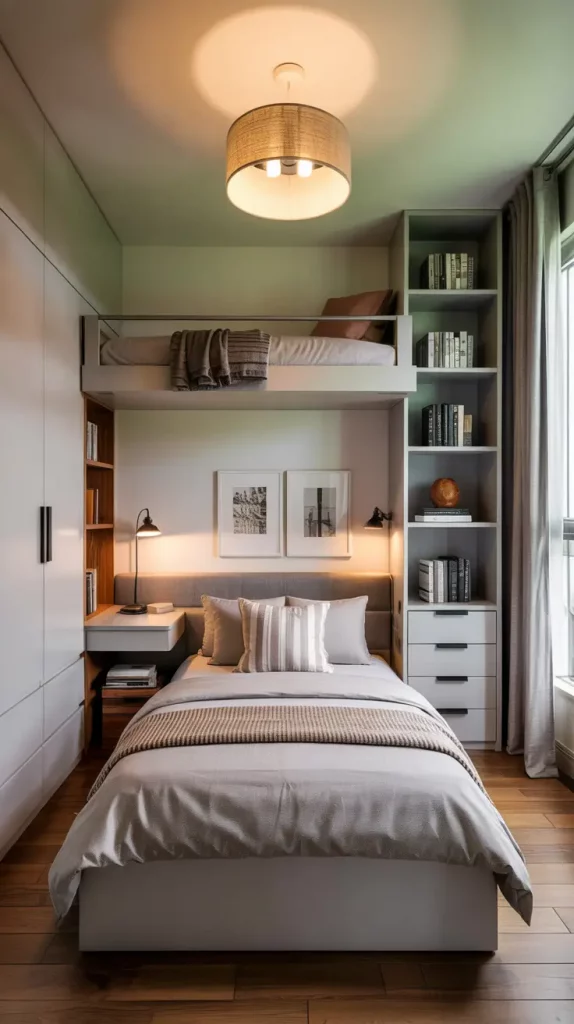
Some of my favorite custom solutions include loft beds with integrated desks, wall-to-wall wardrobes with hidden compartments, and corner units that make use of awkward angles. Even a custom floating nightstand or made-to-measure shelving can greatly enhance practicality.
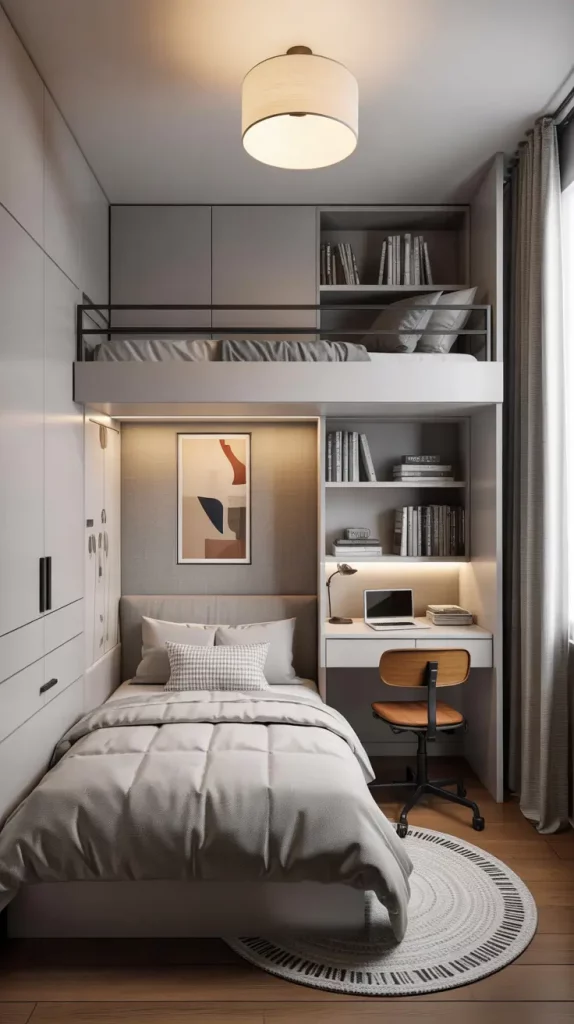
Industry experts in House Beautiful often highlight customization as the most effective strategy for small bedrooms. I agree wholeheartedly. What I tend to add is multi-functionality—custom pieces should adapt over time, not lock homeowners into a single layout.
Common Mistakes To Avoid In Tiny Bedroom Design
Over the years, I’ve noticed consistent mistakes that limit the potential of tiny bedroom designs. The most common issues include oversized furniture, dark heavy palettes, and excessive decor. These choices make small rooms feel smaller and reduce functionality. Avoiding these pitfalls ensures the design remains comfortable and visually balanced.
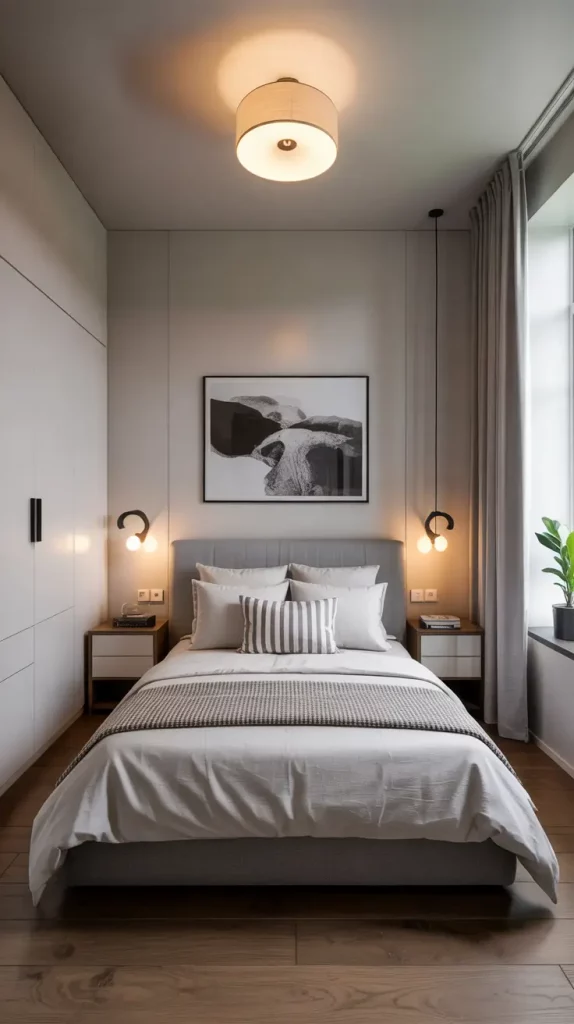
I advise choosing scaled furniture, neutral tones, and streamlined decor. Blocking natural light or overcrowding walls with storage are also mistakes I frequently see. Instead, I recommend using vertical space wisely, selecting multifunctional furniture, and keeping walkways unobstructed.
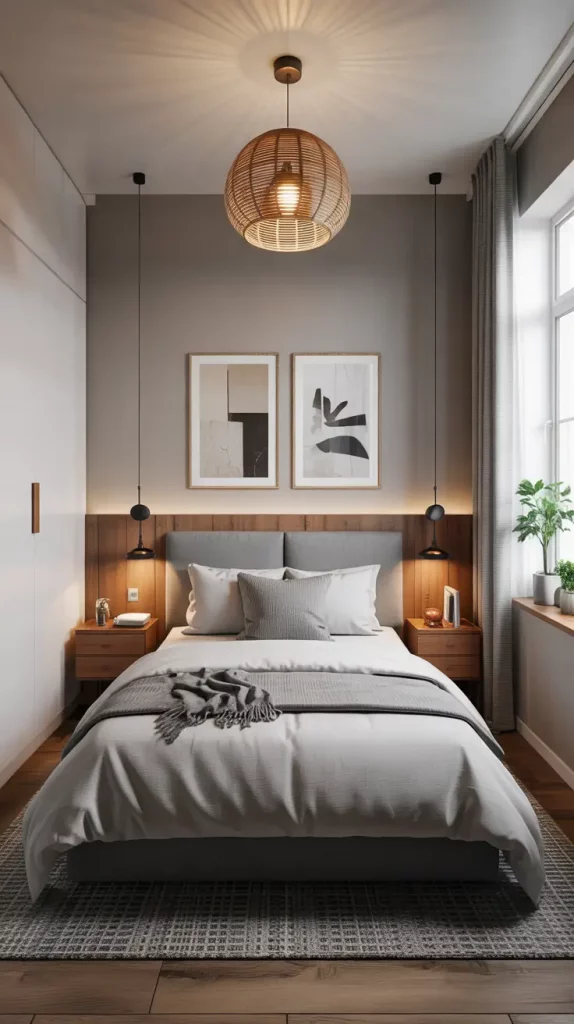
Experts at Better Homes & Gardens emphasize the importance of furniture scaling, and I strongly agree. The only thing I would add is considering long-term usability—rooms should be adaptable, not restrictive.
Future-Proof Tiny Bedroom Design Ideas For Modern Living
Looking ahead, tiny bedroom design ideas in 2026 and beyond prioritize adaptability, sustainability, and tech integration. I design future-proof rooms by focusing on modular furniture, eco-friendly materials, and layouts that can evolve with lifestyle changes. The goal is longevity: a room that works today and still functions beautifully years from now.
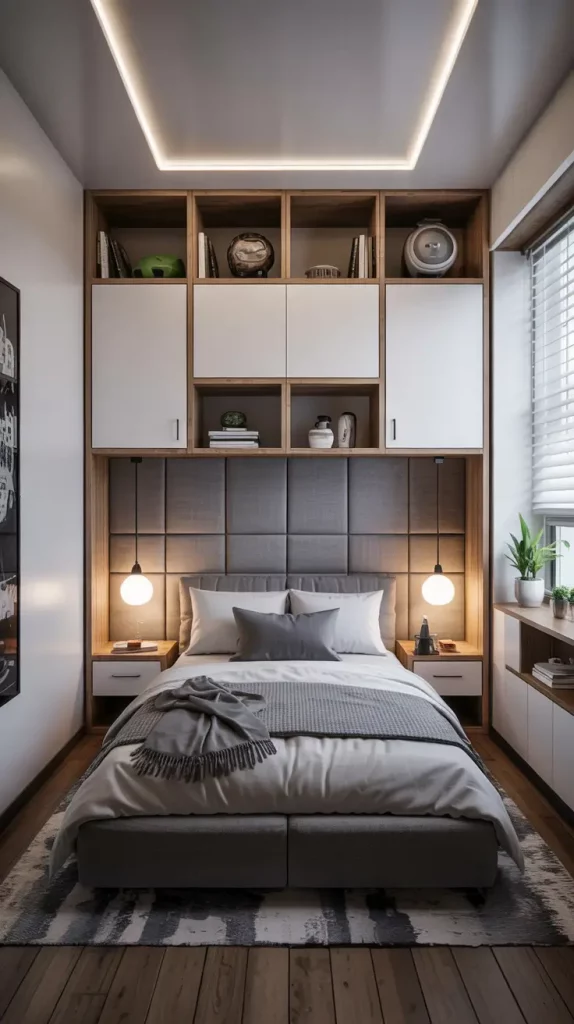
I incorporate adjustable shelving, modular wardrobes, under-bed storage, and updated lighting systems. Smart home features—like voice-controlled lighting or climate control—add convenience. Natural materials such as bamboo, cork, or linen bring sustainability and warmth into compact spaces.
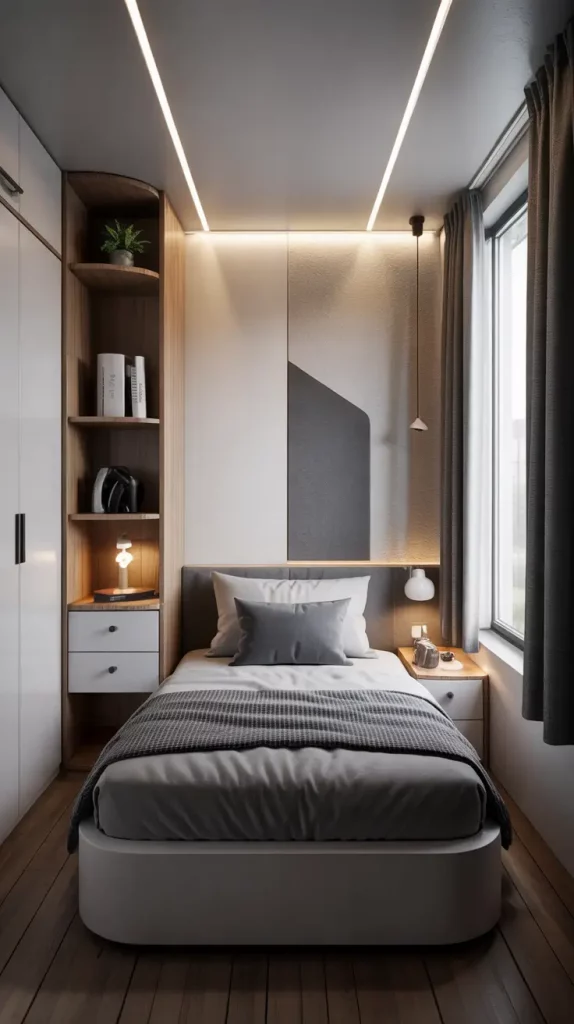
Many design publications, including Architectural Digest, promote sustainable and flexible design as core trends for the future. I agree completely. What I think small bedrooms truly benefit from is a hybrid approach—mixing beauty, function, and long-term adaptability ensures the room remains timeless.
Conclusion
Tiny bedroom design in 2026 proves that small spaces can feel modern, cozy, functional, and visually inspiring when approached thoughtfully. I’d love to hear what challenges you face in your own compact bedroom—share your experiences or questions in the comments so we can explore solutions together.