Remove Road Dust and Sand at Your Entrance: A Two-Mat Setup for 2027
Tired of sand in your hallway? See how a scraper mat plus absorbent inside mat helped me remove road dust at the entrance in 2027, plus tips to try.

Ever notice how one quick trip inside drags half the street along with you? Fine grains of sand, drifting dust, and tiny pebbles slip past the threshold, and before long the hallway feels like part of the driveway, especially heading into 2027.
I spent ages brushing it off and ignoring it, but the daily vacuuming and that gritty crunch underfoot wore me down. Windy weeks were the worst. It felt like I was losing a war with the outdoors.
Here I’ll walk through the setup that finally worked for me: a double mat and trap system for removing road dust and sand at the entrance. It’s simple, practical, and, most importantly, it actually works.
Why Road Dust and Sand Are More Than Just “A Little Dirt”
The dust was less harmless than it looked. My first reaction was, “It’s only a little dirt, I’ll sweep it up later.” It turned out to be a lot more than that.
Each grain of sand works like tiny sandpaper. Over time it scratches hardwood, clouds tile, and grinds into carpet fibers. Dust settles into corners, under furniture, and into vents, and once it’s in there, getting it out takes real effort.
The fine dust also affects indoor air quality. Breathing it in day after day isn’t great, particularly if someone in the house has allergies or little ones spend their time crawling across the floor.
That’s when it hit me: stopping the dirt right at the door isn’t a nice extra. It’s a must.
Extra Traps That Take It to the Next Level
Here’s the part I didn’t see coming: small extras that make a big difference.
-
a rubber grid right outside to knock off extra gravel;
-
a shallow gutter or lip along the doorstep to trap runoff;
-
mesh guard or awning to block wind-driven debris.
I also added a narrow curb along the side steps. That simple edge holds back a surprising amount of sand before anyone reaches the door.
Material Comparison: What Works Best Where
To make things easier, here’s a quick reference I wish I’d had from the beginning:
| Area | Material | Pros | Cons |
|---|---|---|---|
| Outdoor | Rubber with brushes | Excellent dirt removal | Needs frequent shaking |
| Outdoor | Coconut coir | Natural, stylish | Wears down faster |
| Indoor | Microfiber | High absorbency | Needs regular washing |
| Indoor | Polyamide | Durable, holds dirt | Higher upfront cost |
Depending on your climate and personal style, you can mix and match these for the best results.
The Double Mat and Trap System: What Finally Worked
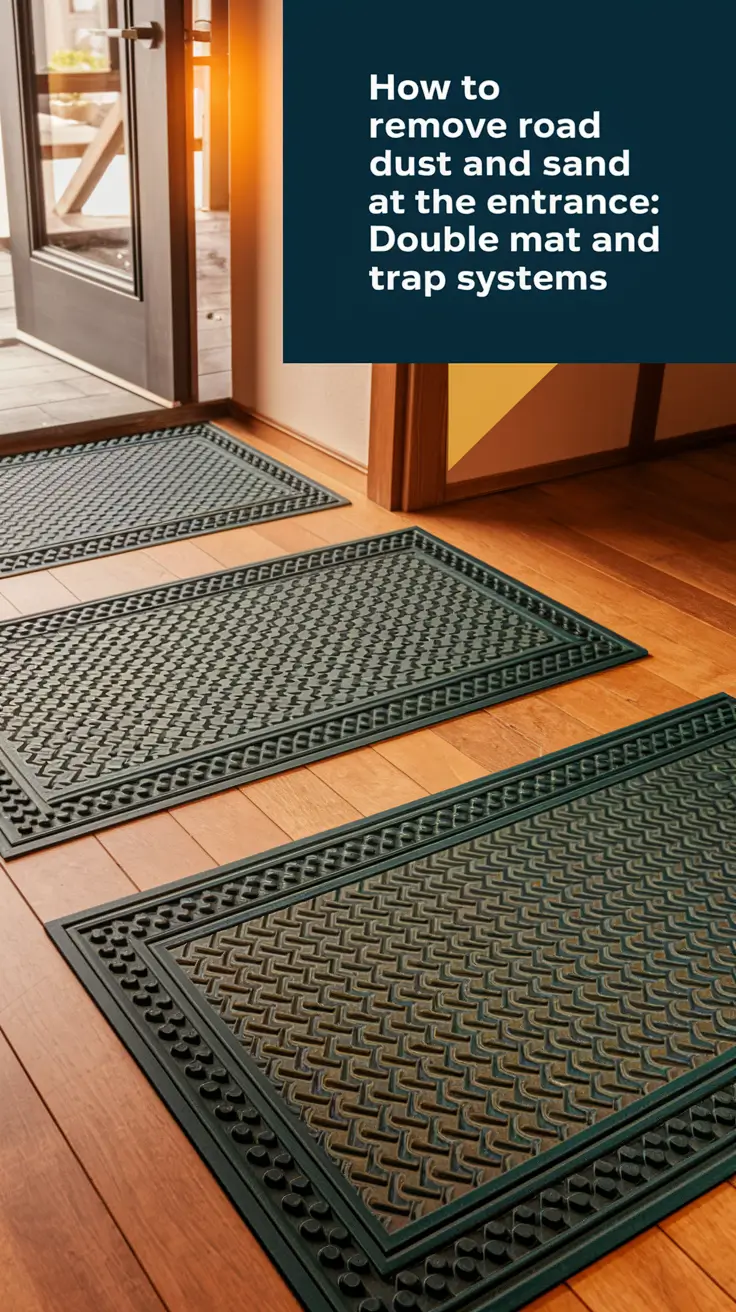
Here’s how it turned out. Rather than expecting one mat to do the whole job, I built a two-step defense. The double mat and trap system catches dirt in stages, a bit like a mini car wash for your shoes.
First Layer: The Outdoor Scraper Mat
This is where most of the heavy lifting happens. I switched to a scraper-style outdoor mat, built with:
-
stiff bristles or metal grates that scrape off chunks of mud, gravel, and bigger debris;
-
rubber or coconut coir materials that stand up to sun, rain, and snow;
-
easy-to-shake or hose-off surfaces that don’t hold onto moisture.
Now, when someone comes up to my door, most of the visible dirt never makes it over the threshold.
Second Layer: The Indoor Absorbent Mat
Just inside the door sits the second line of defense: a high-pile absorbent mat that handles:
-
residual dust and tiny sand particles;
-
any remaining moisture from rainy or snowy shoes;
-
soft landings for pets and kids running inside.
I went with a microfiber blend that has a non-slip rubber backing. It’s thick, soft underfoot, and simple to toss in the washing machine when it needs cleaning. Together, the two mats stopped nearly 90% of what used to end up spread across my hallway.
The Results I See Every Week
Since setting up the double mat and trap system, I vacuum about half as often. My hardwood floors keep their shine longer, my kids don’t carry sand into the living room, and my robot vacuum no longer chokes on fine dust all the time.
Most importantly, the entrance feels calm, clean, and easy.
It isn’t about perfection. It’s about having one less thing eating your time and energy. Honestly, seeing a spotless entry every evening feels like a small daily win.
What’s one small change that completely transformed your home?
Pin this post if you’re planning your own seasonal reset!

The Mistake I Kept Making With Regular Doormats
I started with what seemed like a reasonable fix: a basic doormat, the small, cute kind you can shake out in seconds. I swapped them out with the seasons, tried different patterns, and even bought ones with “extra bristles” that claimed to catch more grime.
What really happened? Within a week, a fine film of dust was still sneaking past the mat. Then spring arrived with its dry winds, and my hallway became a dust runway.
The reality is that a single doormat can’t stop every kind of dirt we bring in. Dry grit blows off the edges, wet mud sticks and hardens, and fine dust glides right over the top. I didn’t need a prettier mat. I needed a smarter setup.
Key Things to Look for When Choosing Entrance Mats
Picking the right materials made a huge difference. These are a few lessons I picked up along the way:
-
material durability (abrasion-resistant for outdoors);
-
water resistance (especially for rain and snow seasons);
-
non-slip bottom (so no one trips);
-
ease of cleaning (hose-friendly or machine-washable);
-
UV and frost resistance (for outdoor longevity);
-
aesthetic fit with your home’s style.
Would you have guessed doormats could be a design feature? I wouldn’t have either, but guests now comment on my entryway more than I ever expected.
3 Steps That Helped Me Build This System
When I finally decided to fix the problem for good, I followed a simple plan. If you’re also tired of chasing dust bunnies, here’s exactly what worked:
-
Measure your entry space carefully.
The bigger the mats, the better the capture zone. I went with a full doorway width, allowing multiple steps before reaching the main floor. -
Position both layers strategically.
The scraper mat sits flush against the door outside. The indoor mat starts immediately inside, covering at least three full steps forward. -
Maintain both mats regularly.
Outdoor: shake or hose weekly.
Indoor: vacuum every few days and wash monthly.
That’s when I finally noticed what was missing. The issue wasn’t the mats themselves. It was how I was using them together.

More Cleaning & Organizing ideas
- Fridge Smells in Summer: The Routine That Finally Fixed Mine in 2027
- Cleaning Your Air Conditioner for Fresher Summer Air in 2027: A Practical Guide – November Update
- Summer Entryway Shoe Storage for 2027: Keep Dirt Out at the Door – November Update
- Washing Windows from Outside, Ladder-Free: Hands-On Tricks for 2027
- Post-Picnic Cleanup for 2027: A Fast Reset Guide for Your Yard and Kitchen – November Update
- Lime Steam Microwave Cleaning for 2027: Odor-Free Without Scrubbing
- Baseboards and Door Frames 2027: The Overlooked Step That Changes a Room
- Under-Sink Storage on a Budget: My $48 Cabinet Makeover for 2027
- Streak-Free Glass Without Store Sprays: My Natural Window Cleaner for 2027 – November Update
- Cleaning the Grill After a Barbecue Without a Metal Brush: The 2027 Method
- Clean Patio Cushions and Umbrellas Without Bleach: Natural Fixes for 2027
- Cleaning Plastic Flower Pots in 2027: Vinegar Tips and Paint Fixes – November Update